Published by HALOX Co.
Steady vs. Flashing Check Engine Light: What Each One Is Telling You
What the amber check-engine light is required to do, why a steady glow and a flash while driving are different messages, how a loose gas cap can turn the steady light on, and why clearing the code before an emissions test leaves the car unready.
The same amber lamp does two jobs, and they are not interchangeable. While you are driving, a steady glow means the onboard diagnostic system has stored an emissions fault. A flash, on the cars whose manuals spell it out, is a misfire warning: Ford says the misfire may be happening and that the extra exhaust heat could damage the catalytic converter, and California’s air board says a blinking warning light means a malfunction that could be damaging that converter. A still photograph of the symbol cannot tell you which of those you had. The one below is simply lit.
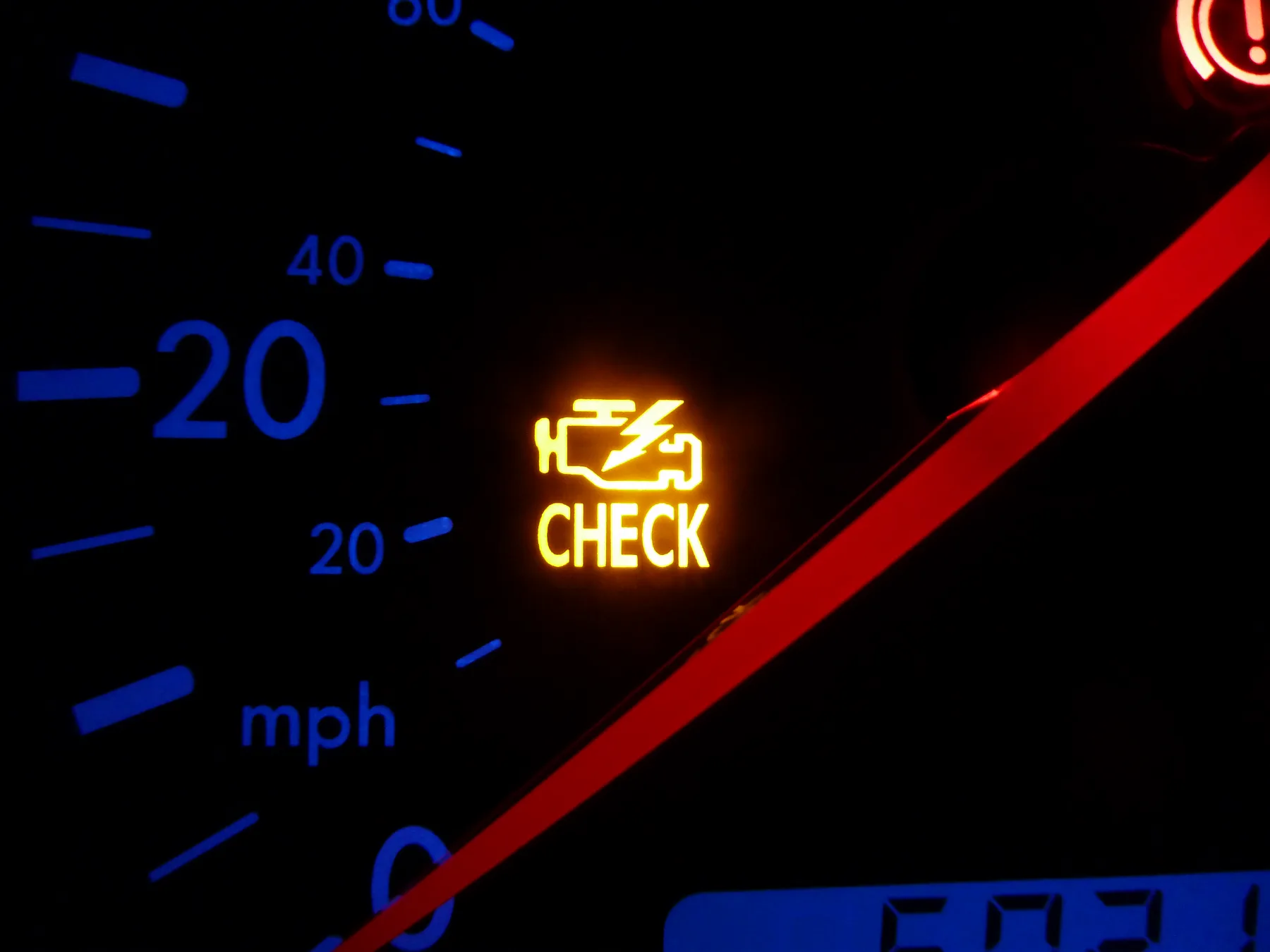

That symbol is the malfunction indicator, the check-engine light. On this cluster the word under the engine outline is CHECK. The red exclamation mark at the upper right is a different lamp. California’s air board describes the malfunction indicator as the warning that comes on when a diagnostic routine finds a problem. It typically reads Check Engine or Service Engine Soon, and it often includes an engine symbol. The computer also stores information a technician uses to find the fault. Federal rules for 2017 and later light vehicles require that system: detect emission-control malfunctions, store a trouble code, and alert the driver, by meeting California’s OBD requirements. California’s OBD rule makes the lamp amber, puts it on the driver’s side of the panel, and has it come on before cranking so you can see that the bulb works.
The connector that rule requires is the standardized plug a scan tool uses. It is separate from the lamp.
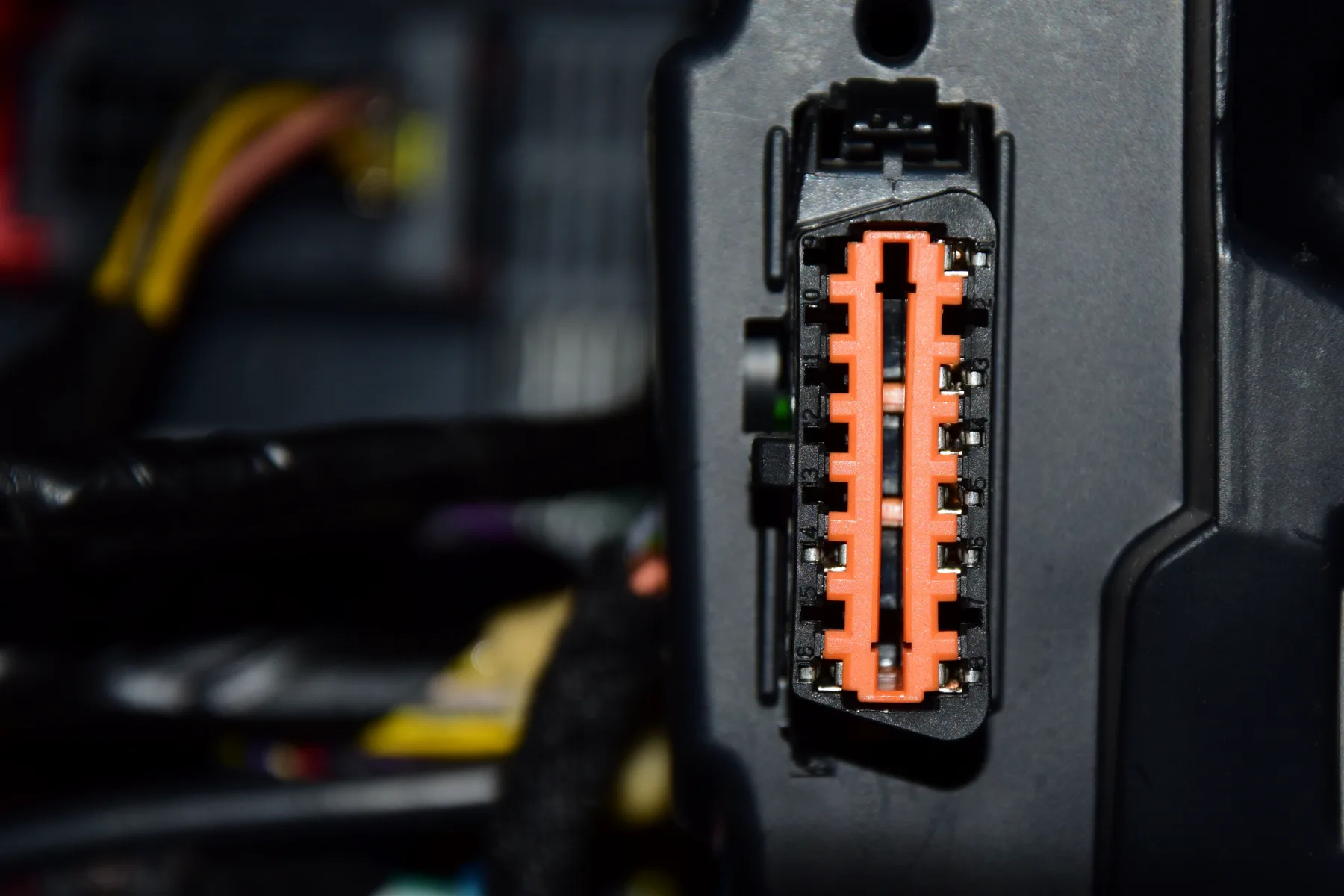

Steady is stored. A flash while you drive is the misfire.
Ford’s 2019 E-Series manual draws the line in the Service Engine Soon entry. If the lamp is on with the engine running, the onboard diagnostics system has detected a malfunction of the emission-control system. If it flashes, engine misfire may be occurring. Higher exhaust temperatures could damage the catalytic converter or other components. The instruction is to drive moderately, avoiding heavy acceleration and deceleration, and to have the vehicle serviced immediately. Ford E-Series manual. The warning is about harm a misfire can do to the catalytic converter. It is not a finding that the converter has already failed.
Honda’s 2025 Civic manual uses the same split and then gives a procedure. The lamp comes on for a problem with the engine emissions control system. It blinks when misfire is detected. If it comes on, avoid high speeds and have the car inspected. If it blinks, park clear of anything that can burn and wait at least ten minutes with the engine off until it cools. If it blinks again when you restart, drive to the nearest dealer at 31 mph or less and have it inspected. Driving with the lamp on, that page says, can damage the emissions controls and the engine. 2025 Civic manual.
Chevrolet’s Aveo guide is shorter and does not name the converter. A flashing light means stop when it is safe, turn the engine off, wait ten seconds, and restart. If it is still flashing, see the dealer as soon as possible. Aveo guide. CARB’s fact sheet is the general version of Ford’s sentence: a blink means a malfunction is occurring that could be damaging the catalytic converter. The OBD rule has that lamp blink once a second while the catalyst-damaging misfire is actually happening. When the misfire stops, a confirmed fault can leave the lamp on steady. A steady light after a flash is the stored fault. It is not an all-clear.
A blink before you have moved is a different event. On that Ford, the lamp comes on with the ignition to check the bulb and to show whether the vehicle is ready for an inspection. It normally stays on until you crank, then goes out if nothing is wrong. If it flashes eight times after fifteen seconds, Ford says the vehicle is not ready for inspection and maintenance testing. Ford. That key-on sequence is a readiness indication. It is not the misfire flash.
A loose cap can turn the steady light on
A steady light is also what the evaporative monitor uses when it sees a leak, and a cap that is not seated is a leak. Toyota’s 2024 Tundra manual says that if the malfunction indicator comes on while driving, check whether the tank is empty and whether the cap is loose. Tighten a loose cap. The light should go off after several trips. If it does not, contact a dealer. Tundra manual. Ford, on the E-Series, uses a separate Check Fuel Cap message when the cap is not installed properly, and says that leaving that message on can bring on Service Engine Soon. Clearing the message can take several driving cycles: a start after four or more hours with the engine off, then ordinary city and highway driving. Ford. Chevrolet’s Aveo guide puts the cap check on the steady light itself. Reinstall the cap so it is tight, and a few trips with it installed should turn the light off. Aveo guide.
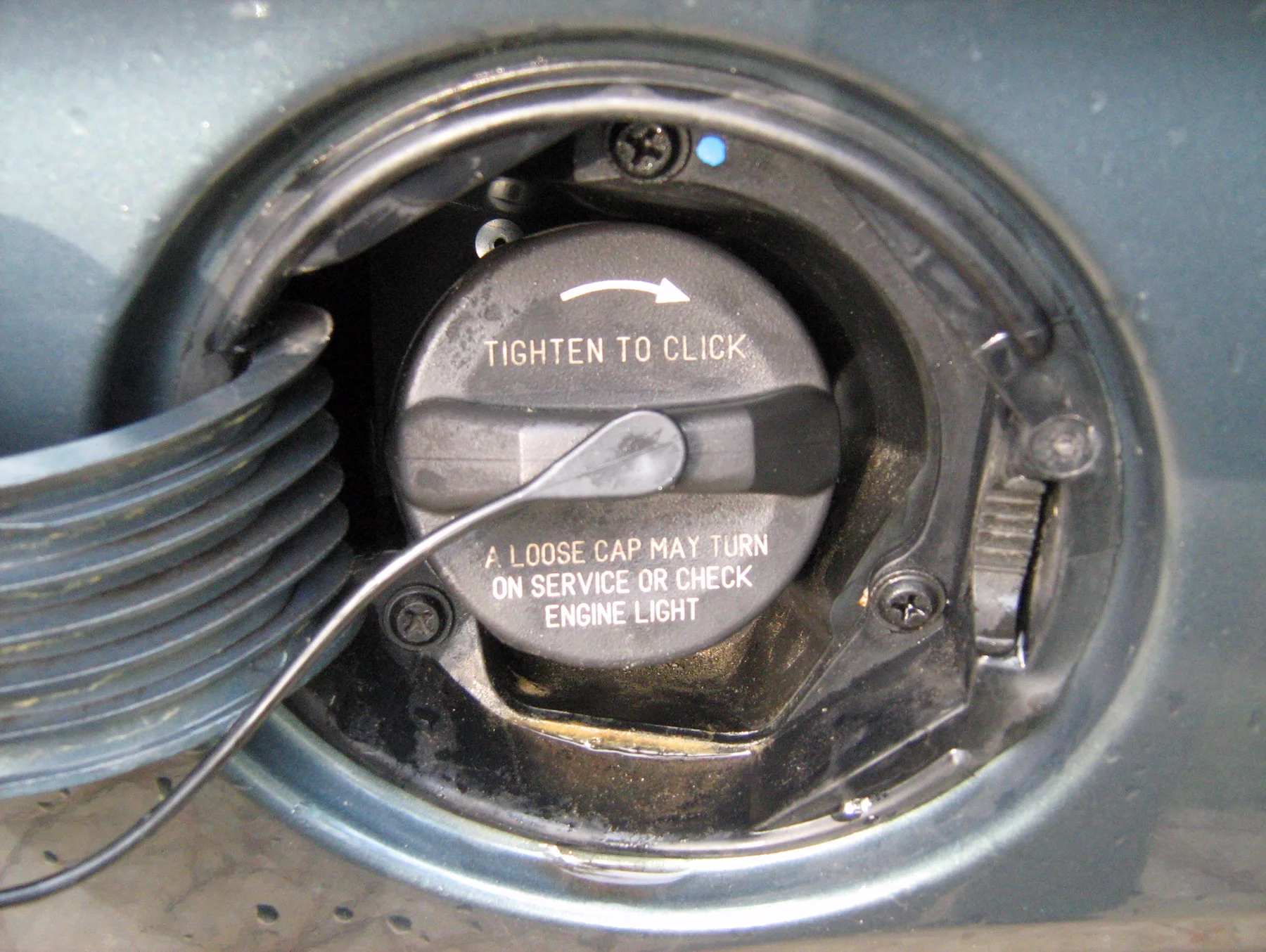

The cap in that photo says the same thing in molded letters. The sentence on the cap is a warning about a loose seal. It does not identify a failed part on the car it is screwed into. CARB says many different problems can turn the light on, so the glow alone is a poor guide to how severe the fault is. Toyota’s 2004 MR2 manual, once the tank is not empty and the cap is tight, says there is a problem somewhere in the engine, the emission controls, the electronic throttle, the automatic transmission’s electrical system, or the warning-light system itself. MR2 manual. A stored code narrows the area. It is the start of a diagnosis.
California’s rule has the misfire monitor identify the cylinder that is misfiring, and it allows a general misfire code instead under conditions the state approves. A cylinder still has several parts in it. The spark plug and the ignition coil are two that a misfire gets blamed on. The code does not establish that either one failed. An oxygen-sensor code is the same kind of note. What an oxygen sensor does is mixture feedback. A code about it is evidence to test. An evaporative code is the same for a cap, a hose, a valve, or the charcoal canister. The light does not sort those.
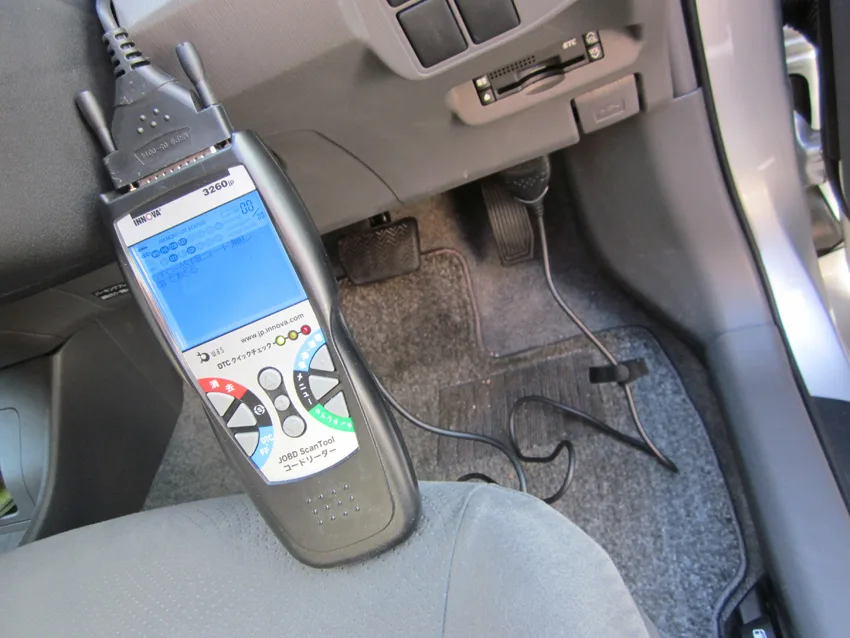

The reader in that photo is how the stored note gets out of the car. The screen is a display of what the computer held. It is not a repair order.
Other dash lamps are not this one. Chevrolet’s warning-light guide treats oil pressure as its own lamp: pull over, turn the engine off, check the oil, then restart. If that light stays on for more than ten seconds, shut the engine off and do not restart it. The coolant-temperature light means the engine has overheated. The same guide says to pull over, shut the engine off, and plan on a tow, because driving with it on can damage the engine. The check-engine light, on that page, means the car has detected a malfunction in the engine or the propulsion system. It can appear before anything feels wrong, and the instruction is to have it serviced. On the 2024 Tundra, the maintenance-required reminder is a separate item, initialized after the service is done. Tundra manual. That reminder is a service-interval message. It is not the malfunction indicator.
Turning the light off before an inspection
Programs that inspect with the onboard system look at the lamp and read the computer. EPA’s inspection guidance treats a lamp that stays on with the engine running as a failure. It also tells the inspector to disconnect the tool without clearing codes or readiness. Those codes, and the freeze-frame recorded with them, are what the diagnosis uses. Clearing belongs with the repair, after that record has been read.
Readiness monitors are the self-tests that show whether each check has actually finished. Clearing codes sets them back to not ready. In a 2011 memorandum, EPA recommended that state programs allow only the evaporative monitor to be incomplete, require the catalyst and oxygen-sensor monitors to be ready, and refuse a retest on which a monitor that was ready the first time comes back not ready. EPA readiness memorandum. Those are recommendations to the programs. California’s inspection reference is a program that does the check. A lamp that stays on with the engine running fails. A lamp that does not come on at key-on, engine off, fails too. The monitors have to be run again after a battery disconnect or after an emissions part is replaced. For 2000 and newer gasoline vehicles, the incomplete monitor that reference allows is the evaporative system. It also sets aside the continuous misfire, fuel, and comprehensive monitors on gasoline cars during the test.
Clearing the light to get through the line fights that design. The lamp can be dark, and the car can still be turned away or failed because the monitors have not finished. On 2010 and newer vehicles that store them, California fails the car for a permanent code even when the lamp is off. Some 2010 vehicles do not store that kind of code and are not checked for it. Where the check applies, a scan tool cannot erase the permanent code, and disconnecting the battery cannot either. The computer clears it only after the underlying fault is fixed and the related monitor has run without finding the problem again. The reference ignores a stored permanent code only after at least 15 warm-up cycles and 200 miles since the onboard information was last cleared. BAR’s permanent-code note; OBD test reference.
A steady lamp establishes that the diagnostic system has a confirmed fault, or, on the Tundra and the Aveo above, that it may be seeing an empty tank or a loose cap. A flashing lamp while you are driving establishes, in the Ford and Honda manuals and in CARB’s description, a misfire treated as a threat to the converter. Ford’s instruction is to avoid heavy acceleration and deceleration and get service immediately. Honda’s, once the light blinks again after a cool-down, is to keep it at 31 mph or less on the way to a dealer. Chevrolet’s Aveo guide stops short of naming the converter and says to shut the engine off, restart once, and see the dealer if it is still flashing. A code establishes the condition the monitor stored. Which part failed is the work that starts from that note.
Sources
- CARB: On-Board Diagnostic II systems fact sheet — The warning light, Check Engine or Service Engine Soon wording, stored information for a technician, and a blink as a malfunction that could be damaging the catalytic converter
- EPA: 40 CFR 86.1806-17, onboard diagnostics — 2017 and later light vehicles must detect emission-control malfunctions, store trouble codes, and alert the driver under California OBD requirements
- California: OBD II malfunction and diagnostic system requirements — Amber driver's-side lamp, key-on bulb check, and a once-per-second blink while catalyst-damaging misfire is occurring
- Ford: 2019 E-Series owner's manual — Service Engine Soon steady versus flashing, moderate driving, the eight-flash readiness indication, and the check-fuel-cap message
- Honda: 2025 Civic Hatchback owner's manual, malfunction indicator — Lamp on for an emissions-control problem, blink for detected misfire, cool-down, then 31 mph or less to a dealer if it blinks again
- Toyota: 2024 Tundra owner's manual, short version — Empty tank and loose cap when the malfunction indicator comes on while driving, and the separate maintenance-required reminder
- Toyota: 2004 MR2 owner's manual — Loose cap as a temporary cause, and the systems the lamp can be pointing at when the tank and cap are not the cause
- Chevrolet: 2007 Aveo get-to-know guide — Flashing lamp: stop, shut off, wait, restart; steady lamp: tighten the fuel cap
- Chevrolet: warning lights — Check-engine light versus oil-pressure and coolant-temperature lights
- EPA: performing onboard diagnostic checks in an inspection program — A lamp that stays on with the engine running fails; do not clear codes or readiness during the inspection
- EPA: OBD monitor readiness memorandum, May 2011 — Recommendations that catalyst and oxygen-sensor monitors be ready, and that a previously ready monitor stay ready on retest
- California BAR: on-board diagnostic test reference — Lamp pass and fail, readiness-monitor limits, and permanent codes that a scan tool cannot erase
- California BAR: permanent diagnostic trouble codes — A permanent code clears only after the fault is fixed and the monitor runs clean
References checked .