What a ball joint actually does
A ball joint is the spherical pivot between a control arm and the steering knuckle. It is not the outer tie-rod end. Clunks and shoulder wear also come from other suspension faults.
The arm has to swing. The knuckle has to steer. Those two motions meet at one stud, and a bushing there would bind one of them. The piece that allows both is a ball in a socket.
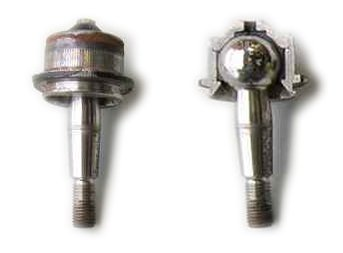
Open one and the stud ends in a sphere, riding in a cup with grease under the boot. The housing bolts to the control arm, or presses into it. The taper of the stud seats in the steering knuckle. That sphere is the pivot between arm and knuckle. It is not the outer tie-rod end. The outer end is also a ball in a socket, and it lives on the steering link. The tie rod shoves the knuckle left and right. This joint lets the arm rise and the knuckle turn without letting the hub walk off the corner.
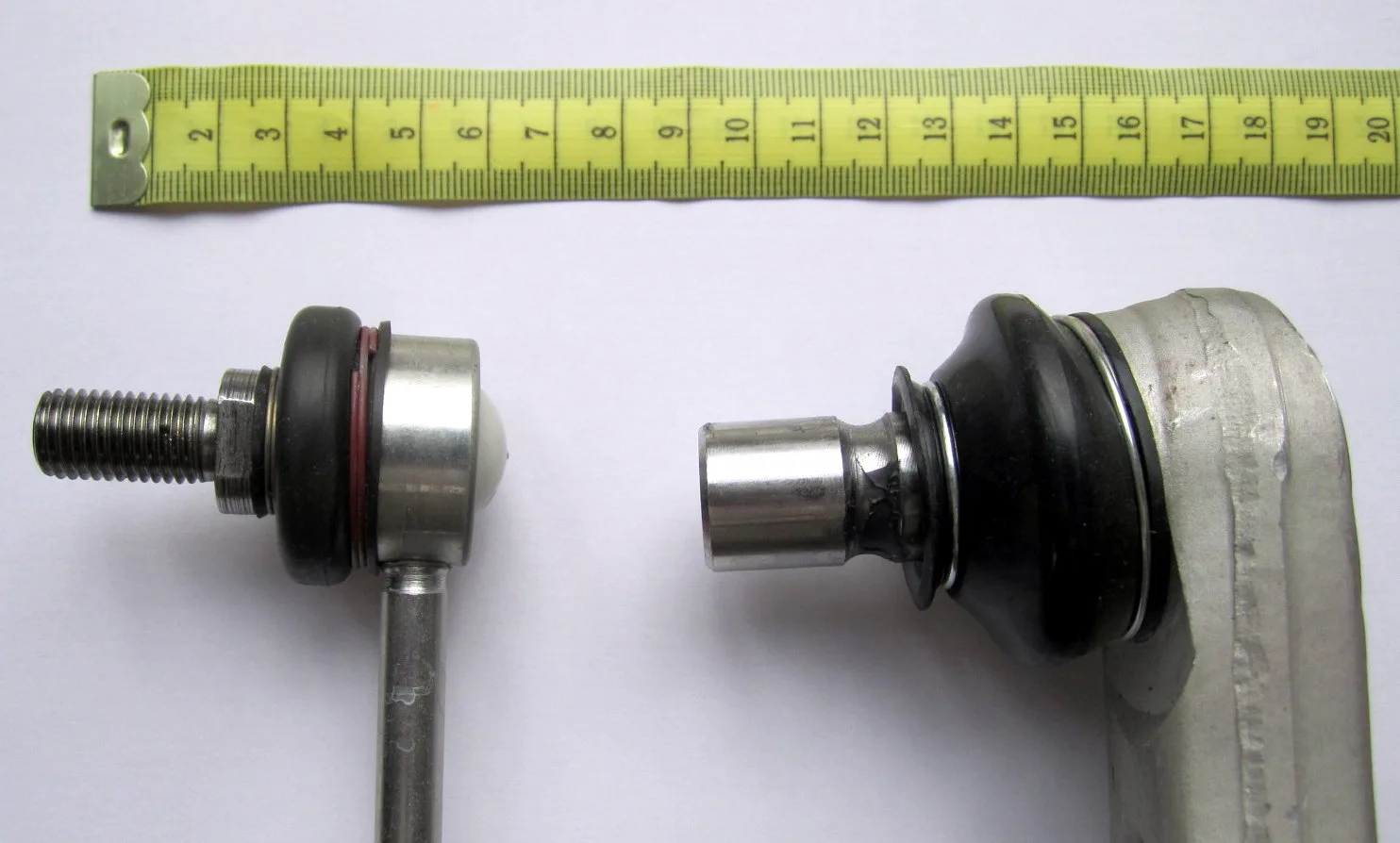
On that corner the lower arms end at the balls in the knuckles. The short upright with small ends of its own is the stabilizer link, the sway-bar drop, not the joint that holds the knuckle. A loaded ball joint carries the car through the stud. On a lot of MacPherson corners the strut takes the weight and the lower ball only keeps the knuckle from leaving the arm. Split the boot and grit replaces the grease.
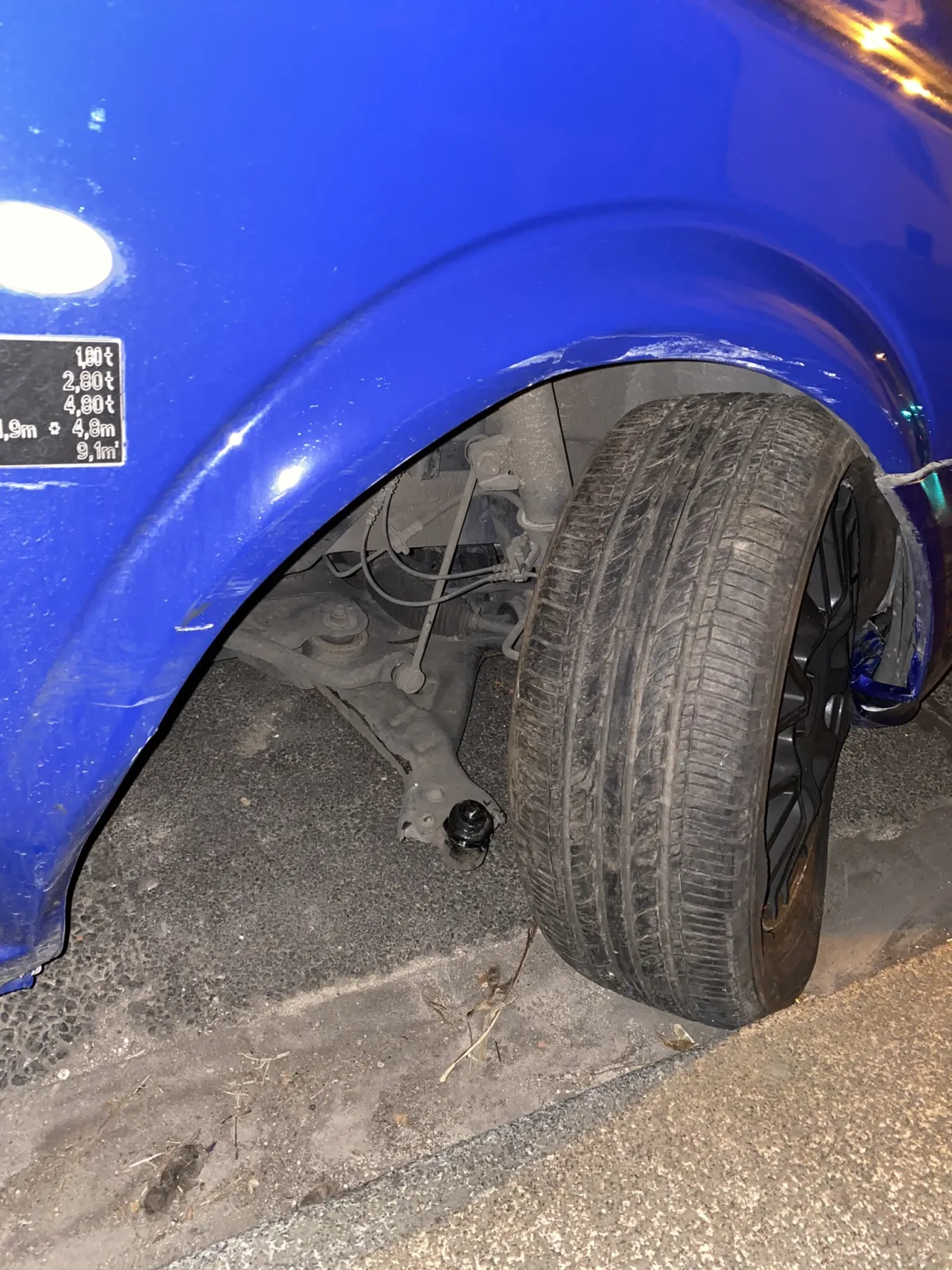
A clunk off a curb, a tire worn on one shoulder, a wheel that sits wrong — any of those can be this joint. They can also be a loose outer tie rod, a rough wheel bearing, or a torn bushing where the arm meets the body. In the photo the stud has left the knuckle and the tire has folded in. That is a failed ball joint. The noise alone does not name the part.