What a brake booster actually does
A brake booster multiplies pedal force with engine vacuum or a pump so the master cylinder sees more push. It is not the master cylinder, not ABS, and not the caliper or rotor.
The pedal is a lever. On a car with power brakes, your leg is not the force that moves the fluid. A round can on the firewall does that. The brake booster multiplies what the pedal puts in, so the master cylinder sees a harder push than your calf can make on its own.
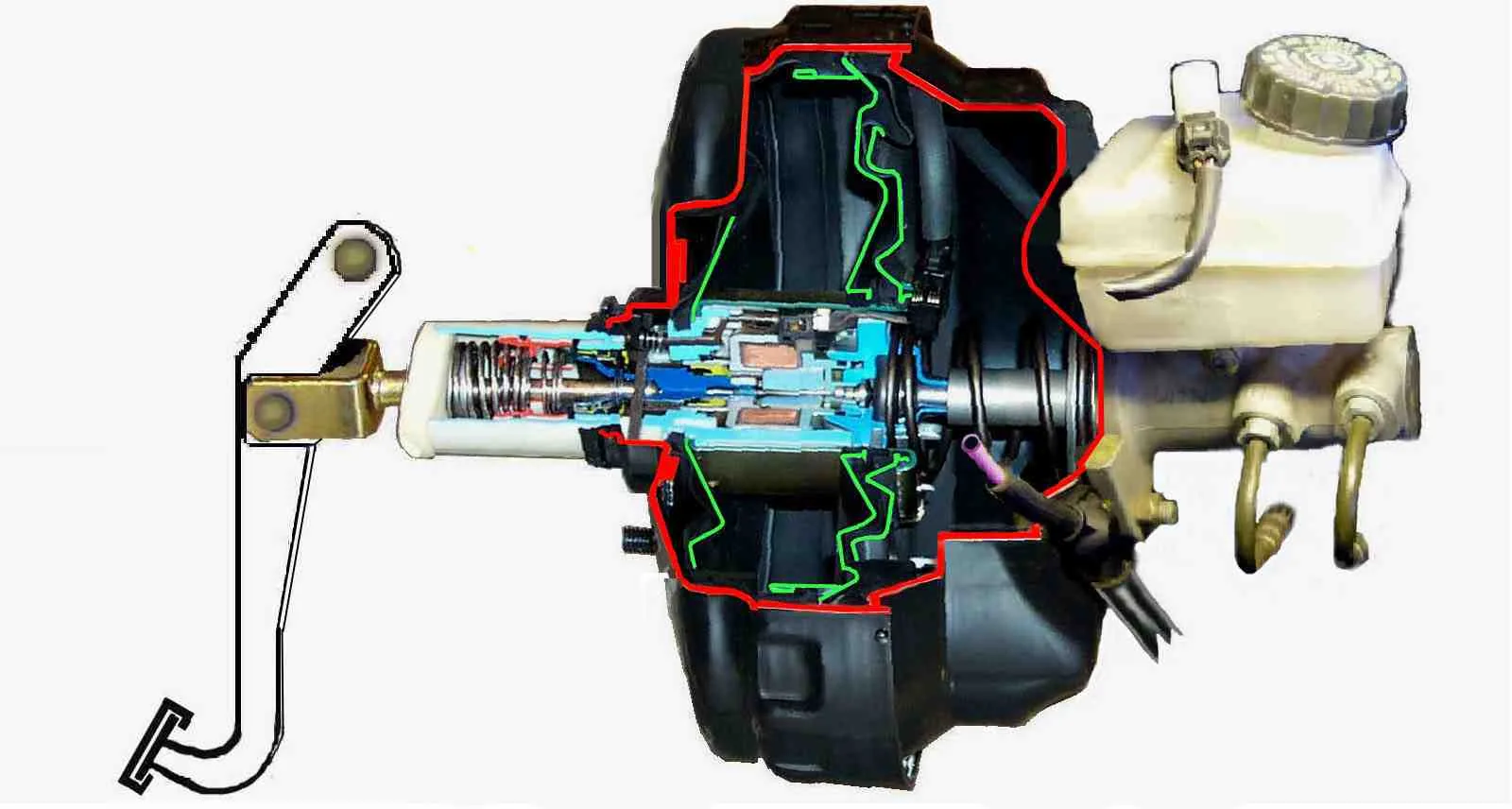
Open the can and the working part is a diaphragm about the size of a dinner plate. Engine vacuum holds one side of it. That vacuum comes from the intake manifold, or from a pump on a diesel and on a lot of newer cars. Press the pedal and a valve lets outside air onto the other face. Atmospheric pressure on the diaphragm is the extra force. A pushrod leaving the housing is what the master cylinder feels. A reaction disc between the pedal rod and that pushrod feeds a slice of the load back to your foot, which is why the pedal still firms up as the pads bite. Your foot meters the valve. The air does the heavy work. A check valve in the hose stores a little of that vacuum, which is why you still get an assisted stop or two after the engine dies.
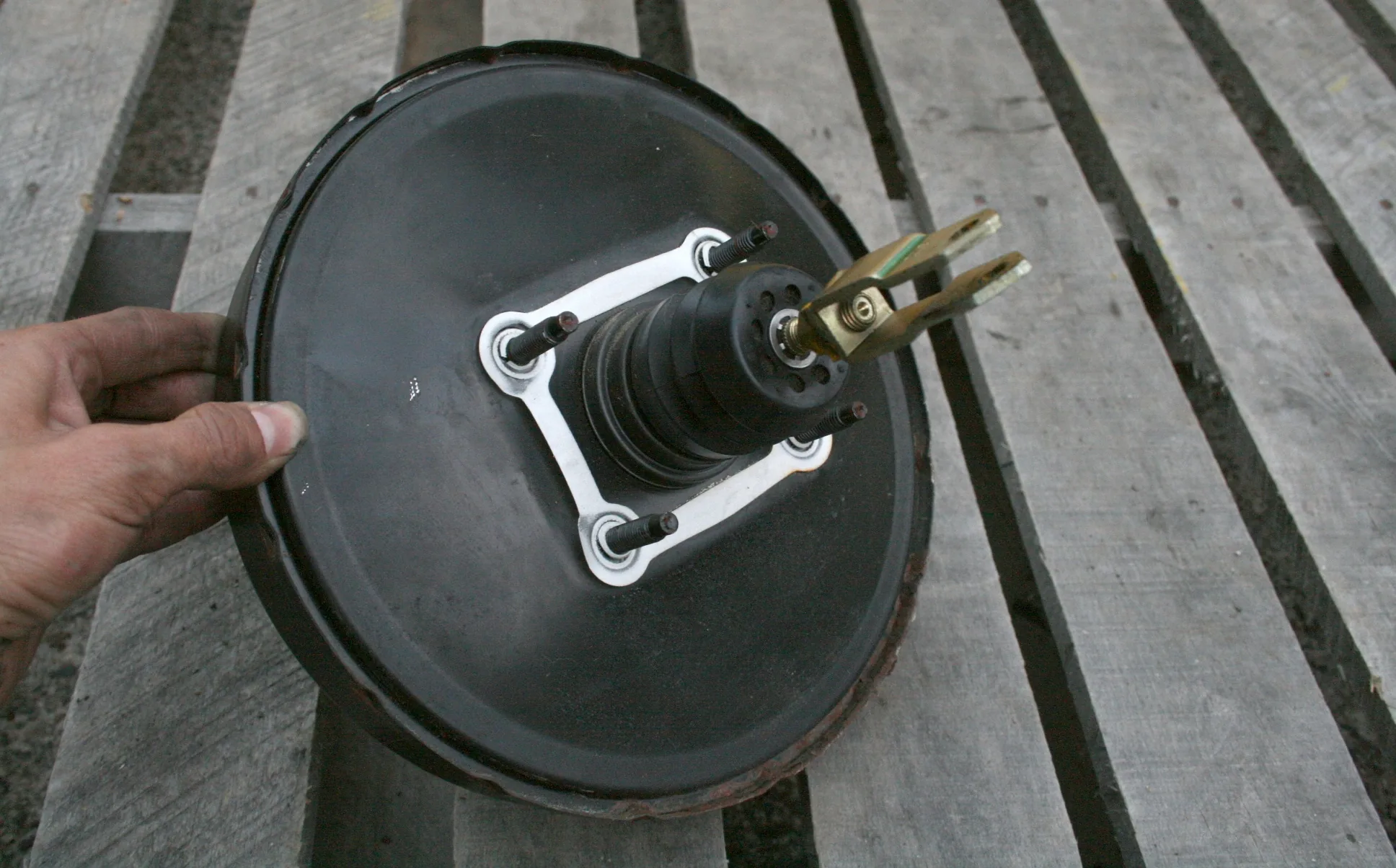
On that Geo Storm the black can is the booster, hose on top, firewall behind it. A pedal that sits high and hard with the engine off, then drops once the engine catches, is that vacuum arriving. Tear the diaphragm, pull the hose, or kill the pump, and you are back on leg power. The brakes can still stop the car. They just take a much heavier foot. A hiss while you hold the pedal down is often that diaphragm leaking to atmosphere.
The master cylinder is the next part in line, not this can. It turns the push into pressure in the brake lines. The caliper is the clamp on the disc. The rotor is the disc the pads grab. ABS is a valve block and a controller that pulses line pressure when a wheel is about to lock. None of those is the booster. A soft pedal, a pedal that sinks, or fluid on the firewall is a leak in the hydraulics. A booster fault is usually a hard pedal, a hiss, or a vacuum line that will not hold.
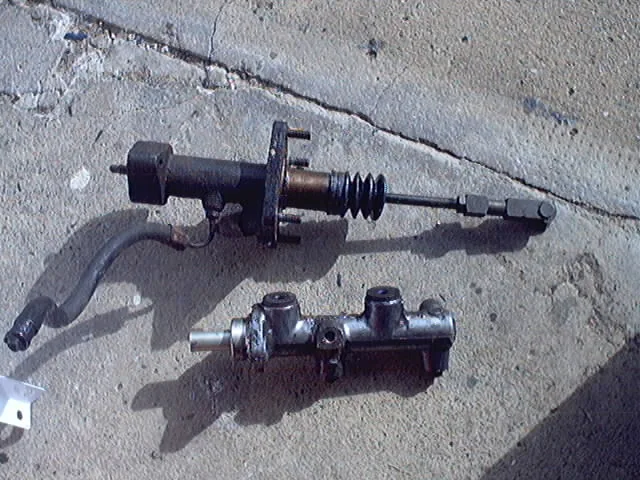
Some cars never use intake vacuum. The Audi 200 turbo in the photo runs a hydraulic booster, fed by a pump the way power steering is, bolted straight to the master cylinder. Same split of jobs. The assist unit multiplies pedal force. The master turns that force into line pressure. They share hardware. They are not the same part.
An electric car, and plenty of new gasoline cars, use an electric vacuum pump, or a booster that is electric on its own. The job does not change. Something other than your leg has to lean on the master cylinder. The can on the firewall is that something.