Published by HALOX Co.
What a brake caliper actually does
How floating and fixed brake calipers apply both pads, and how the pistons, guides and seals make and release the clamp.
A disc brake needs force on both faces of the rotating disc. The caliper is the structure that applies that force through the pads. Brake pressure acts on its pistons; the friction material on the pads is what touches the rotor.
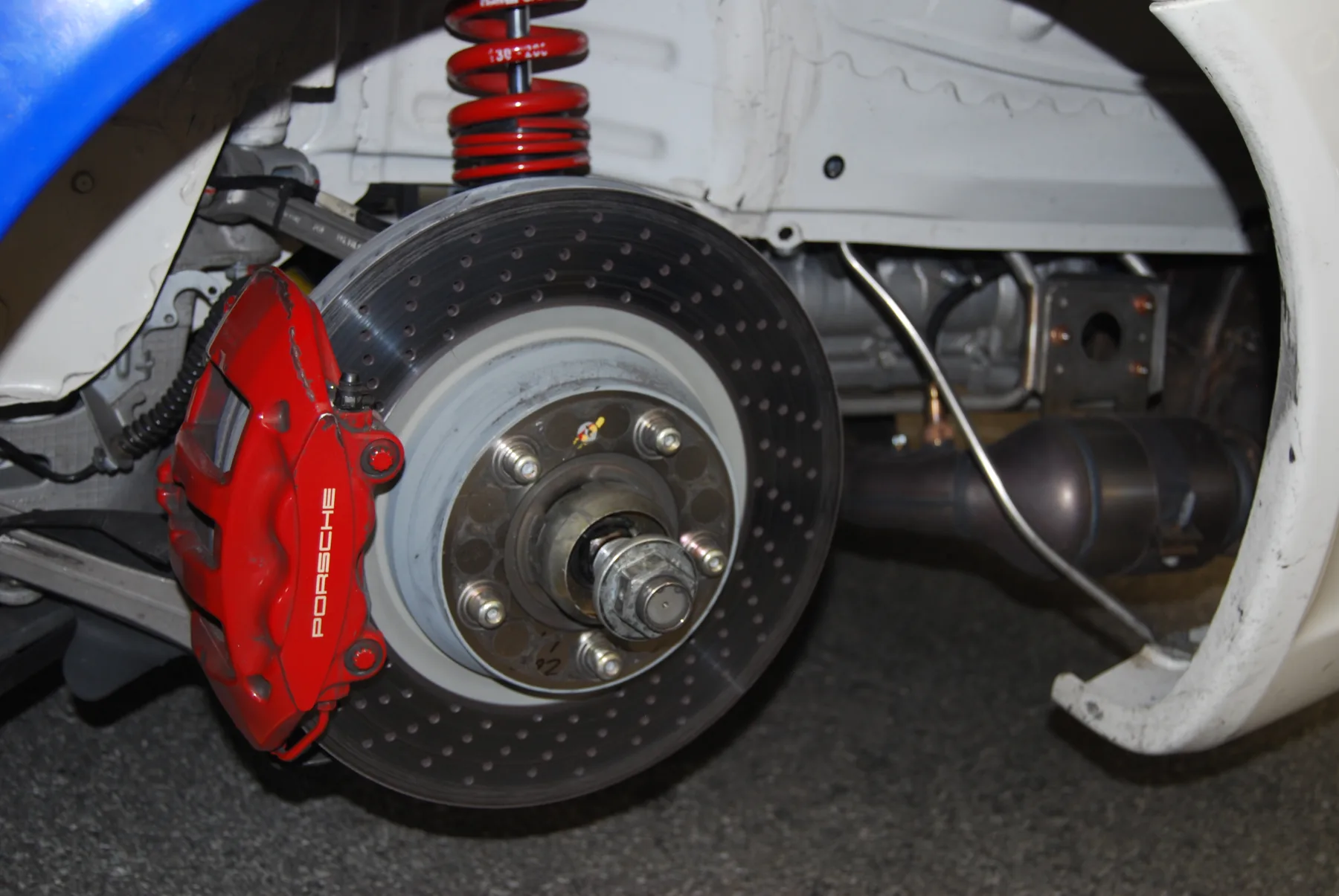

Two ways to make the same clamp
A floating caliper normally has one or more pistons on one side. Those pistons press the inner pad against the disc. The reaction moves the caliper body along its guides, bringing the outer pad against the other face. The housing must be able to slide for that arrangement to work.
A fixed caliper bolts rigidly in place and has pistons facing each other across the disc. It applies both pads without sliding the whole housing. Brembo’s technical explanation describes both layouts. Counting visible pistons is less useful than understanding which parts move.
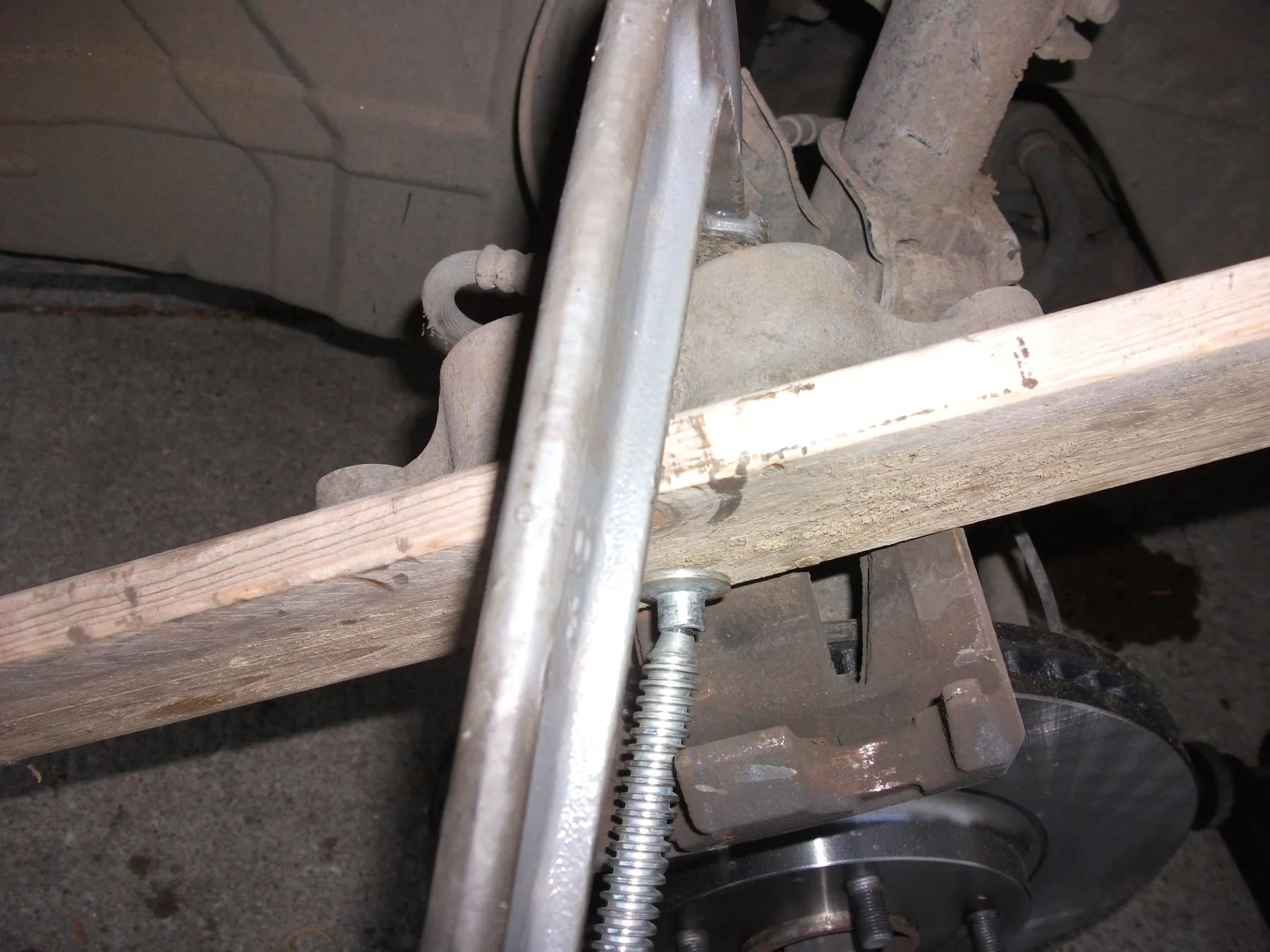

The service picture shows a piston being moved inward. It is not a universal procedure for all calipers: this article identifies the part, rather than specifying how a particular vehicle’s piston or parking-brake mechanism must be serviced.
Releasing the clamp
Piston seals contain the fluid and provide a small rollback movement when braking pressure falls. Dust covers protect the exposed working area. Brembo identifies the seals, guides and covers as separate components with different tasks; a caliper is more than a metal shell around a piston.
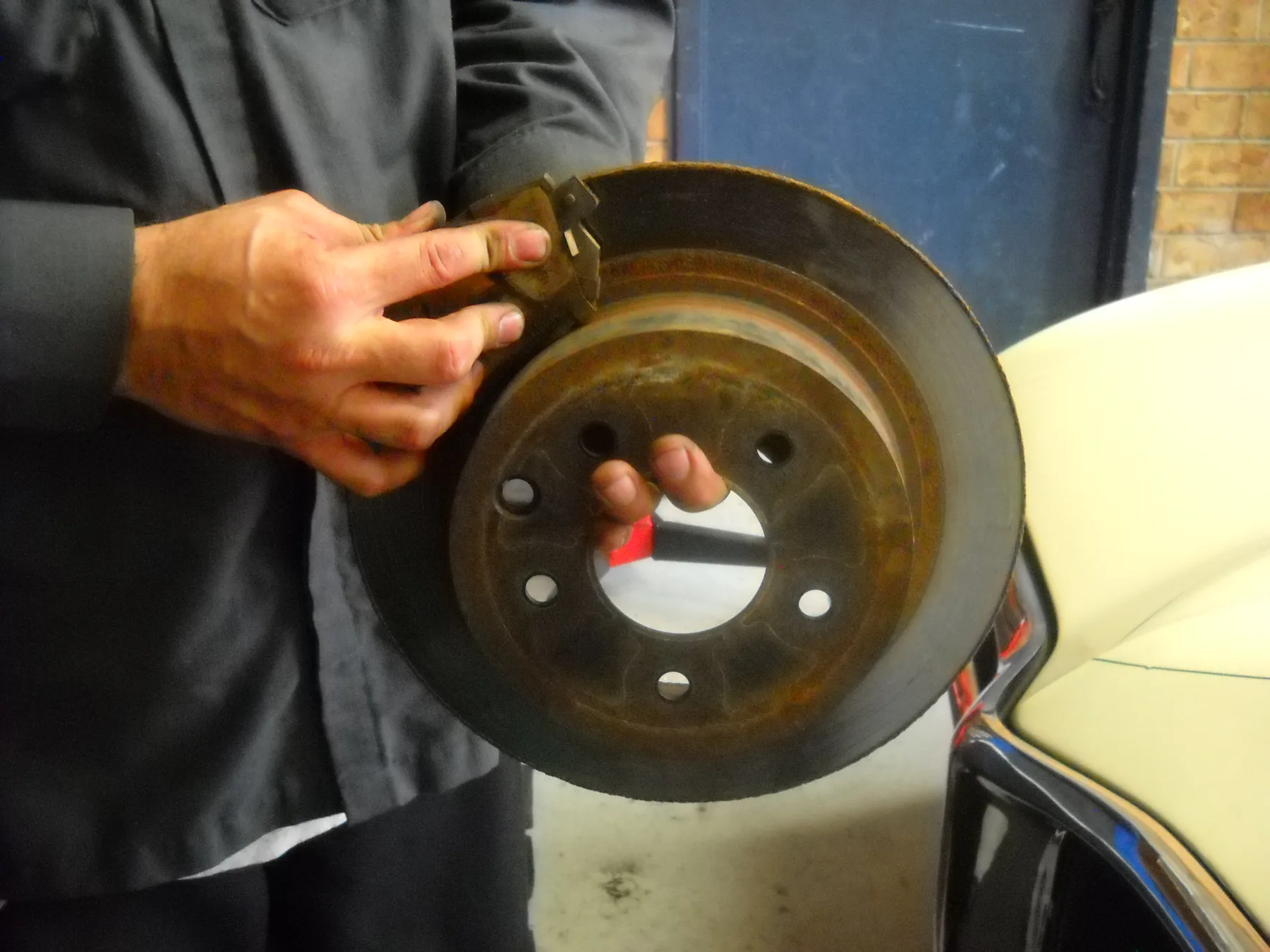

The pad has a backing plate and friction material. The rotor turns; the caliper holds and loads the pads. Their contact produces torque at the wheel and heat in the brake, as Ferodo explains. Uneven wear or drag needs a system inspection; it does not establish that the caliper alone is faulty.
Sources
- Brembo: brake-caliper technology and operation — Floating and fixed calipers, guides, seals and rollback
- Ferodo: engineering essentials — Friction material, disc torque and conversion to heat
References checked .