What a brake master cylinder actually does
A brake master cylinder turns pedal or booster push into line pressure for the calipers and wheel cylinders. It is not the booster, not the ABS modulator, and not a caliper.
The pedal is a lever. On a car with power brakes, a booster multiplies what that lever puts in. Neither the pedal nor the booster makes hydraulic pressure. The part that does is a piston in a bore full of brake fluid. Brake fluid does not compress, so the piston raises pressure and that pressure leaves through the ports. A caliper or a wheel cylinder uses it to shove a pad or a shoe. The bore, the pistons, and the ports are the brake master cylinder.
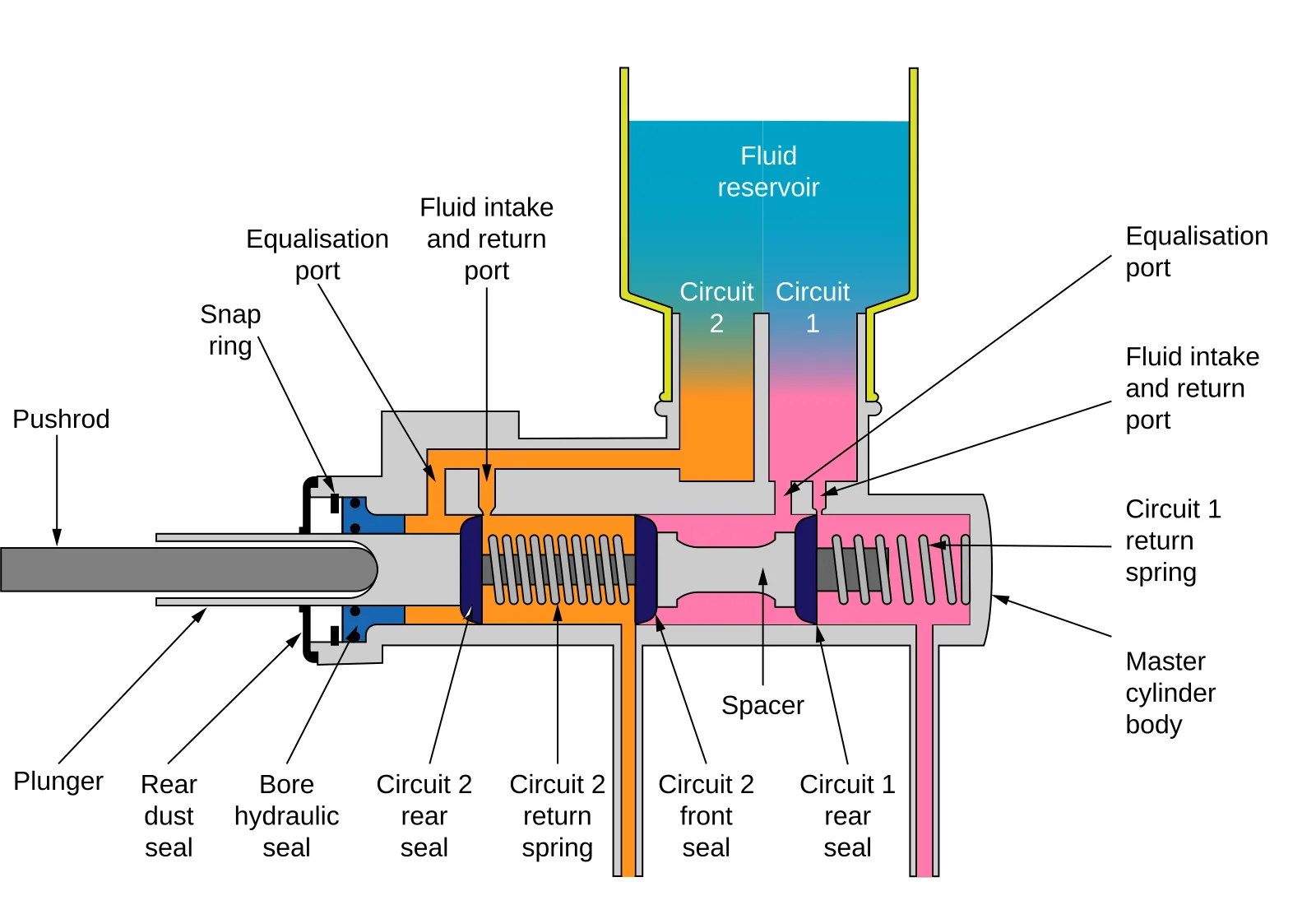
The drawing is a tandem master, the layout on a modern car: two plungers in one body. The pushrod, from the booster or straight from the pedal, moves the first plunger. That plunger raises pressure in one circuit and, through the spring in front of it, moves the second plunger, which raises pressure in the other. Two lines leave the housing. Split a hose or a caliper seal and one circuit goes soft. The other circuit still has pressure, so the car can still stop, from farther away, on a longer pedal. A front-drive car usually pairs the circuits on a diagonal, left-front with right-rear, so one failure does not leave you braking with a single axle. Some rear-drive cars and trucks split the front axle from the rear. Pedal up, the small ports in the bore are open to the tank, so fluid that grows with heat can return and the pads can ease off the disc. Pedal down, the seals cover those ports. The fluid is trapped, and the rest of the travel is line pressure.
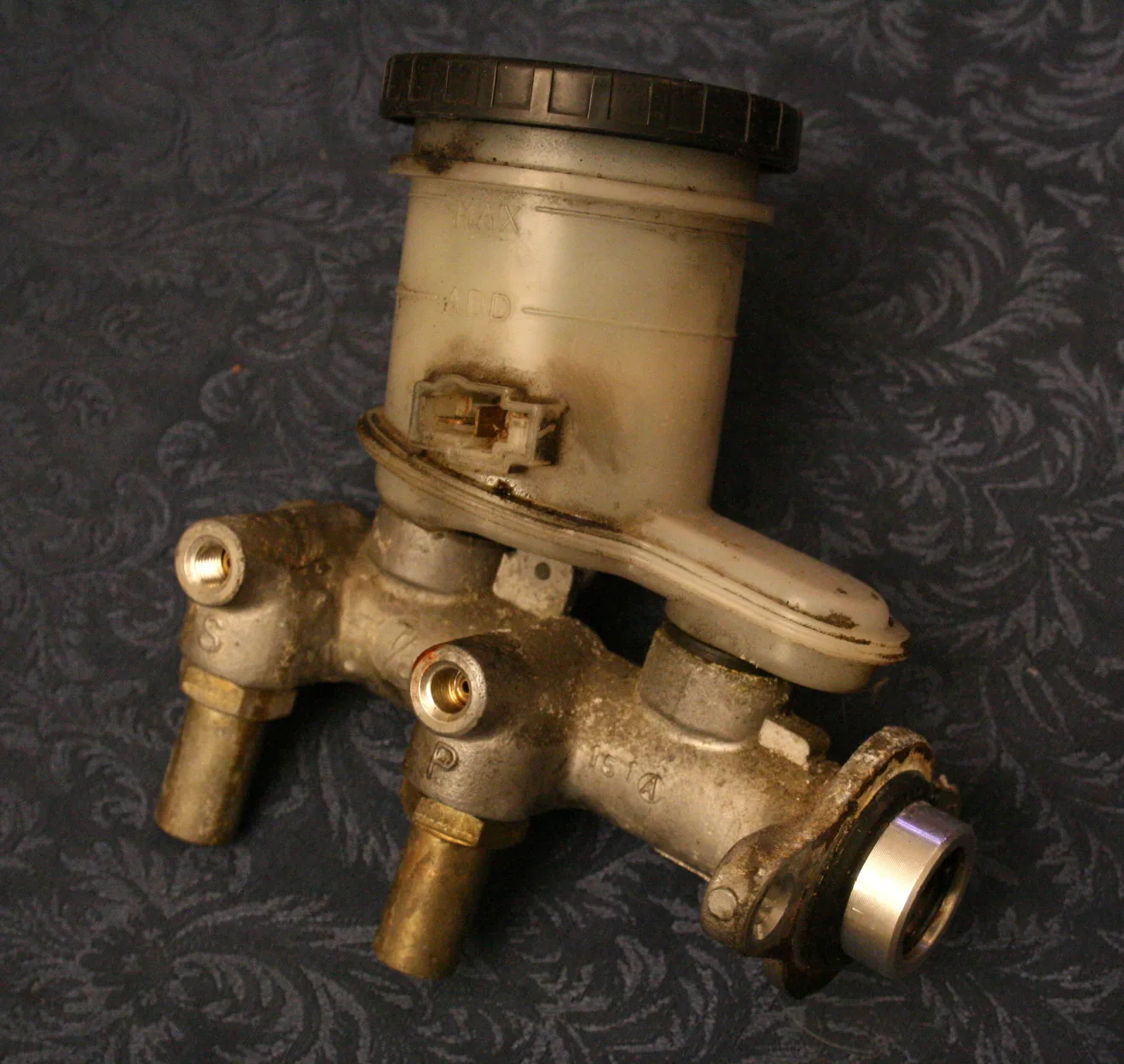
On that Geo Storm the master is the metal body with the brake lines, in the bay with the black vacuum can. The can is the booster. It multiplies pedal force. It does not make the pressure. Fluid at the firewall, a pedal that sinks while you hold it, or a reservoir that will not stay full is this cylinder or a leak past it. A pedal that sits high and hard with the engine off, then drops once the engine catches, is the booster taking on vacuum. Different part, different fault.
The plastic tank on top is the reservoir. A vented cap lets it breathe. It is not a pressure chamber. It holds spare fluid so the bore stays full as the pads wear and the caliper pistons walk outward. A baffle, or two wells, keeps a leak in one circuit from draining the supply for the other. A float in the tank can light the brake warning lamp when the level falls.
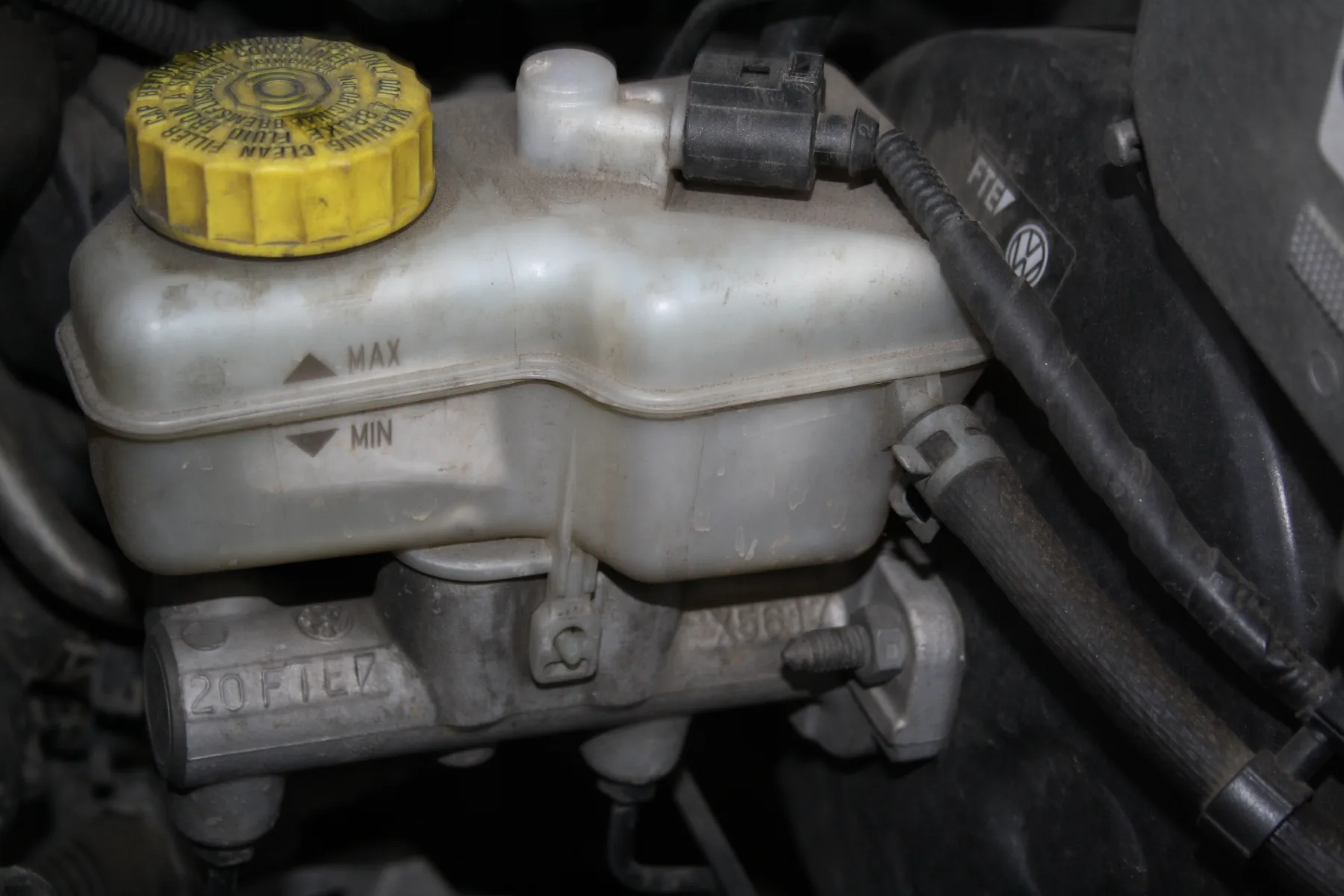
On the Fabia that translucent tank is the reservoir, level marks on the side, sitting on the master. The lines under it carry the two circuits out to the corners. A level that has dropped can be worn pads. It can also be a leak. The tank does not make the pressure. The bore under it does.
Past those lines, the caliper is the clamp on the disc. A wheel cylinder, on a corner that still has drums, pushes the shoes. ABS, on a car that has it, is a valve block farther down the lines. It can hold or release pressure at a wheel that is about to lock. It does not turn the pedal push into the pressure it is metering. None of those is the cylinder on the firewall.