Published by HALOX Co.
What a catalytic converter actually does
How the substrate and catalytic washcoat differ, what a three-way catalyst converts, and why cold operation and air-fuel control affect its performance.
The honeycomb visible through a converter inlet provides a large coated surface for exhaust gas to contact. That surface supports chemical reactions. The converter’s purpose is to reduce harmful exhaust constituents, rather than silence the exhaust like a muffler.
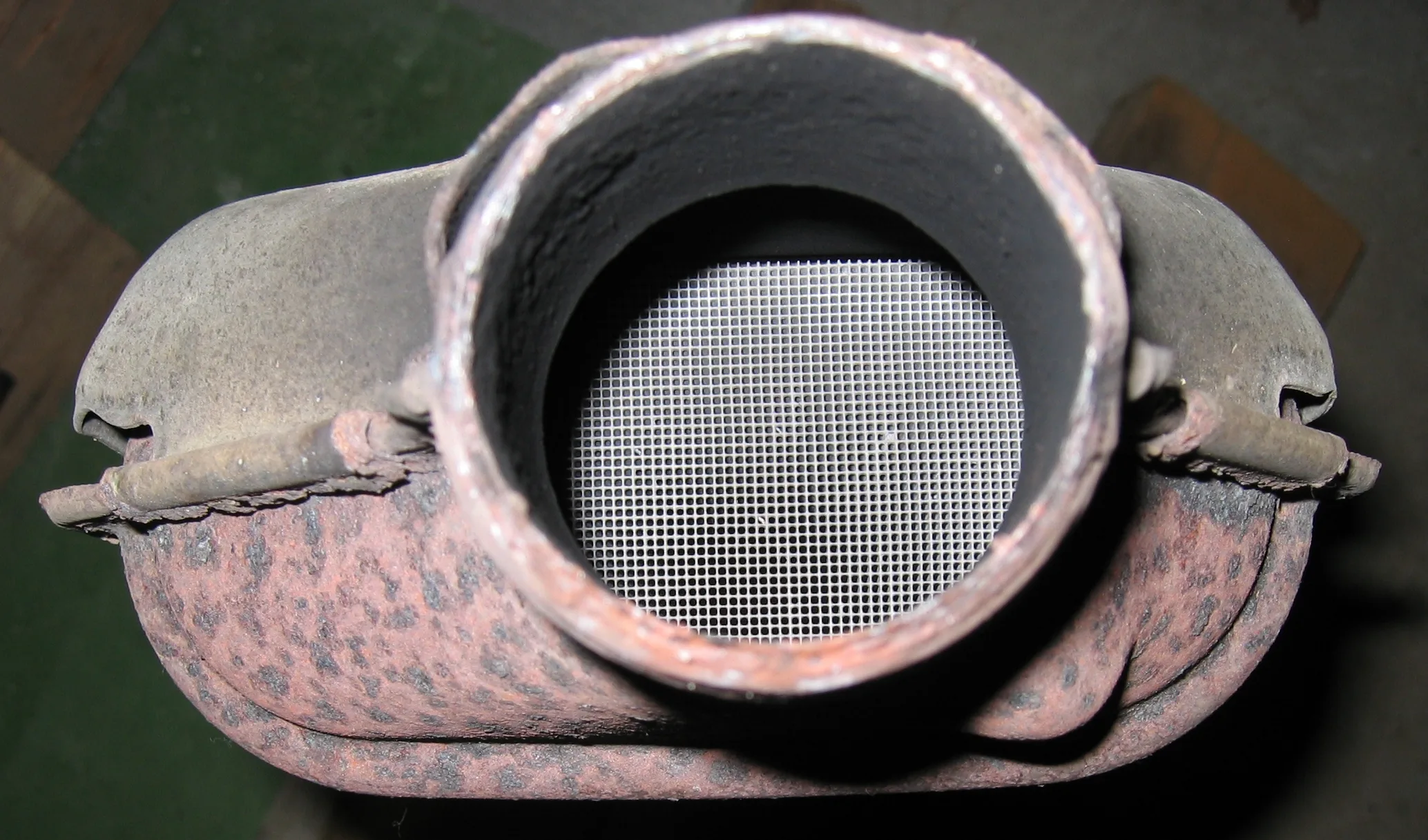

The substrate is the support. Its washcoat carries the active catalyst material. Platinum, palladium and rhodium are commonly used; the ceramic itself is not the whole catalyst. A metal shell and cushioning material hold the substrate in place while allowing for heat expansion. Walker’s anatomy guide identifies these parts.
Three-way refers to the chemistry
A three-way gasoline catalyst addresses hydrocarbons, carbon monoxide and nitrogen oxides. Oxidation converts hydrocarbons and CO toward water and carbon dioxide; reduction converts NOx toward nitrogen. Oxygen storage helps the system manage these reactions as the exhaust composition changes.
It needs sufficient temperature and closely controlled air-fuel balance to work efficiently. Cold-start performance is therefore different from warmed-up performance. It is inaccurate to describe a cold washcoat as becoming ordinary ceramic: the coating is still present, but catalytic activity is temperature-dependent. Walker’s chemistry explanation describes heat and mixture control together.
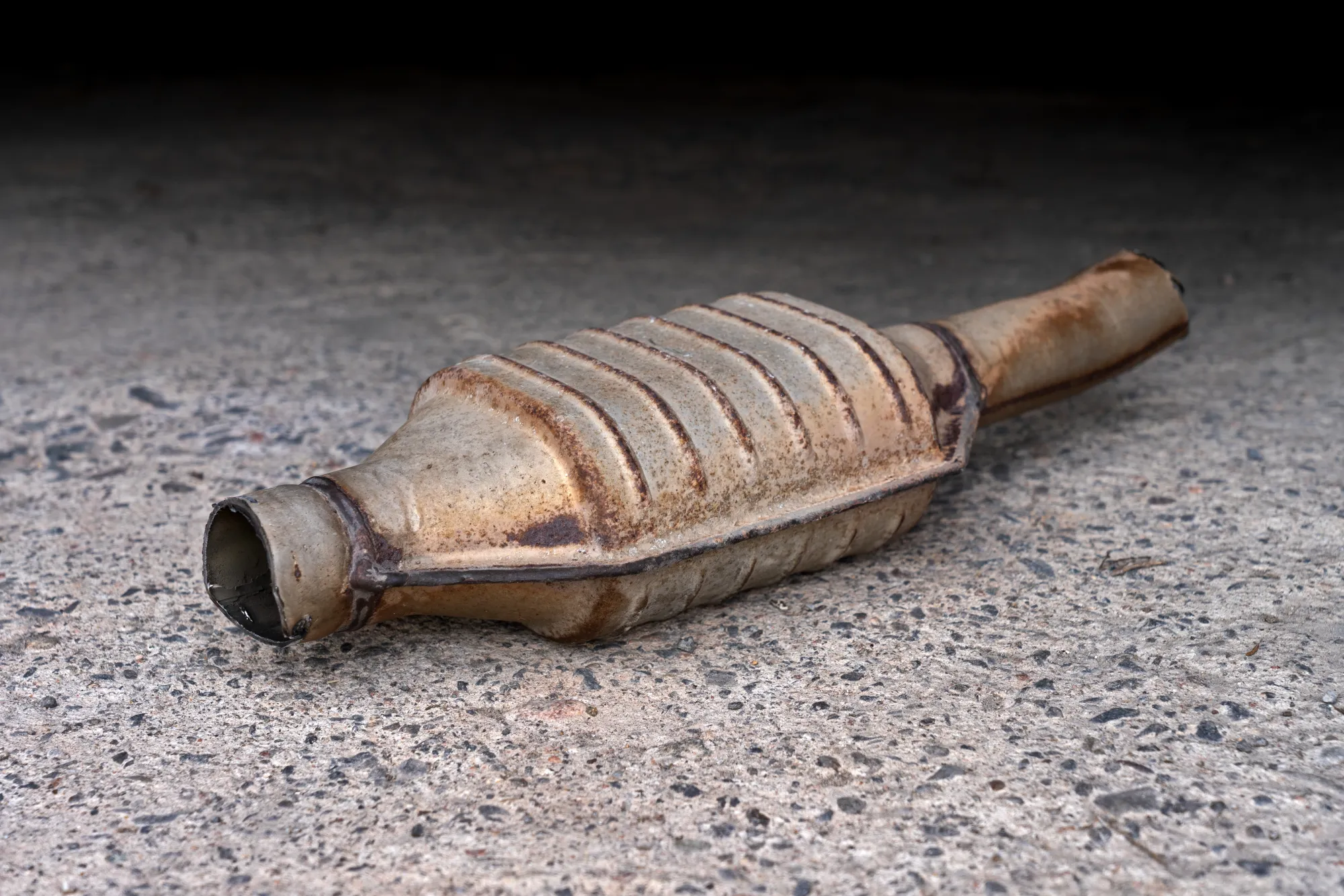

One housing does not imply two bricks. Walker describes single- and multiple-substrate designs, and both ceramic and metal substrates. The number and position of converters depend on the exhaust and emissions system.
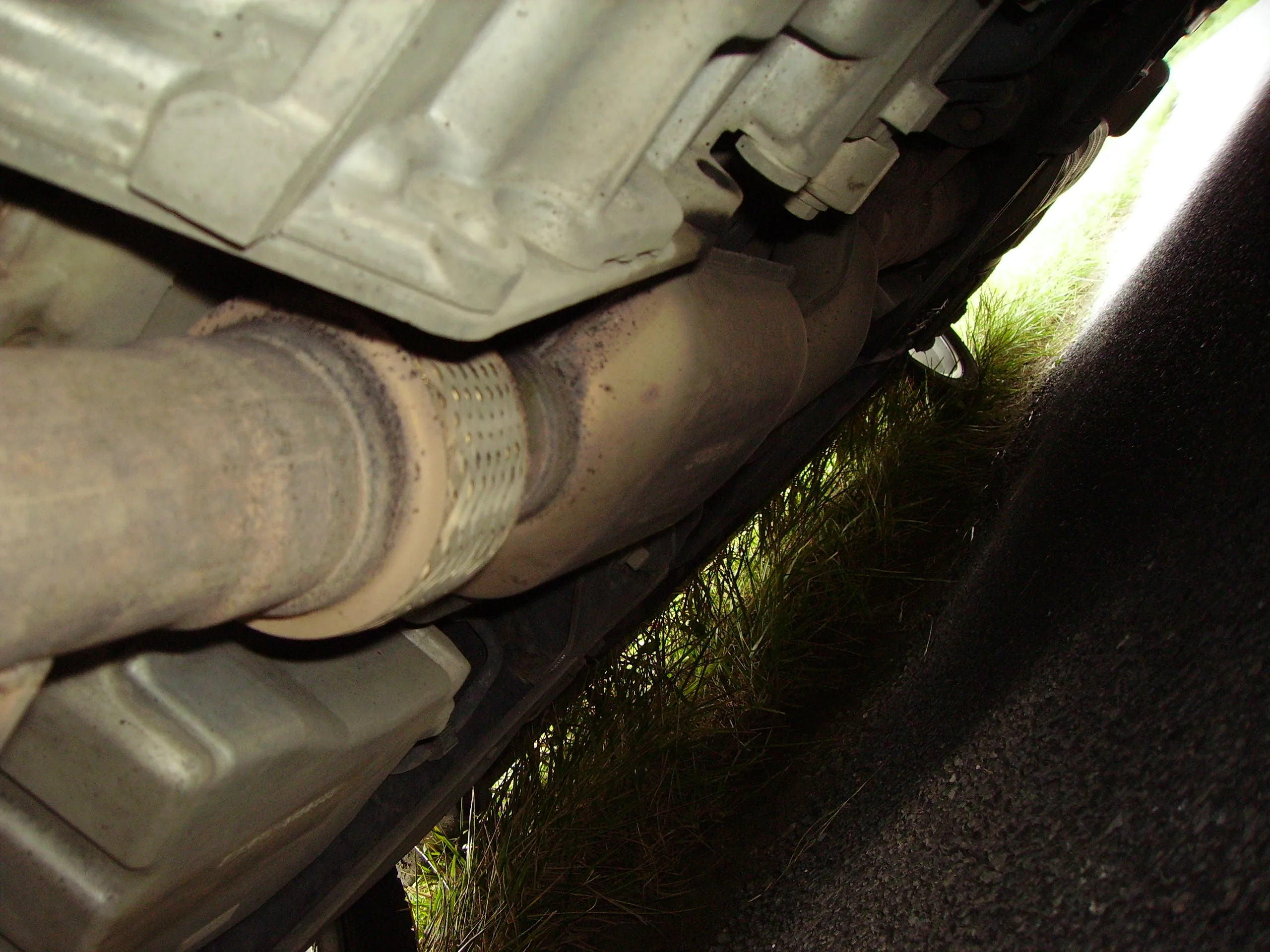

The shell can show location and external damage, but not conversion efficiency. Engine-control faults, unsuitable mixture, exhaust leaks or contamination can affect converter operation. A smell, rattle or warning code needs investigation in that context; it does not independently establish the state of the coated surface.
Sources
- Walker: how a catalytic converter works — Substrate, washcoat, precious metals and one/multiple-brick construction
- Walker: catalytic converter operation and chemistry — Heat, air-fuel control and three-way reactions
References checked .