What a clean air vehicle sticker actually is
A Clean Air Vehicle sticker was California's HOV decal for qualifying clean cars. As of October 1, 2025 it does not allow a solo driver in the carpool lane. It is not the registration tab.
Is the colored decal on the bumper the registration tab? No. People also treat it like a safety inspection sticker, a smog certificate, or the underhood VECI label. Those are different papers.
A Clean Air Vehicle decal was California’s carpool sticker. The Department of Motor Vehicles issued it. The Air Resources Board decided which cars qualified, from early hybrids and natural-gas cars to battery-electric, fuel-cell, and eligible plug-in hybrids. On a qualifying car it let one person use a high-occupancy vehicle lane, the carpool lane, without the passenger count on the sign, and on some toll roads it came with a lower rate. Caltrans authorized the lanes. The Highway Patrol enforced them. It is not the month-and-year tab on the plate. It is not a safety inspection sticker. It is not a smog certificate, the station pass a clerk takes for registration. It is not the VECI label in the engine bay. That factory sticker says how the car was certified. This one sat on the bumper.
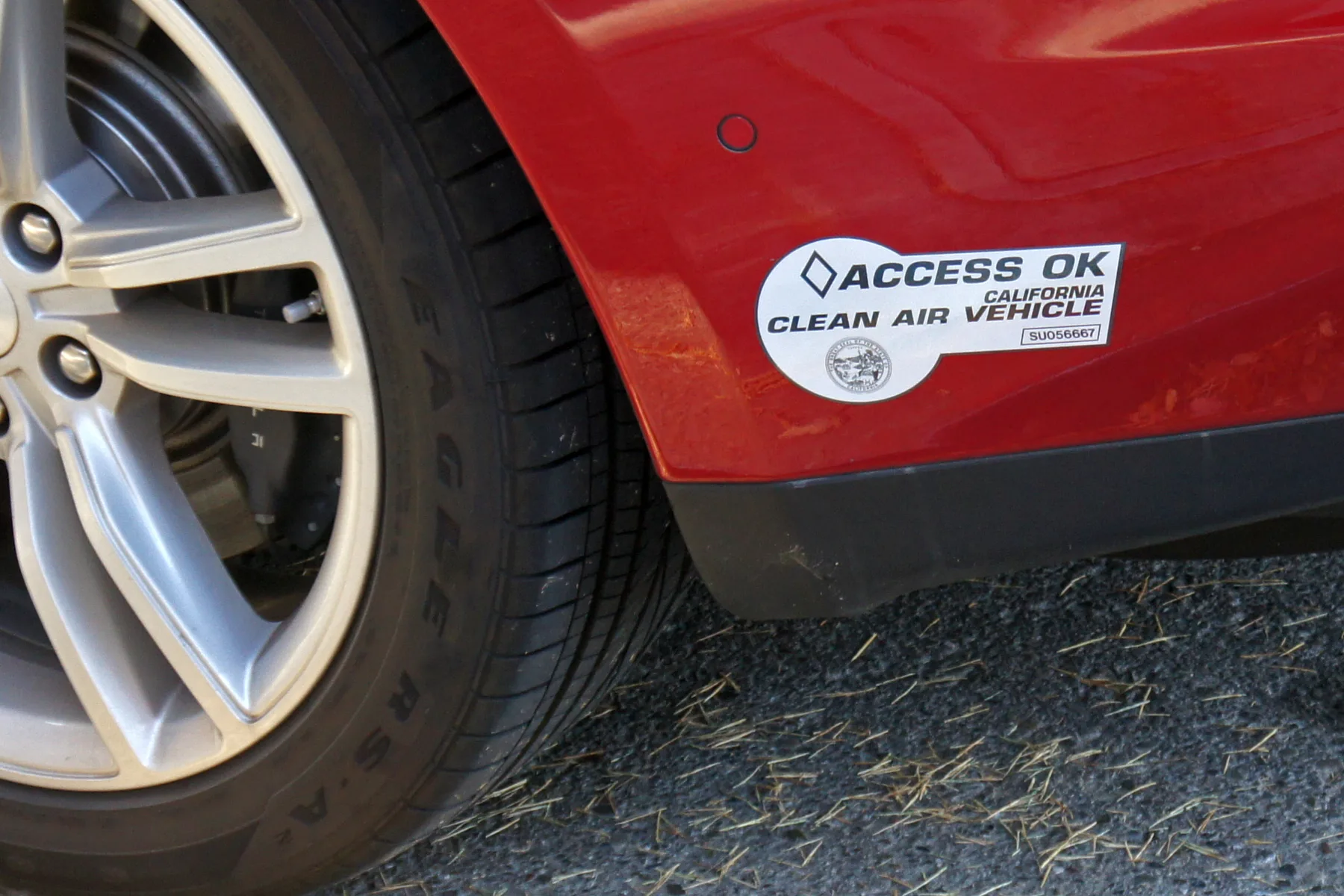
The decal on that Model S is a white Clean Air Vehicle sticker, photographed in Berkeley in April 2015, one color in a long run of them. The colors tracked the year of issue, and each run had its own end date. Later issues included sunflower yellow, lime green, cardinal red, and teal, with printed dates that ran as far as September 30, 2025. The color on the bumper is not what decides the lane now.
The federal statute that let states hand out these decals, Section 166 of Title 23, was not extended. California had rewritten its own law in hope of keeping solo access through January 2027. DMV and the Air Resources Board both say that federal approval did not come, so the program ended at midnight on September 30, 2025. Starting October 1, 2025, every Clean Air Vehicle decal is invalid for a solo trip in an HOV lane, including one that still had months left on it. The reduced toll went away the same day. There is no grace period. DMV stopped taking new and replacement applications on August 29, 2025, at 5 p.m. You do not have to peel the sticker. It does not make a one-person car legal in the diamond lane. A driver has to meet the occupancy on the sign and pay the toll the authority posts, or risk a citation.
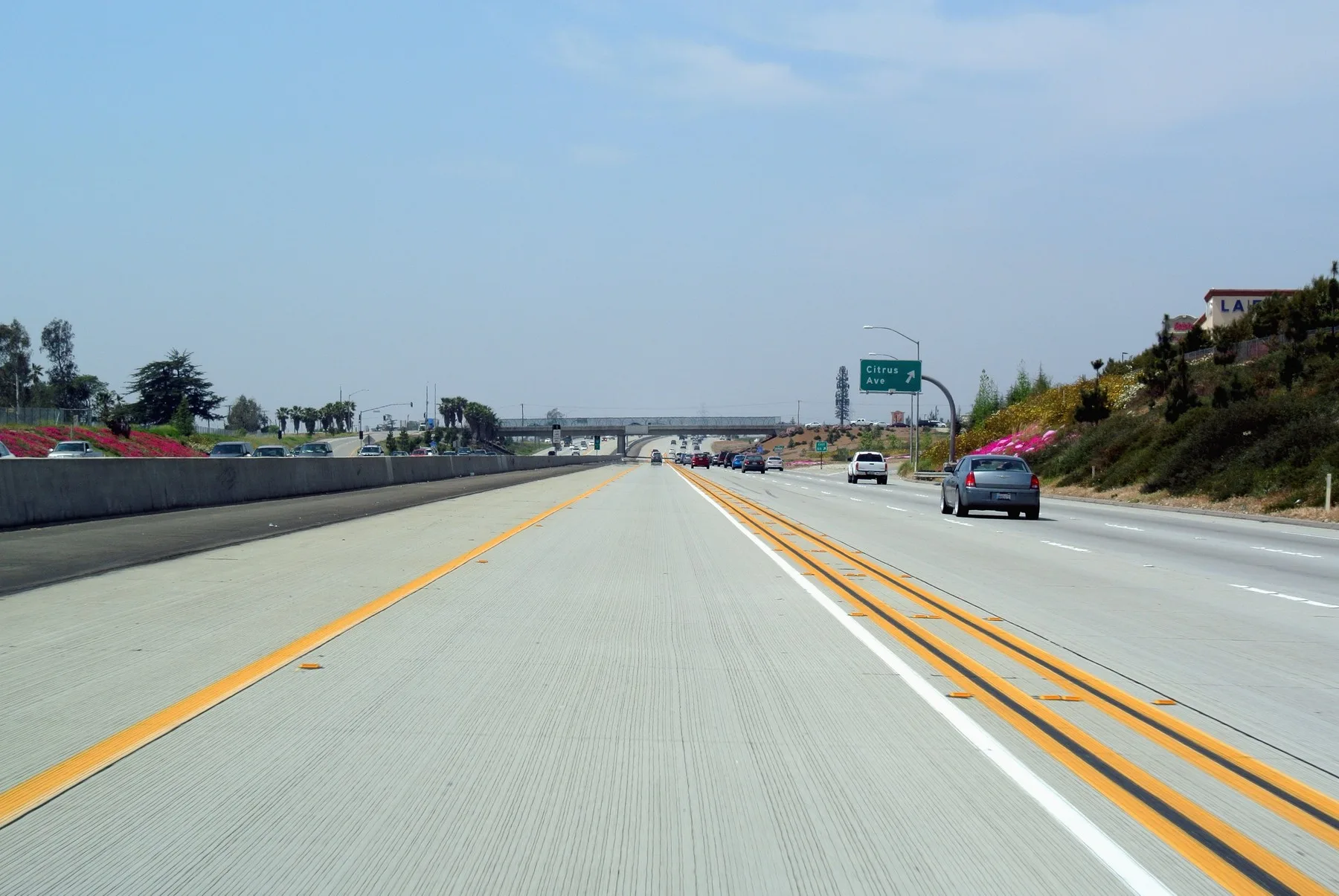
The lane did not go away with the sticker. On the Foothill Freeway in Fontana the left lane is the carpool lane, white lines beside it and a diamond on the pavement. Caltrans says motorcycles, mass transit, and cars with two or more people may use HOV lanes in the hours posted. Some routes want three, including parts of I-80 and I-880 in the Bay Area, the El Monte busway on I-10 at peak hour, and I-5 at San Ysidro. Northern California often limits the restriction to weekday peak hours. Southern California often runs it all day, behind a buffer. The sign posted on the freeway is the rule. A bumper decal is not.
Another state’s carpool lane can want a different count, different hours, or a toll this sign does not mention. DMV says the California decals are no longer valid here or elsewhere in the United States. The diamond in another state is that state’s sign.
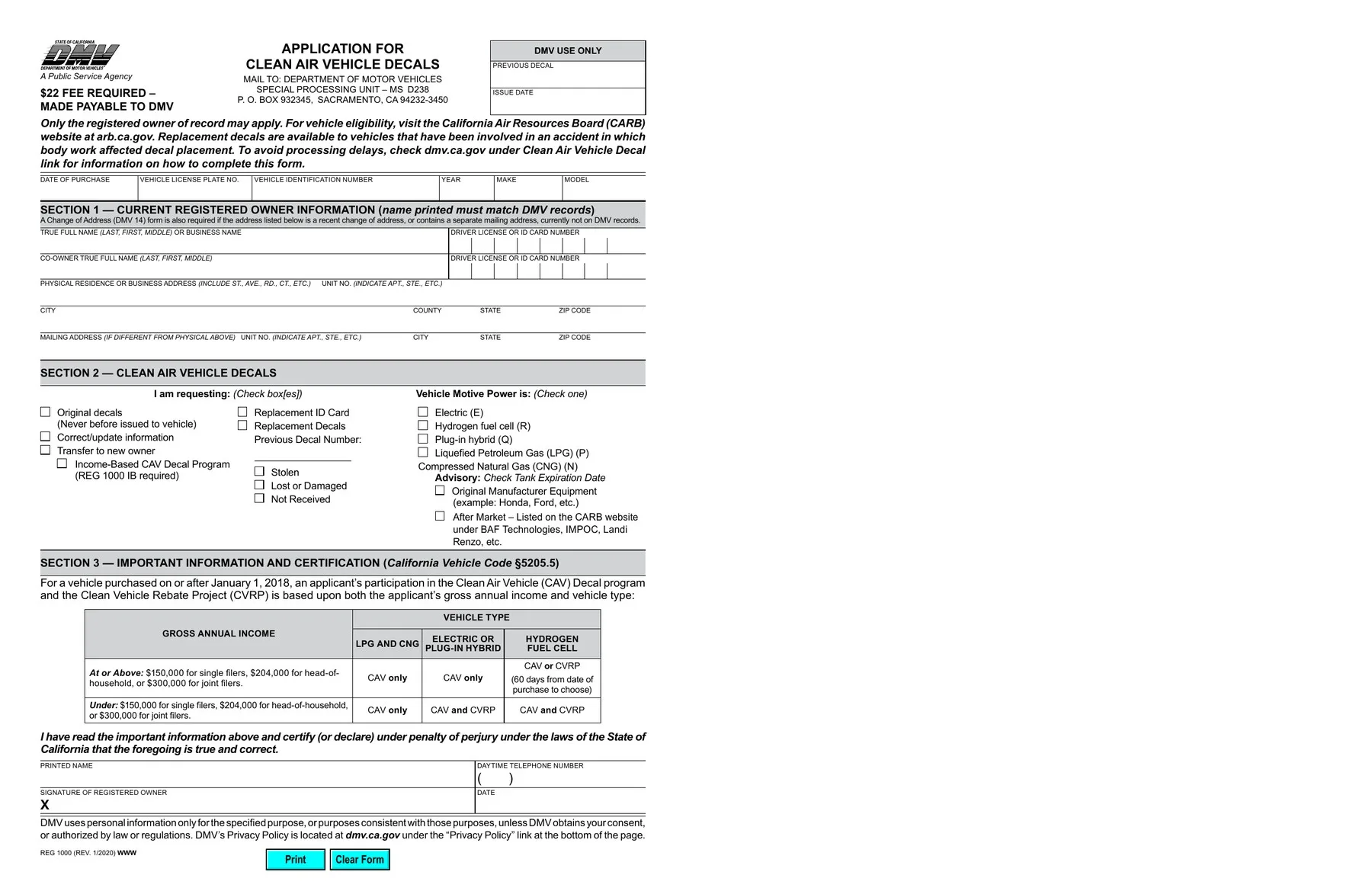
The paper was REG 1000, Application for Clean Air Vehicle Decals. The sheet in the photo is the January 2020 revision. Only the registered owner of record could apply, and the car had to be on the Air Resources Board list. That window is shut. DMV says an application it had not received complete, with payment, before August 29, 2025, was sent back. One it had already finished was mailed, and that decal died with the rest on October 1.