Published by HALOX Co.
What a control arm actually does
How a control arm guides the wheel through its body-side bushings and outer ball joint, and how wishbone and strut layouts split that locating job. Covers what usually damages arms, MOOG's list of symptoms and why they overlap with other faults, and why rubber bushings have to be tightened with the car at ride height.
A control arm guides the wheel end of the suspension relative to the body or subframe as the suspension moves. Its pivots let it swing up and down; its shape and mounting points control the path the wheel follows.
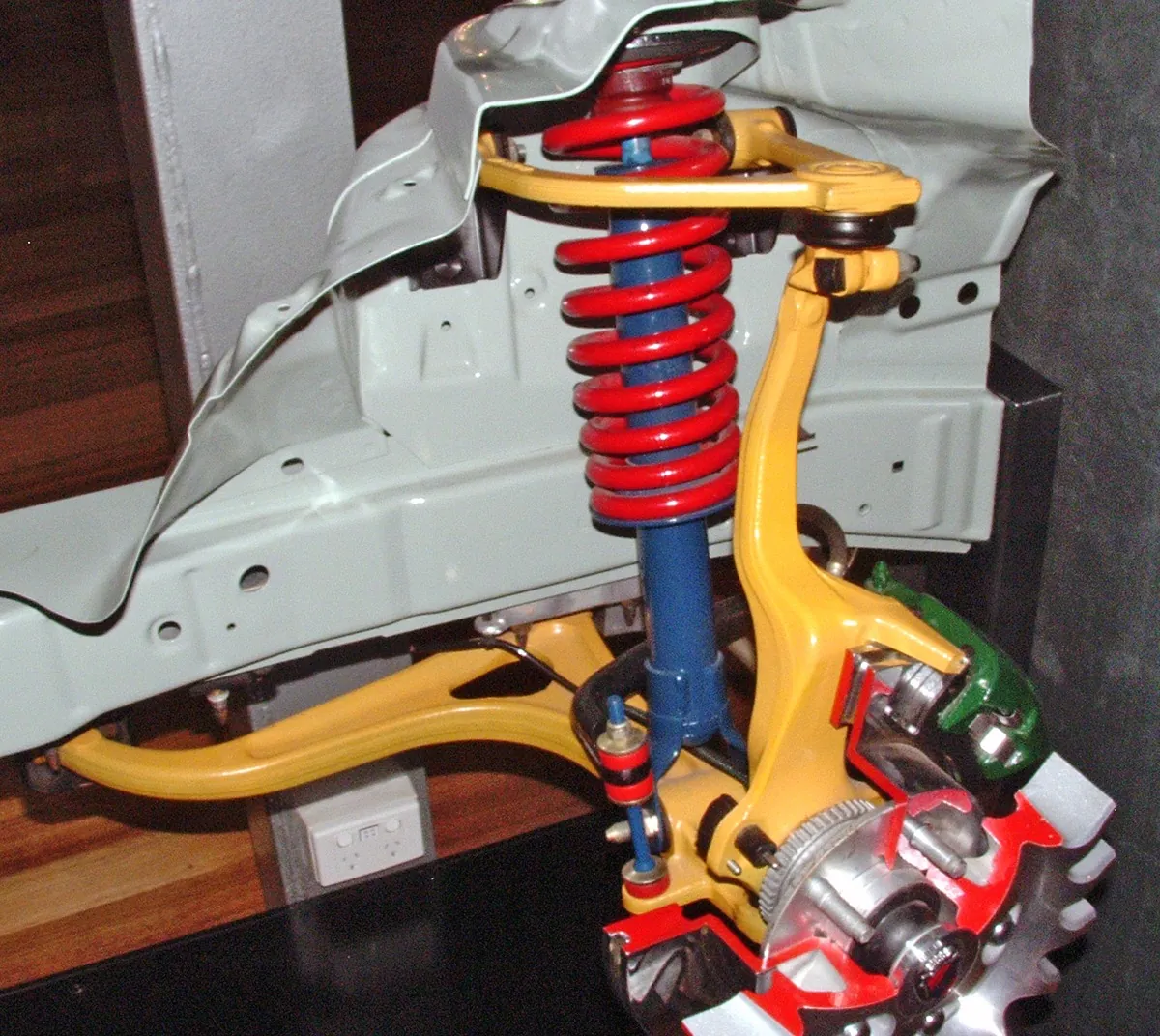

MOOG describes a control arm as three parts:
- the body;
- a bushing, which connects it to the frame; and
- a ball joint, which connects it to the wheel.
The arm lets the wheel move up and down to stay on the road. MOOG’s control-arm explanation. The wishbones in the cutaway are one shape of arm, each with two separate body-side pivots and an outer joint toward the knuckle. The ball joint lets the outer end swivel, but it isn’t the whole arm. A rubber bushing at the inner end allows controlled movement and filters some vibration. That’s why an intact metal arm can still have a worn connection.
The layout decides how many arms are needed
MOOG notes that many cars use an upper and a lower arm at each front wheel. Having two connection points keeps the wheel stable and evenly controlled, and independent rear suspension works similarly. MOOG.
In a conventional MacPherson layout, the structural strut takes over the upper arm and upper ball joint. The bottom of the strut bolts to the knuckle, which connects to a lower control arm through a lower ball joint. Monroe describes the strut’s structural role.
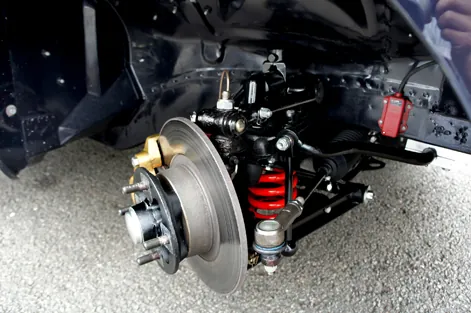

The two corners pictured use different hardware around the arms. The useful identification question stays the same: which part spans the body-side pivots and the wheel-side joint?
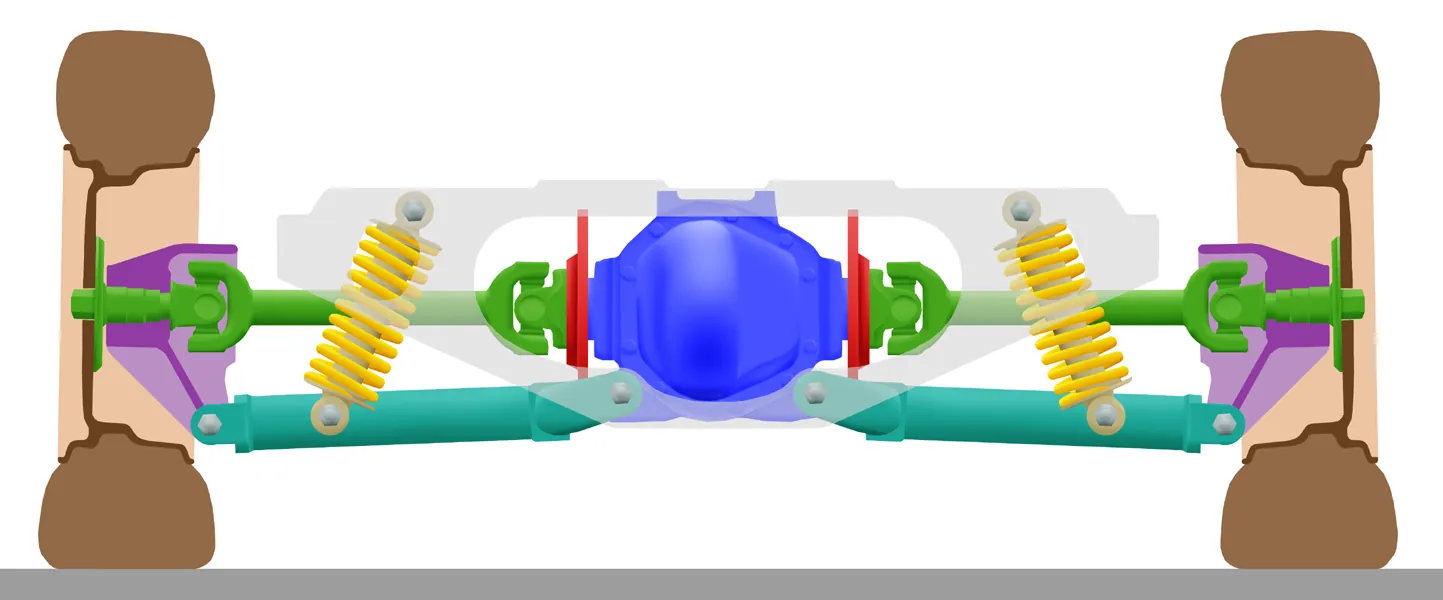

Rear suspension can use arms for the same job. In the diagram, the central differential carries drive while the links around it guide the hubs. The spring carries the load and the damper controls movement, but neither replaces the links that keep the wheel on its intended path.
What damages them
MOOG says control arms are built to last, but sudden impacts (potholes, curbs, road debris) and corrosion from road salt often cut that short. Damage can hit the body, the ball joint or the bushings. MOOG.
The symptoms MOOG lists:
- clunking over bumps, or when accelerating, braking or steering, often from a worn bushing letting the arm knock against the frame;
- wandering, pulling or not tracking straight;
- tire wear on the inner or outer edge (MOOG says to find the cause, not just replace the tires);
- vibration through the steering wheel that changes with speed, or shimmy from worn bushings; and
- a rougher ride.
MOOG. Each of these can also come from tie rods, sway-bar links, struts or alignment. A photo or a clunk alone can’t tell you whether the arm body, its joint, its bushing or another part is at fault. Wheel position and tire wear depend on the whole geometry and the condition of every connection.
Tighten at ride height
How an arm is installed affects how long it lasts. MOOG warns that rubber bushings tightened with the suspension hanging are clamped at too steep an angle. Once the car’s weight is on the wheels, the rubber stays twisted, which wears out the bushings early and can damage other parts. The fix is to do the final tightening of rubber bushings with the suspension at ride height. MOOG’s bushing torque tip. Monroe recommends an alignment whenever steering or suspension parts are replaced. Monroe on alignment.
Sources
- MOOG: control-arm function and damage — Body, bushing and ball joint; upper/lower arms; damage causes; clunk, wander, tire wear, vibration and ride symptoms
- Monroe: structural role of struts — Strut replacing upper arm and ball joint; knuckle-to-lower-arm connection
- MOOG: rubber bushing torquing tip — Torque rubber control-arm bushings at ride height to avoid twist and premature failure
- Monroe: alignment after strut replacement — Alignment recommended when steering and suspension components are replaced
References checked .