Published by HALOX Co.
What a crankshaft actually does
A crankshaft's main journals spin in the block and the offset rod journals take the connecting rods. Counterweights balance that offset. Oil reaches the rod journals through drillings in the shaft.
A piston moves back and forth; the output needed by the drivetrain is rotation. The connecting rod delivers piston force to an offset journal on the crankshaft, creating torque around the shaft’s main axis. Motorservice’s function guide follows that force to the flywheel end.
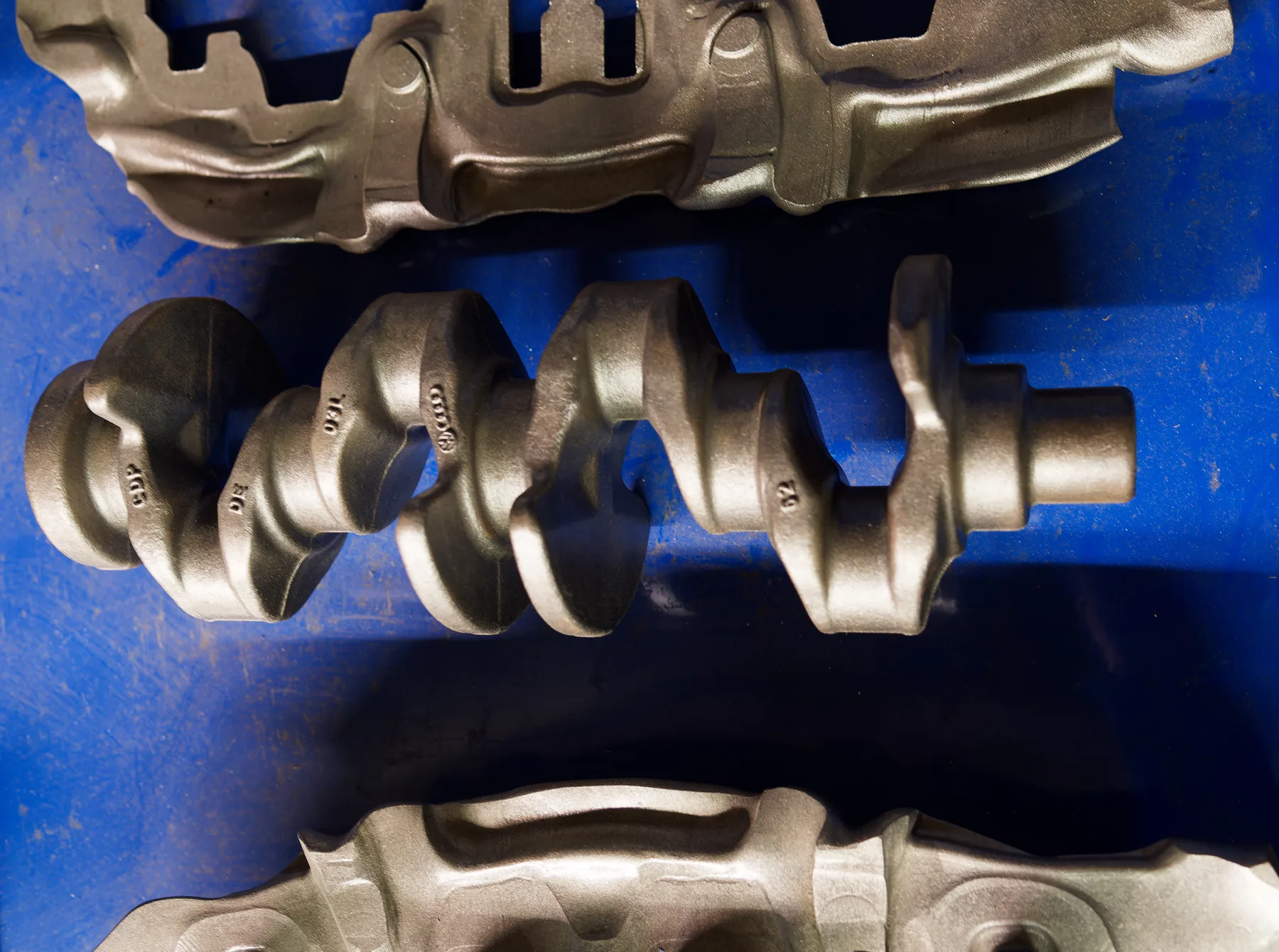

Read the two journal positions
Main journals share the crank’s rotational centerline and are supported by the engine’s main bearings. Connecting-rod journals are offset from that line. Their offset is the crank throw: in the basic crank-and-rod geometry, the stroke is twice that offset.
The surfaces linking journals are the webs or cheeks. Counterweights add mass in selected positions around them. Oil bores provide paths to the bearing surfaces. Motorservice’s labeled crankshaft drawing identifies journals, counterweights, oil bore and the drive and flywheel ends.
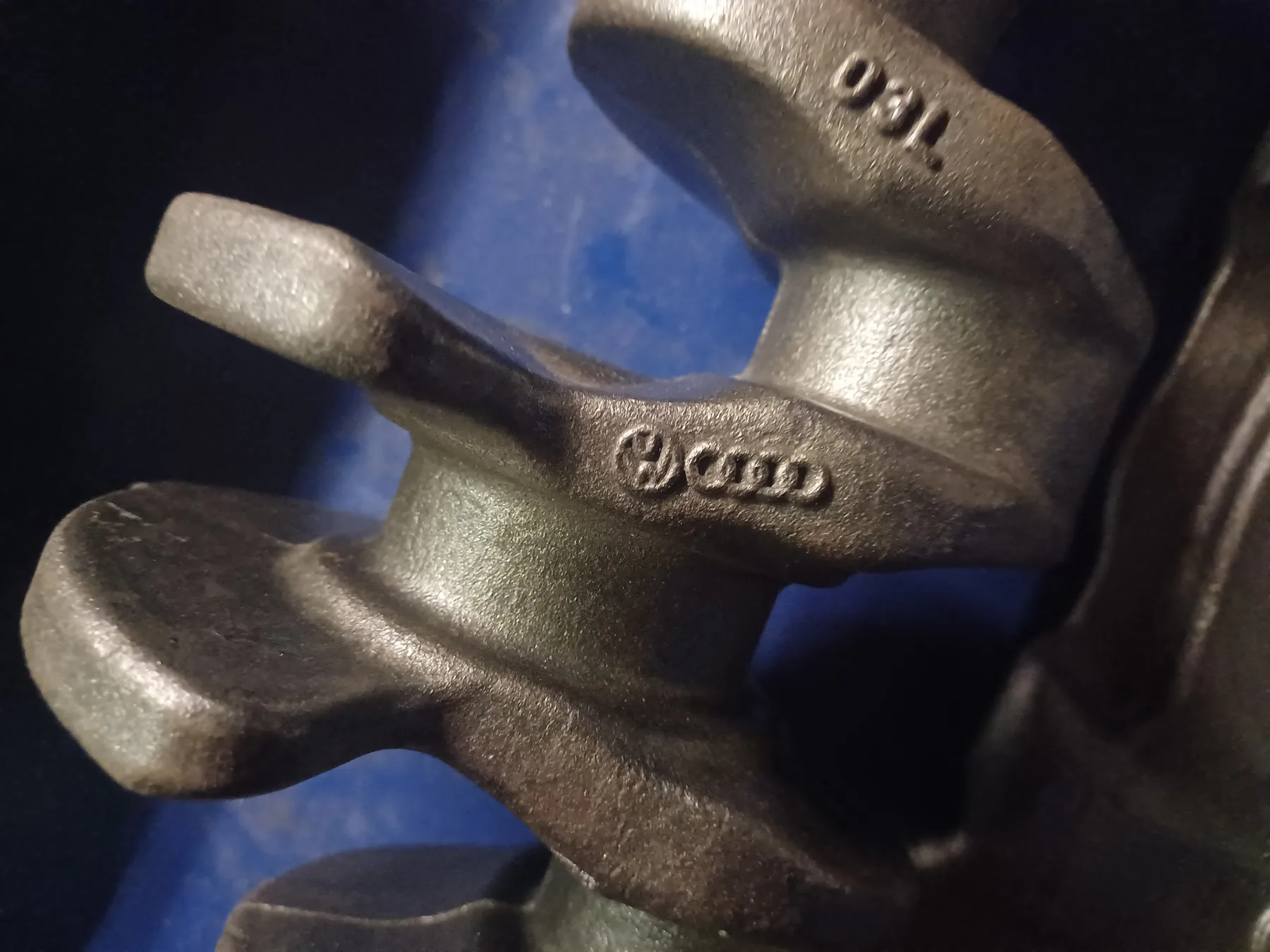

The close view is useful for distinguishing a web from a cylindrical bearing surface. It is not a measurement of journal condition or proof that a particular oil passage is clear.
Balance and twisting are separate questions
The weights help manage the rotating assembly’s balance. They do not make the shaft immune to twisting under changing combustion loads. Fluidampr distinguishes rotating-mass imbalance from torsional motion. The harmonic balancer addresses that torsional motion. A crank can therefore have substantial counterweights and still need a damper.
The drive end supplies the engine’s timing drive; the opposite end connects to the flywheel or other transmission drive plate. Journal lubrication and the engine’s specified clearances are also part of the design, not details that can be inferred from a polished-looking surface.
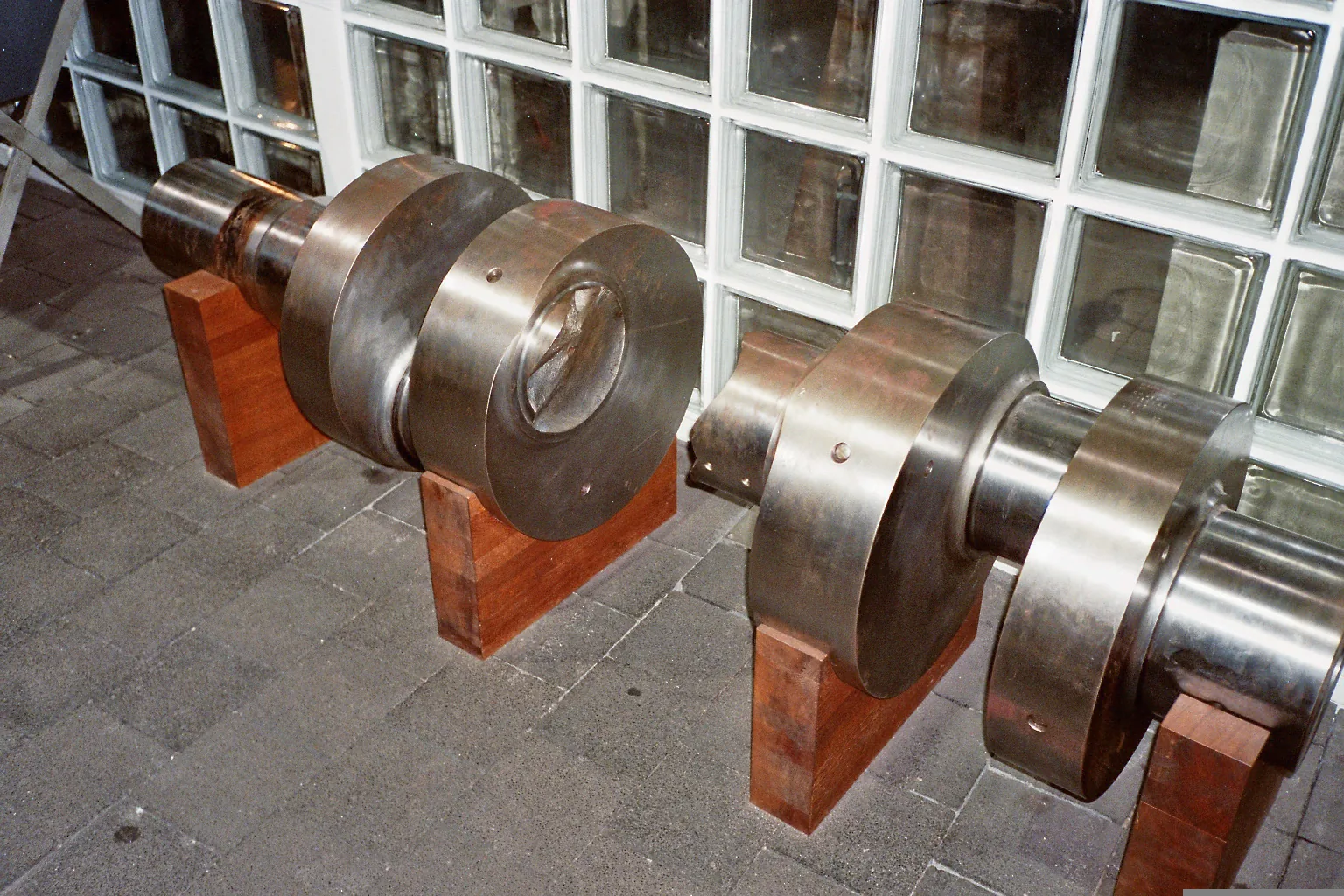

Motorservice identifies overload, excessive rotary oscillation, earlier bearing damage and oil-system problems among possible causes of crankshaft damage. Its damage guide is a reason to investigate the complete failure, rather than assume that a broken shaft is simply the final stage of one recognizable knock. The photograph cannot establish the operating history or fracture mechanism.
Sources
- Motorservice: crankshaft structure and function — Reciprocating-to-rotary conversion and crankshaft material
- Motorservice: crankshafts — Main/conrod journals, counterweights, oil bores and ends
- Motorservice: crankshaft damage — Lubrication, oscillation and causes of fracture
- Fluidampr: engine vibration — Rotating-mass imbalance versus torsional motion
References checked .