Published by HALOX Co.
What a CV joint actually does
How fixed and plunging CV joints accommodate steering and suspension movement, and why a torn boot is a risk that needs inspection rather than proof of a destroyed joint.
A driven wheel must receive torque while the suspension changes its angle to the drivetrain. At a steered wheel, the angle also changes as the driver turns. A constant-velocity joint accommodates that angle without imposing a repeating speed fluctuation between its input and output.
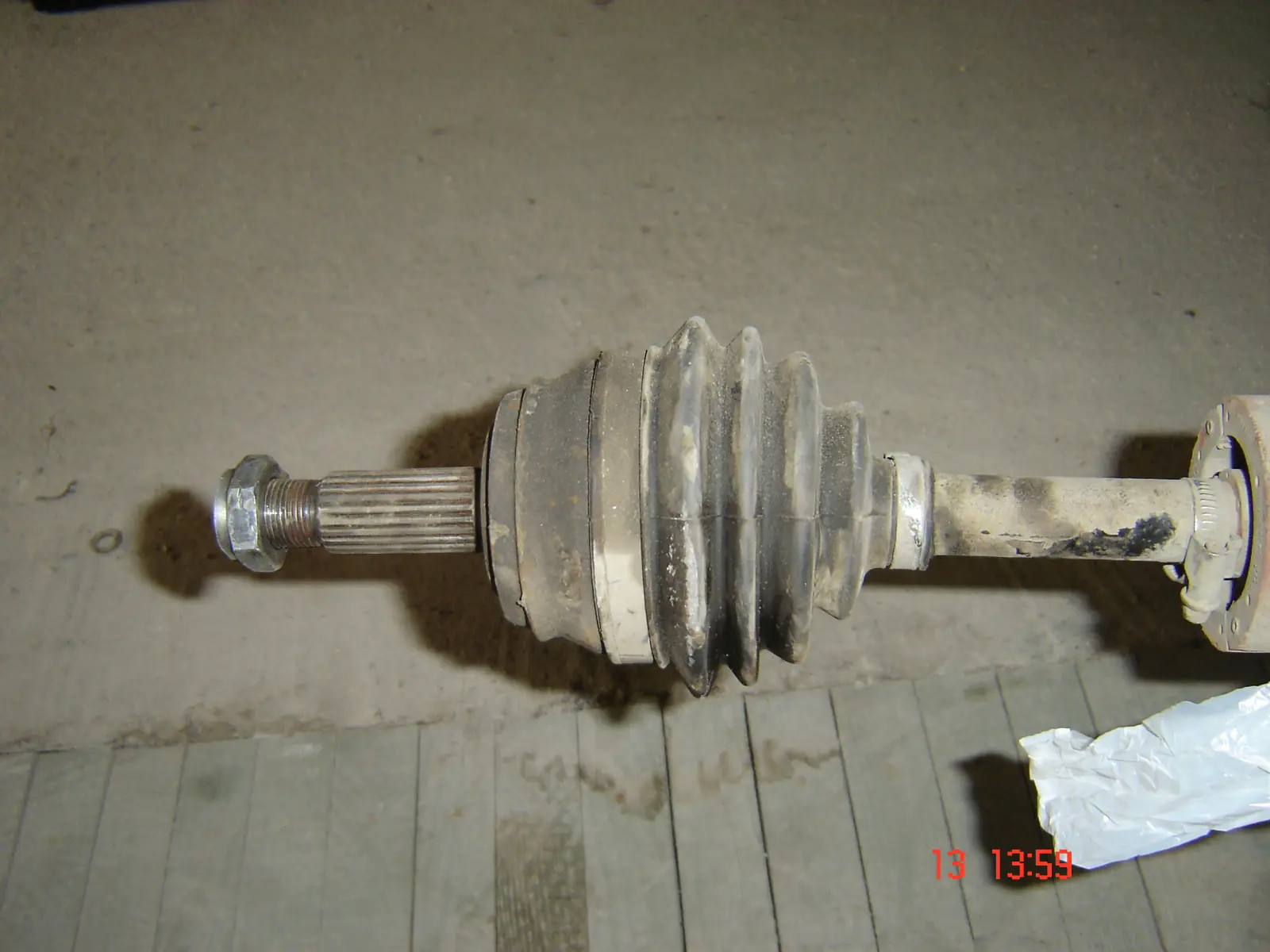


Articulation and plunge solve different problems
The wheel-side joint of a front driveshaft needs a wide articulation range. A fixed ball joint provides angular motion while maintaining its working length. The inboard connection usually also needs to accommodate length change as the suspension travels. A plunging joint lets the shaft move axially within the joint.
GKN’s joint guide shows several designs: fixed ball joints, tripod plunging joints and ball plunging joints. That variety matters. The inboard joint is not invariably a tripod, and a shaft with CV joints is not limited to front-wheel drive.
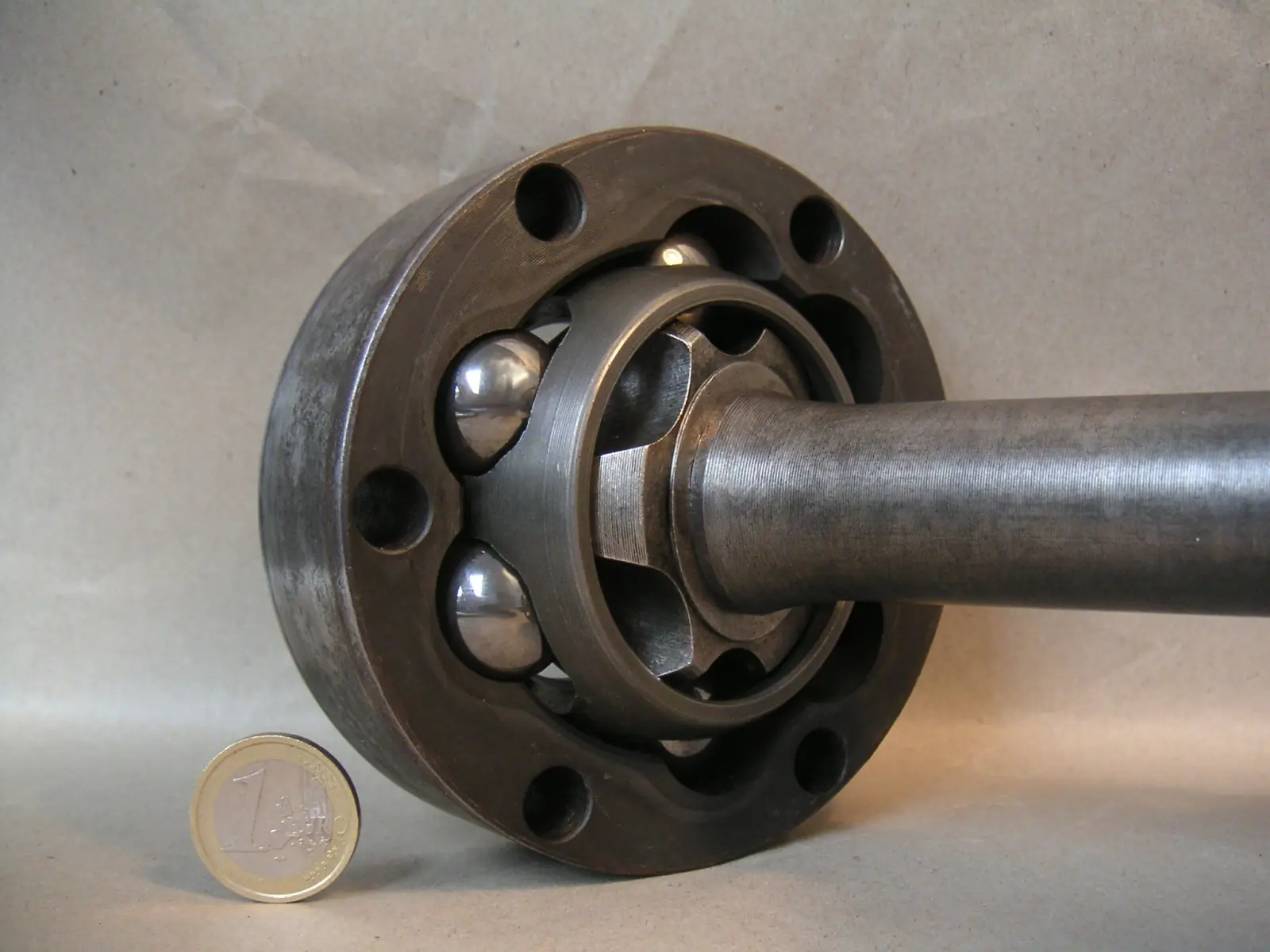

The shaft carries torque between the joints; the joint permits the relative movement. In this exposed example, balls and tracks provide the articulated torque path. The boot on an assembled joint protects the lubricated working parts.
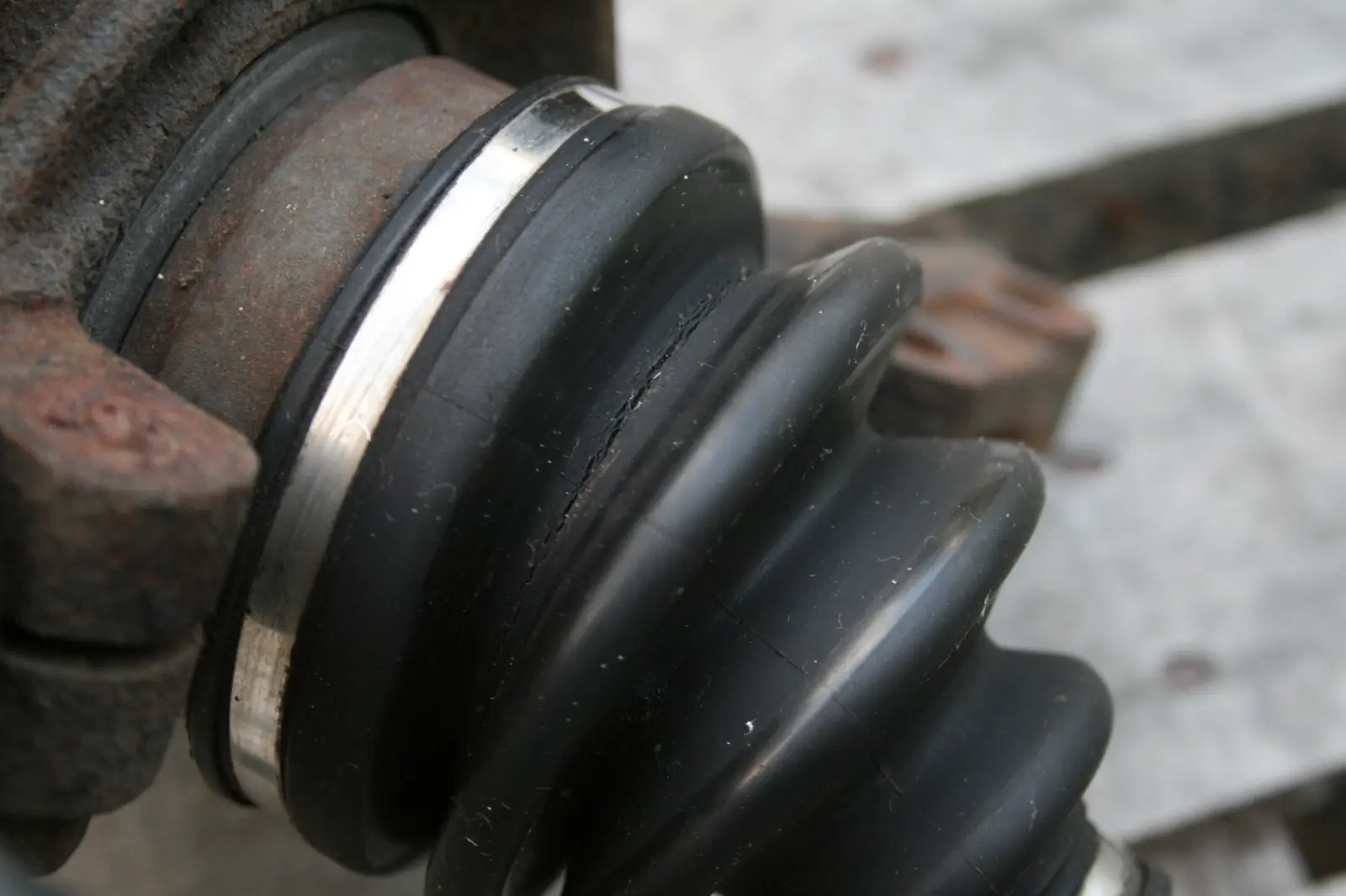

A torn boot can let grease escape and dirt or water enter. MOOG explains that failure path as a risk of premature wear. The tear alone does not prove the joint is already destroyed or establish how long it will last. Clicking during turns can be associated with outer-joint trouble, but a noise still needs examination rather than a grease-only or differential-only assumption.
Sources
- GKN: constant-velocity joints — Fixed and plunging joint roles and construction variants
- MOOG: CV axle construction and failure — Torque delivery, boots and non-exclusive symptoms
References checked .