Published by HALOX Co.
What a flywheel actually does
The different jobs of a manual flywheel, dual-mass flywheel and torque-converter flexplate, with the limits of a photograph or rattle as evidence.
The flywheel sits at the crankshaft’s transmission end. In a conventional manual drivetrain it supplies rotating inertia and one friction surface for the clutch. Those are related jobs, but they answer different questions: how evenly the engine turns, and how torque reaches the transmission input.
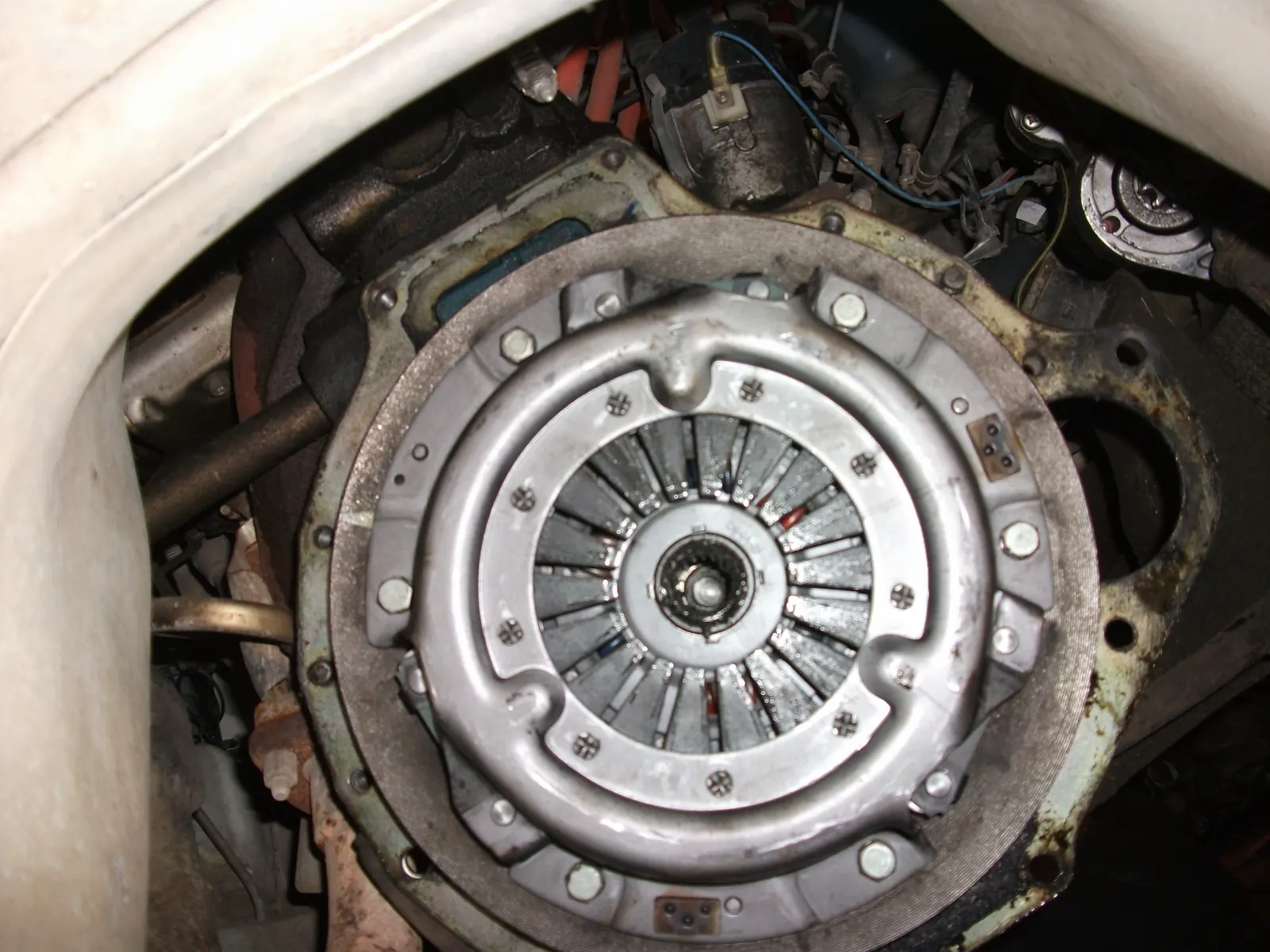

The pressure plate is still fitted in this photograph. The clutch disc and the flywheel’s working face are hidden behind it. The starter teeth around the rim are visible. It is therefore a view of the assembly, not a bare friction face.
Inertia smooths speed changes
A spinning flywheel stores rotational energy. It resists rapid speed change between the engine’s combustion events. Its friction face also gives the pressure plate a surface against which to clamp the clutch disc. South Bend Clutch identifies both roles.
Two masses add isolation
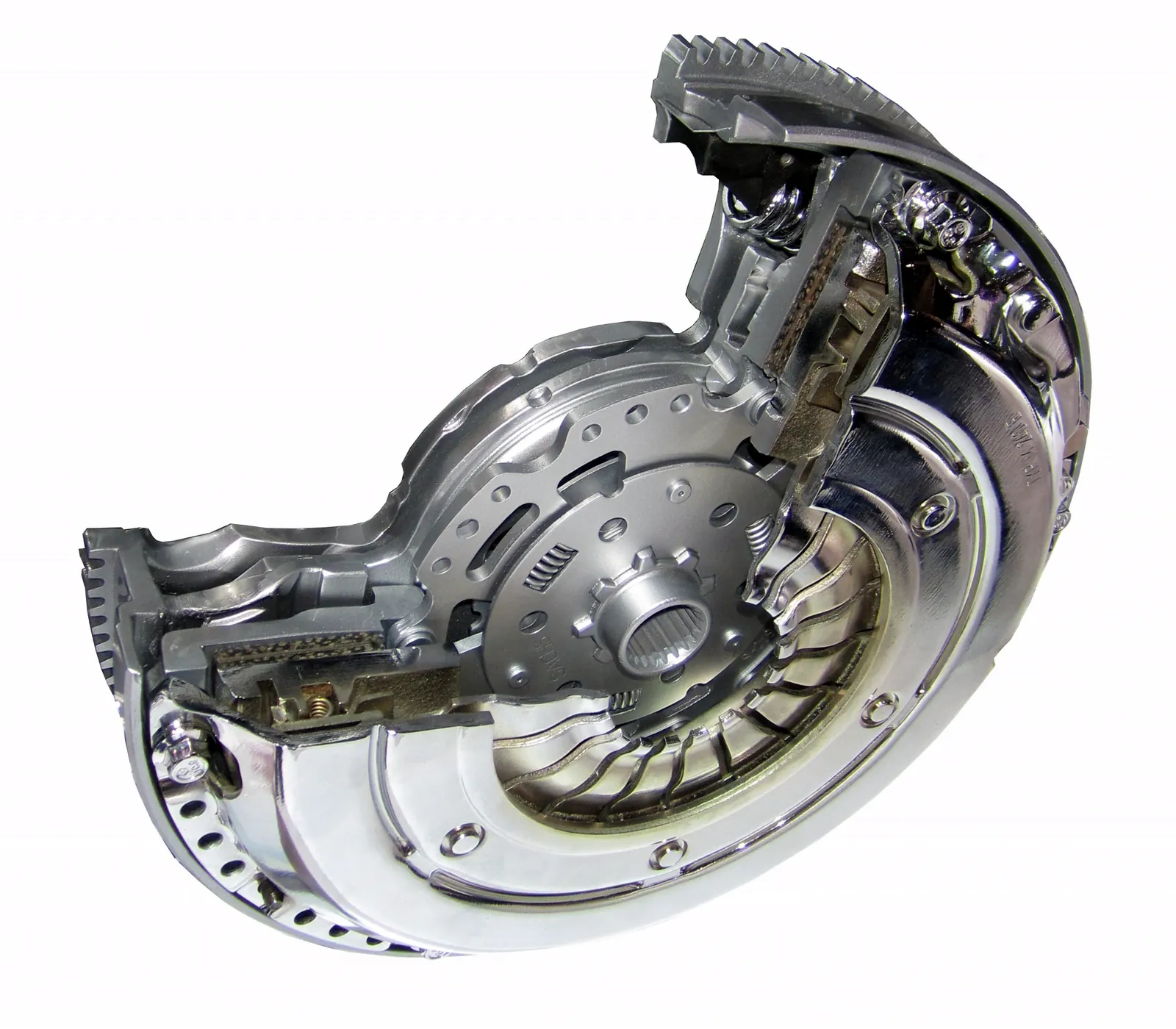

The cutaway shows a spring-coupled arrangement between engine-side and transmission-side masses. Relative movement through the damper reduces the torsional fluctuations reaching the gearbox. Schaeffler’s original LuK engineering paper explains this isolation and the arc springs’ behavior. This is a different function from simply making a single disc heavier.
A flexplate is the converter connection
In a conventional torque-converter automatic, a flexplate provides the crank-to-converter attachment and commonly carries the starter ring gear. It is not the dry manual clutch’s friction face. ATI’s design explanation describes flexibility as necessary to accommodate allowable alignment tolerances.



The last picture shows work at that connection; it does not expose the plate clearly enough to demonstrate its construction.
Rattle, starting noise or vibration is not a unique DMF or flexplate diagnosis. ZF’s DMF guidance identifies other causes and manufacturer-specific assessment methods. It also warns that a condition check cannot reliably predict remaining service life. Machining or replacement decisions require the actual part’s service instructions.
Sources
- South Bend Clutch: clutch and flywheel roles — Clutch friction face and rotating inertia
- Schaeffler: DMF simulation techniques (2006) — Torsional isolation and arc-spring behavior
- ATI: flexplates and design tolerances — Converter attachment, starter ring and flexplate flexibility
- ZF: checking a dual-mass flywheel — Diagnostic scope and remaining-life limits
References checked .