Published by HALOX Co.
What a harmonic balancer actually does
Why crankshaft twisting differs from rotating-mass imbalance, how elastomer and viscous dampers work, and what a visible damaged pulley cannot establish.
A crankshaft can twist and rebound slightly under changing combustion loads while it rotates. The component commonly called the harmonic balancer is a torsional vibration damper: it reduces that twisting motion.
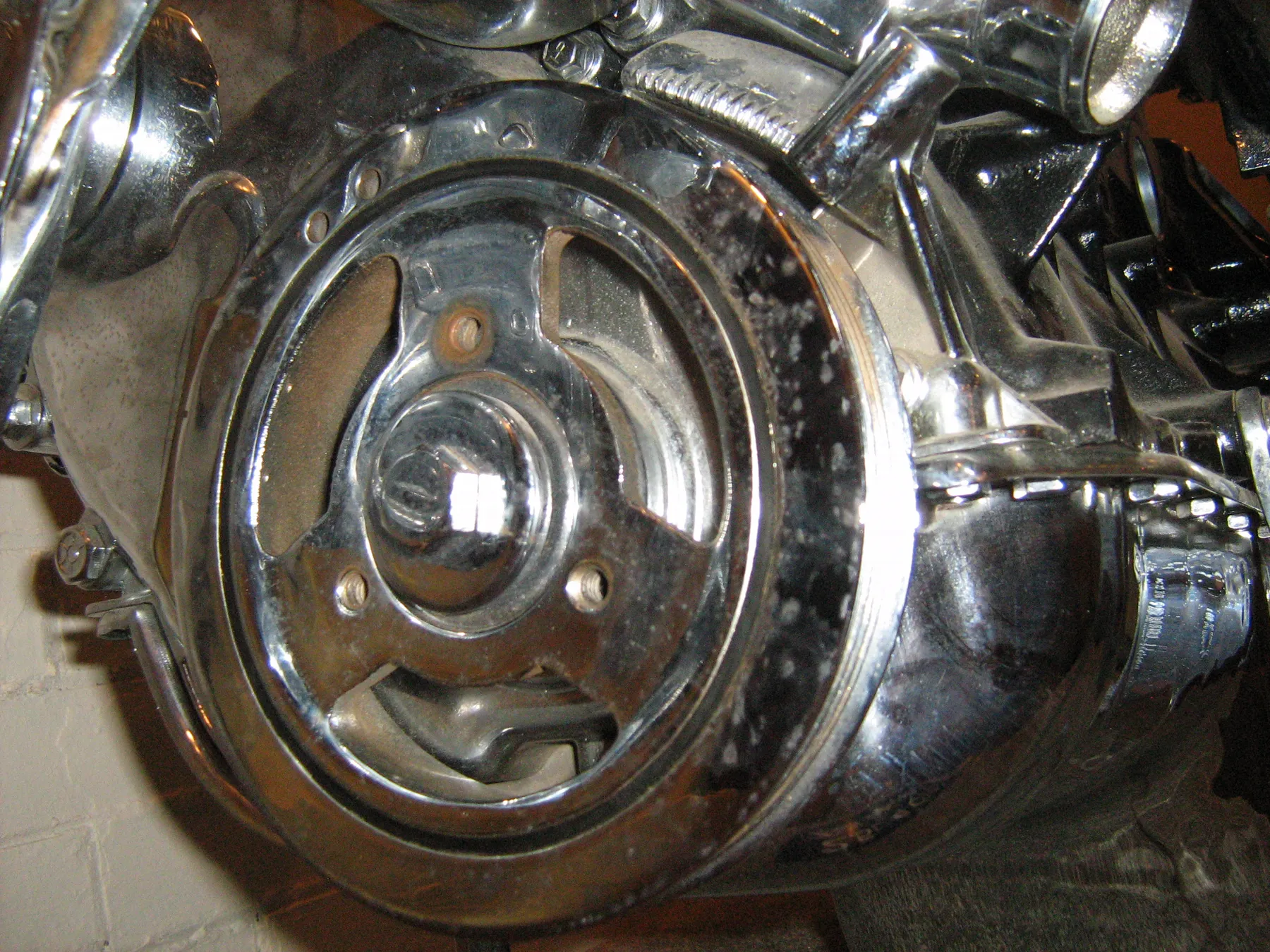


Damping is different from mass balance
Rotating-assembly balance concerns how mass is distributed. Torsional vibration concerns relative twisting along the shaft. Fluidampr’s engine-vibration guide distinguishes these motions and axial movement along the crankshaft.
The name balancer can still be partly literal on an externally balanced engine, where the damper also carries a balance weight. That extra role depends on the engine; it does not replace the damping task.
Rubber is one damping arrangement
An elastomer damper has metal portions coupled by a rubber damping element. Relative movement through that element dissipates vibration energy. In a damper integrated with the crank pulley, it also affects the accessory drive. Gates describes this construction.
Cracked, deformed or separated rubber is evidence to examine, but not every defect is visible from the front. Gates identifies ageing, heat, vibration and contamination among causes. Oil is not the one universal reason a bond fails, and the part’s outward appearance does not measure its damping performance.
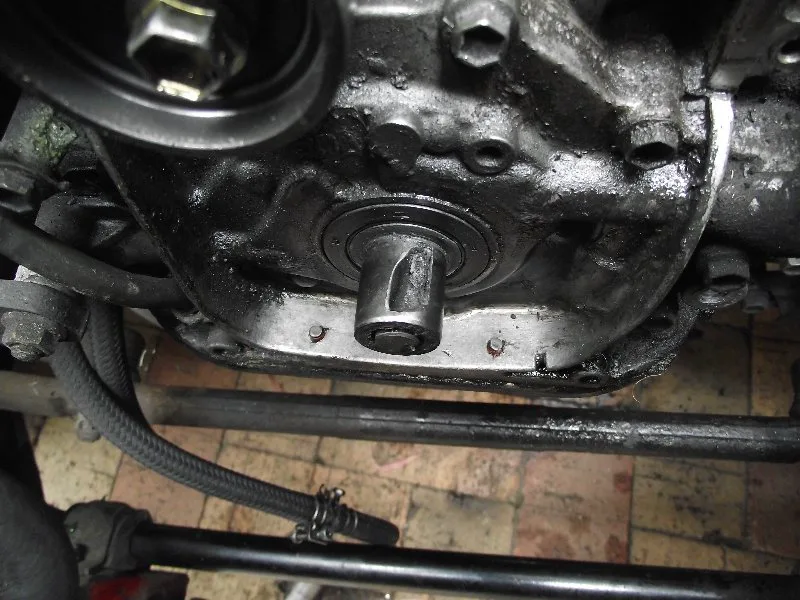

The keyway photograph illustrates a mounting interface. It cannot establish the sequence that caused the damage, or provide the bolt, tool and tightening specification for another engine.
A viscous damper uses a different construction. An inertia ring moves against a thin layer of silicone fluid inside the damper, converting torsional motion to heat. Vibratech TVD explains that mechanism. There need not be an exposed rubber bond to inspect. Correct identification therefore starts with the damper design fitted to the engine.
Sources
- Fluidampr: engine vibration — Unbalanced, axial and torsional engine motion
- Gates: torsional damper construction and wear — Elastomer pulley damping and inspection limits
- Vibratech TVD: viscous torsional dampers — Viscous damper as a different construction
References checked .