Published by HALOX Co.
What a Monroney label actually is
The legal identity and purpose of a Monroney label, its manufacturer price entries and separately required fuel information, and how it differs from dealer papers.
Several papers surround a new car’s window. Which one is the manufacturer’s disclosure label? The Monroney is the label required for covered new automobiles by the federal Automobile Information Disclosure Act. A dealer addendum and an eventual sales receipt have different jobs.
15 U.S.C. 1231 and 1232 define the covered automobile and require the manufacturer to attach the label before dealer delivery. It identifies the automobile and includes assembly/delivery information, the manufacturer’s suggested base price, factory option prices, transportation charge and total. Suggested price is the important qualifier: the printed total does not prove what a buyer finally paid.
The statute’s automobile definition includes passenger cars and station wagons; related labeling rules have their own scope. The trade also uses Monroney for labels on other vehicle types. Do not use that everyday nickname to assume every federal provision applies identically to every truck or commercial vehicle.
Fuel-economy labeling has a separate basis in 49 U.S.C. 32908, and its information may be combined with the price-disclosure label. That explains why the window sheet can contain both factory pricing and fuel information. This page identifies the document; the companion guide to what a Monroney sticker shows explains how to compare its panels.
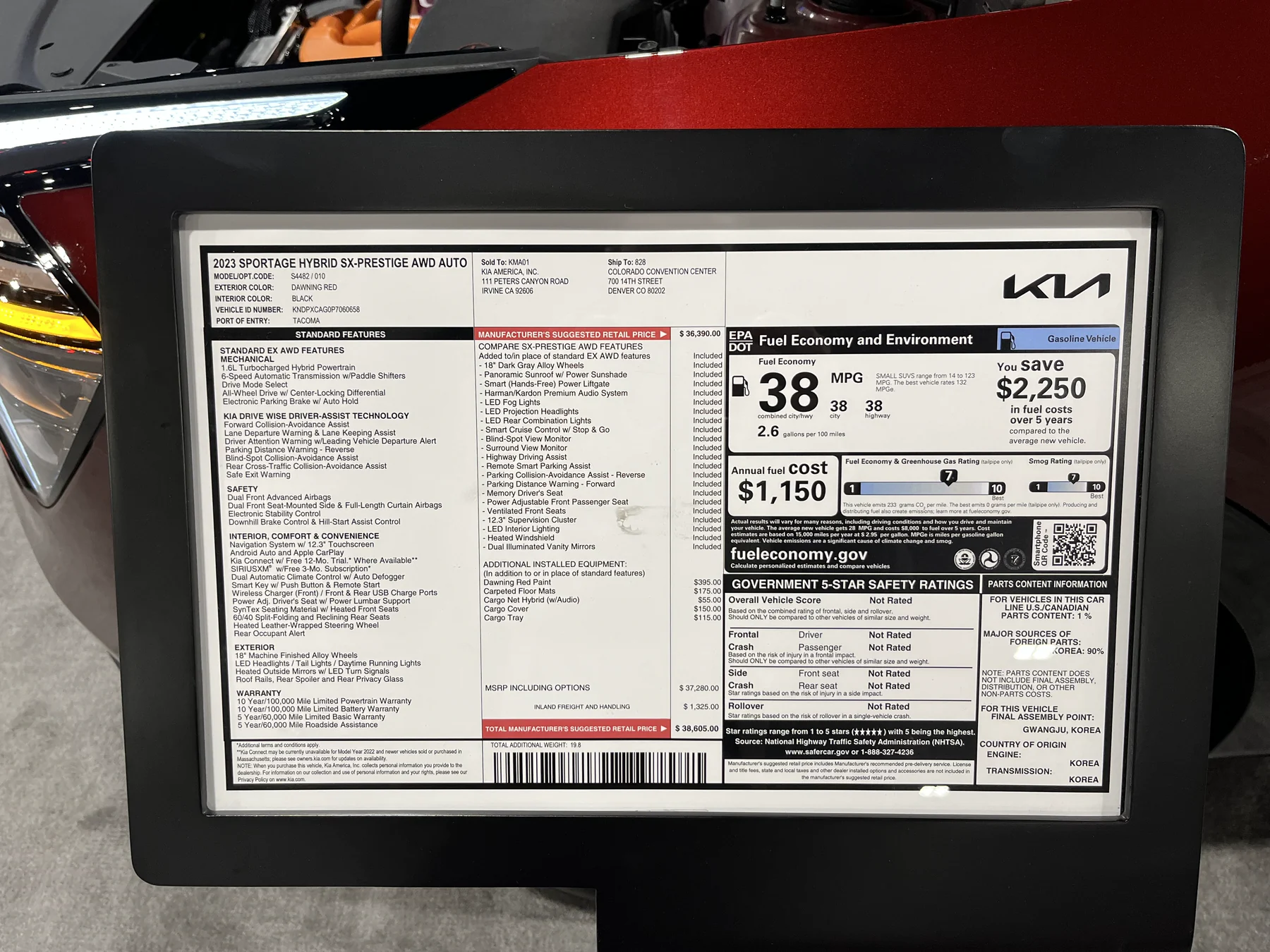

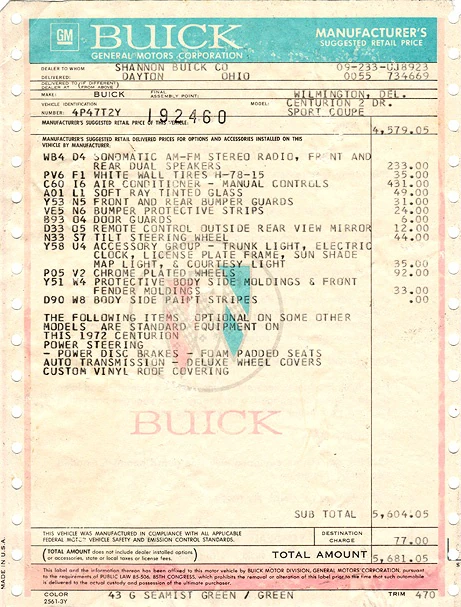

A used-car dealer’s FTC Buyers Guide is a warranty-disclosure form. The tire/loading placard and certification label describe loading and manufacturer certification. Those distinctions keep the factory label’s identity separate from registration, condition and the actual purchase contract.
Match the VIN, model and factory content to the car. For payment, read the negotiated contract and its charges. A manufacturer label is valuable evidence of the new-car disclosure, but it does not establish current condition or make the historical MSRP today’s market value.
Sources
- 15 U.S.C. 1231 and 1232: Automobile Label Requirements — United States; statutory automobile definition and new-auto label entries
- 49 U.S.C. 32908: Fuel Economy Labeling — United States; fuel-economy labeling separately from price-disclosure statute
- FTC: English Used Car Buyers Guides — United States; FTC 2016 form variants and common reverse
References checked .