Published by HALOX Co.
What a muffler actually does
How reactive and absorptive muffler designs reduce different sound frequencies, and why the outer shell does not reveal the complete internal layout.
Exhaust gas and pressure waves travel through the exhaust system together. A muffler changes how those waves propagate so less noise reaches the outside. Its useful task is to reduce sound while still providing a path for the gas to leave.
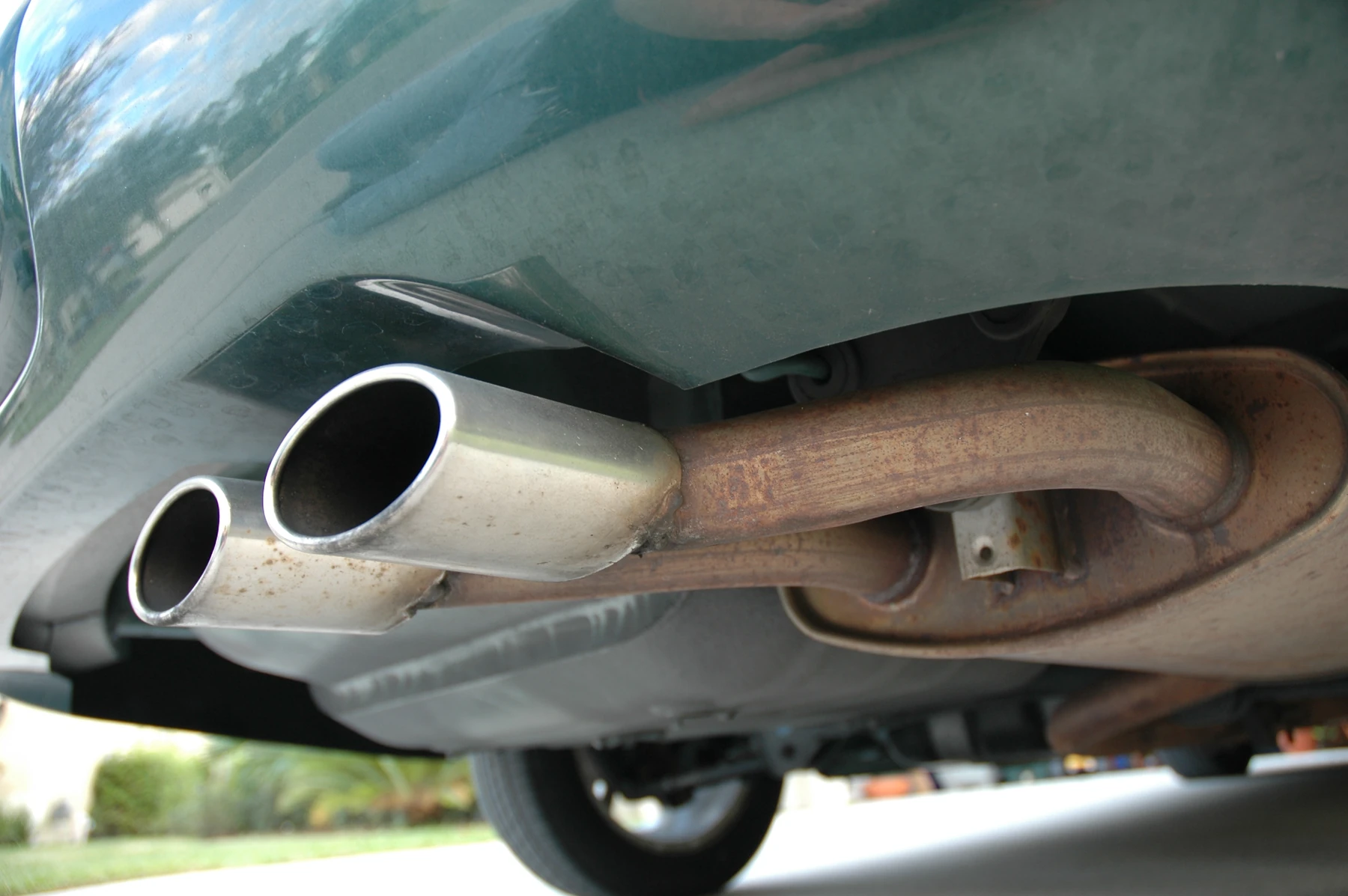

The outlet pipes are the tailpipe. The muffler is the noise-control device farther along that path. Walker explains the internal sound-reflecting tubes and distinguishes them from the tailpipe through which the gas exits.
Reflection and absorption do different work
Reactive designs use reflections and internal passages to change sound-wave interaction. Some waves oppose one another and reduce the outgoing sound. Chambers can also be tuned to reduce particular frequency ranges.
Absorptive designs let sound interact with material that flexes and dissipates its energy as heat. Glass-filled arrangements are an example, and absorption is especially useful at higher frequencies. Walker’s sound-control guide describes both mechanisms and the Helmholtz chamber used for low-frequency control.
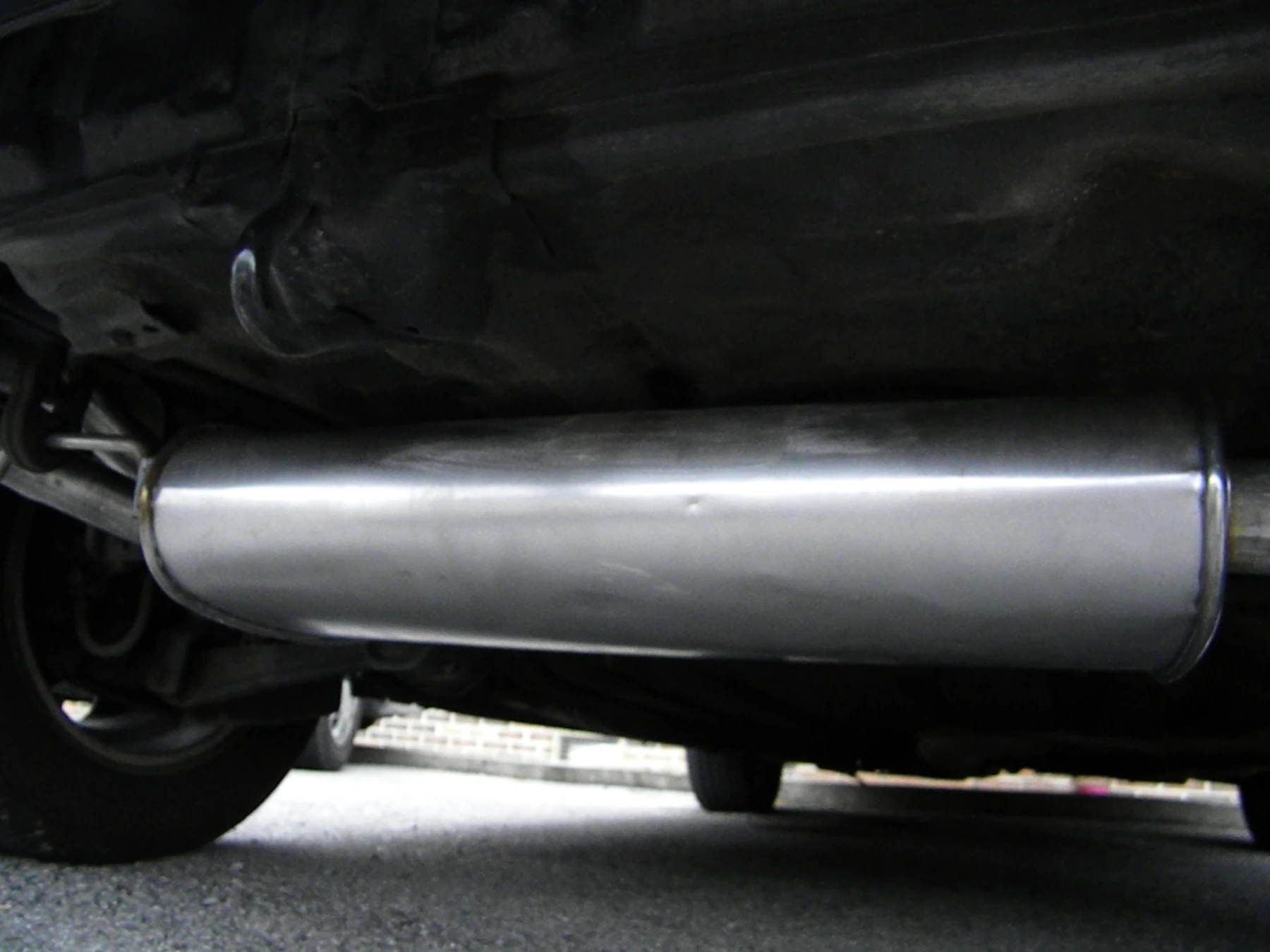

The outside shell cannot reveal the complete internal design. A cylindrical housing is not proof of a straight-through or packed construction, just as an oval housing is not proof of a particular chamber layout.
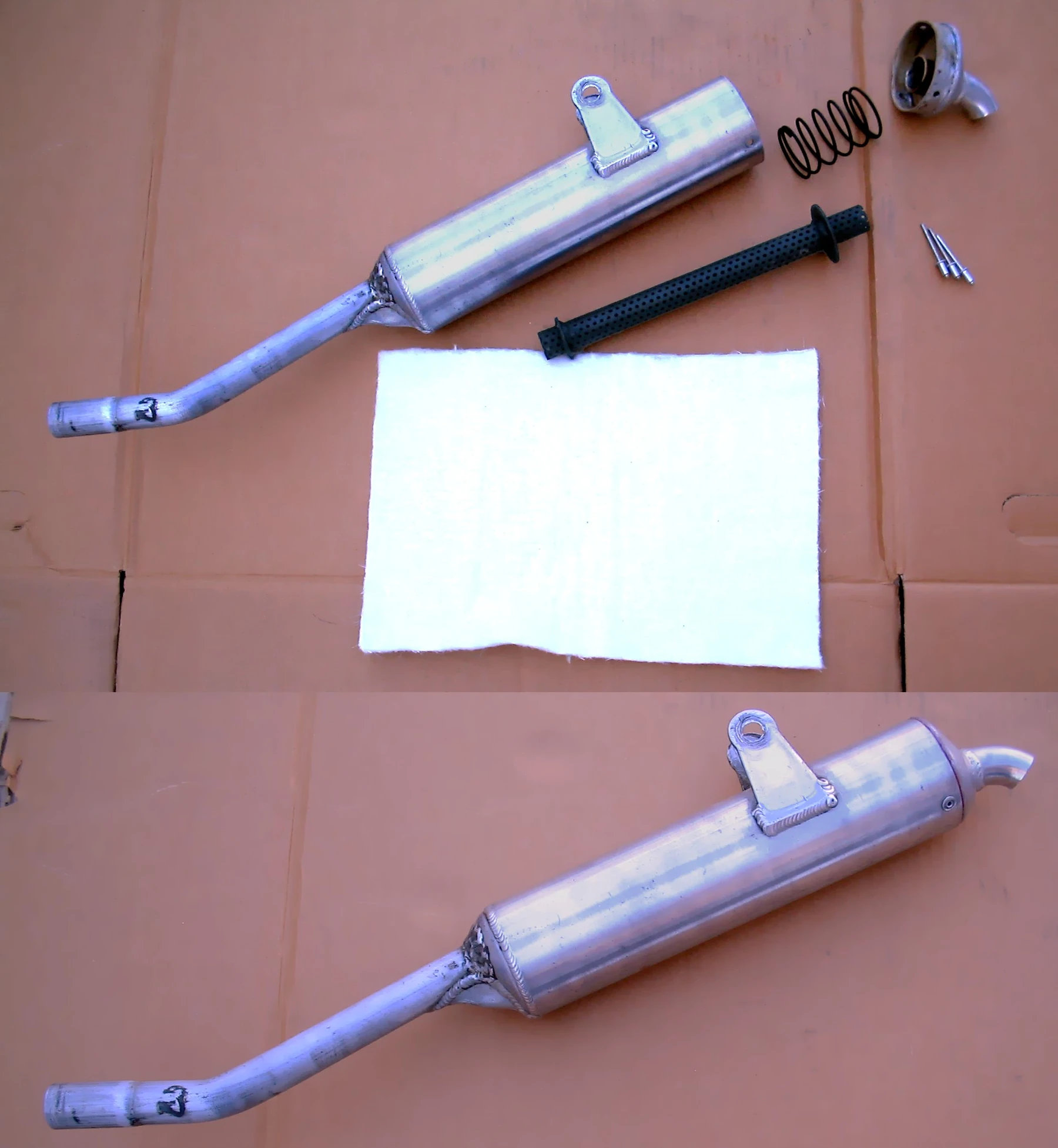

The opened example helps show that the shell and internal passage are separate pieces. Different mufflers can combine noise-control methods; a nearby resonator can add further frequency-specific control.
The converter answers a different question
A catalytic converter changes exhaust chemistry on a coated substrate. The muffler’s primary job is acoustic. Similar-looking cans cannot be identified reliably just by their shape, and a changed exhaust note or rattle does not prove which can or internal part is damaged.
Sources
- Walker: containing sound — Reactive and absorptive sound control
- Walker: how to choose a muffler — Muffler versus tailpipe and internal sound paths
- Walker: catalytic converter operation — Catalytic conversion as a separate exhaust-system job
References checked .