Published by HALOX Co.
What a PCV valve actually does
Why crankcase ventilation must remove blow-by and control pressure, how an oil separator differs from the regulating valve, and why a rattle check is incomplete.
PCV means positive crankcase ventilation. Its purpose is to remove gases reaching the crankcase and control their route back into the engine’s intake. A PCV valve is a flow- or pressure-regulating component within that system, rather than the whole ventilation path.
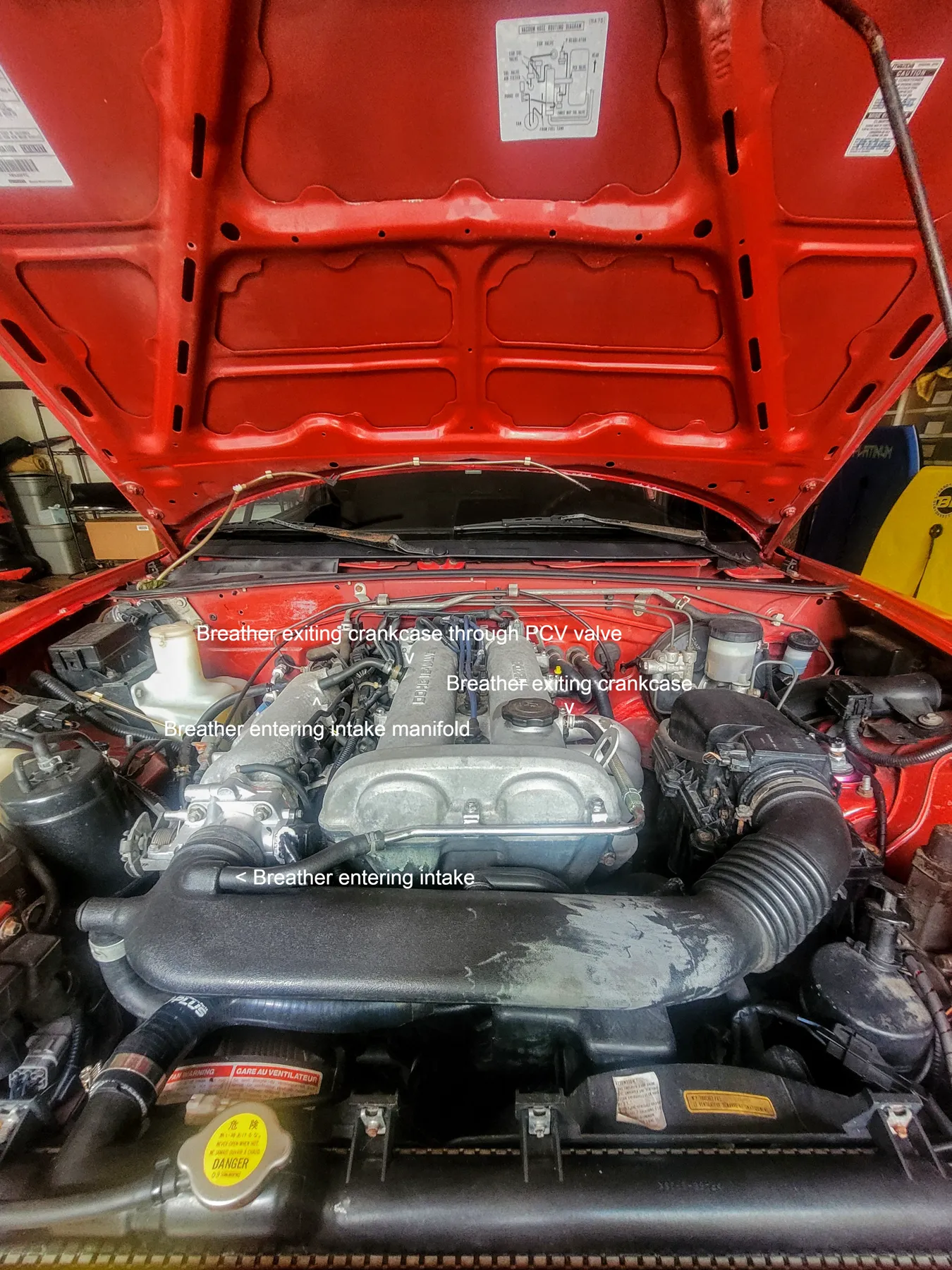

The gas arrives past the rings
Some cylinder gas passes the piston rings into the crankcase. Mixed with entrained oil, this is blow-by. If it cannot leave at an adequate rate, crankcase pressure can rise and contribute to oil leakage at seals.
Solberg explains this general piston-engine process. Its examples concern industrial engines, so their routing and pressure specifications are not service values for a passenger car. The shared principle is controlled removal of gas rather than unlimited suction or a sealed box.
Removing gas and separating oil are different jobs
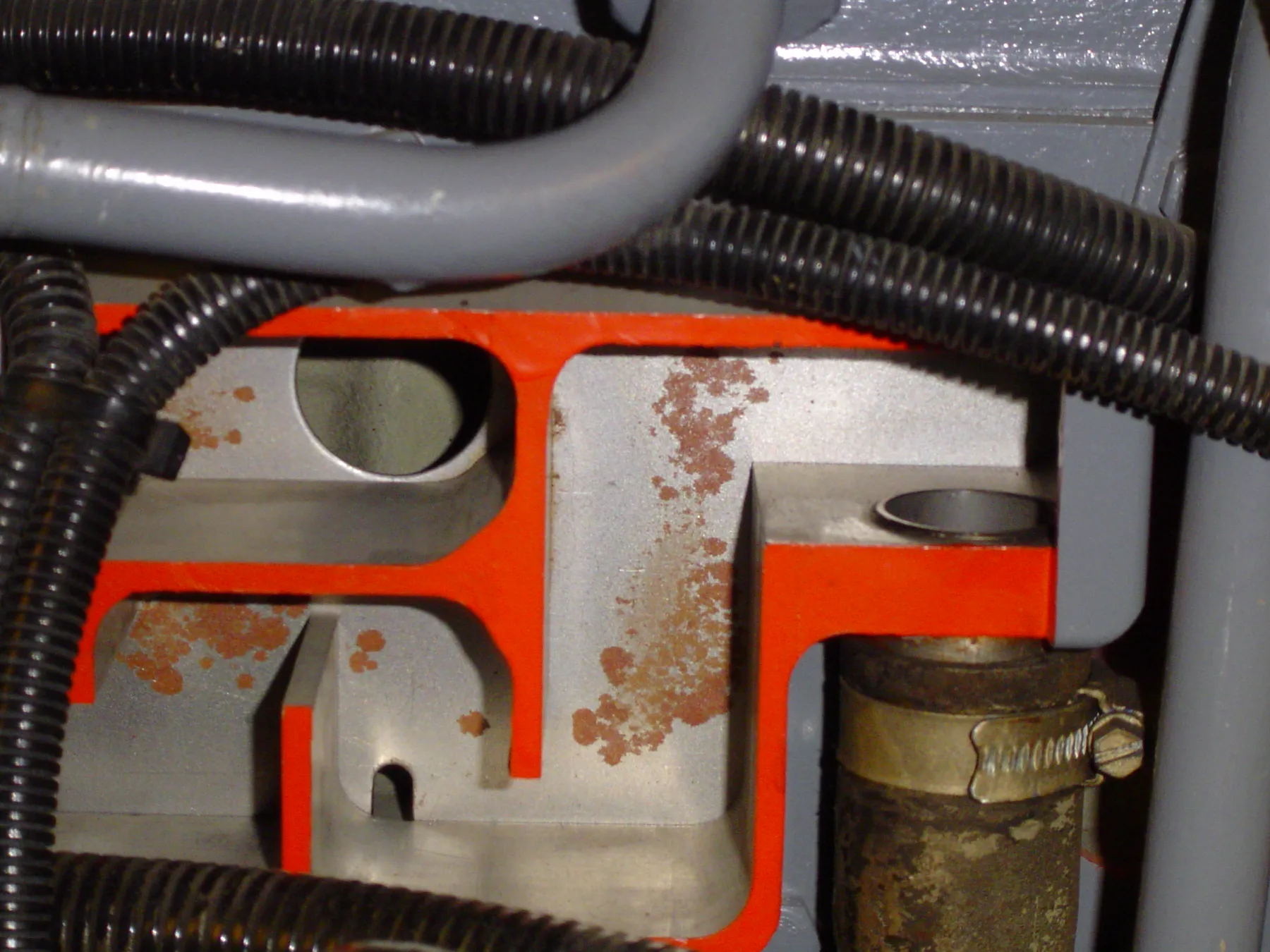


An oil separator captures liquid oil carried in that stream. The regulating part manages pressure or flow. MAHLE’s passenger-car explanation describes returning separated oil to the oil circuit and cleaned gas to the intake. The separator is not simply another name for the valve.
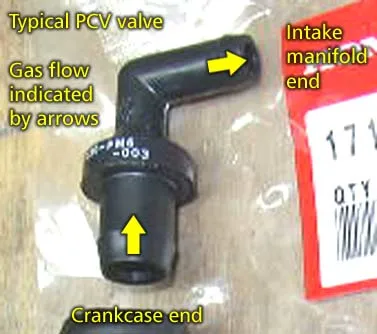


The marked valve illustrates a recognizable separate component. Other arrangements integrate separation and pressure regulation in modules. MAHLE lists these module functions, so a small removable valve in a grommet is not a universal feature.
The actual valve design determines how it regulates and how it is assessed. A shake-and-rattle check cannot establish the complete system’s flow, sealing or pressure regulation. An oil leak or rough idle likewise does not independently identify a stuck PCV valve.
Sources
- Solberg: engine blow-by and crankcase ventilation — General piston-engine blow-by and pressure regulation; industrial examples
- MAHLE: passenger-car air management — Automotive oil-mist separation and closed intake return
- MAHLE: engine peripherals — Integrated module functions including crankcase-pressure regulation
References checked .