Published by HALOX Co.
What a piston ring actually does
How combustion pressure behind a compression ring does most of the sealing, why the end gap is left open, and how an oil-control ring scrapes on its own tension.
Does the spring in a piston ring do the sealing?
It holds the ring against the cylinder when combustion pressure is not behind it. During the burn, gas enters the ring groove and presses on the back of a compression ring. Motorservice’s piston-ring brochure says that boost is up to 90 percent of the compression ring’s total pressure force during the combustion cycle. It acts mainly on the first ring, and to a lesser degree on the second. Those rings sit in grooves at the top of the piston. On the majority of engines the gas seal is two compression rings, with an oil-control ring below them.
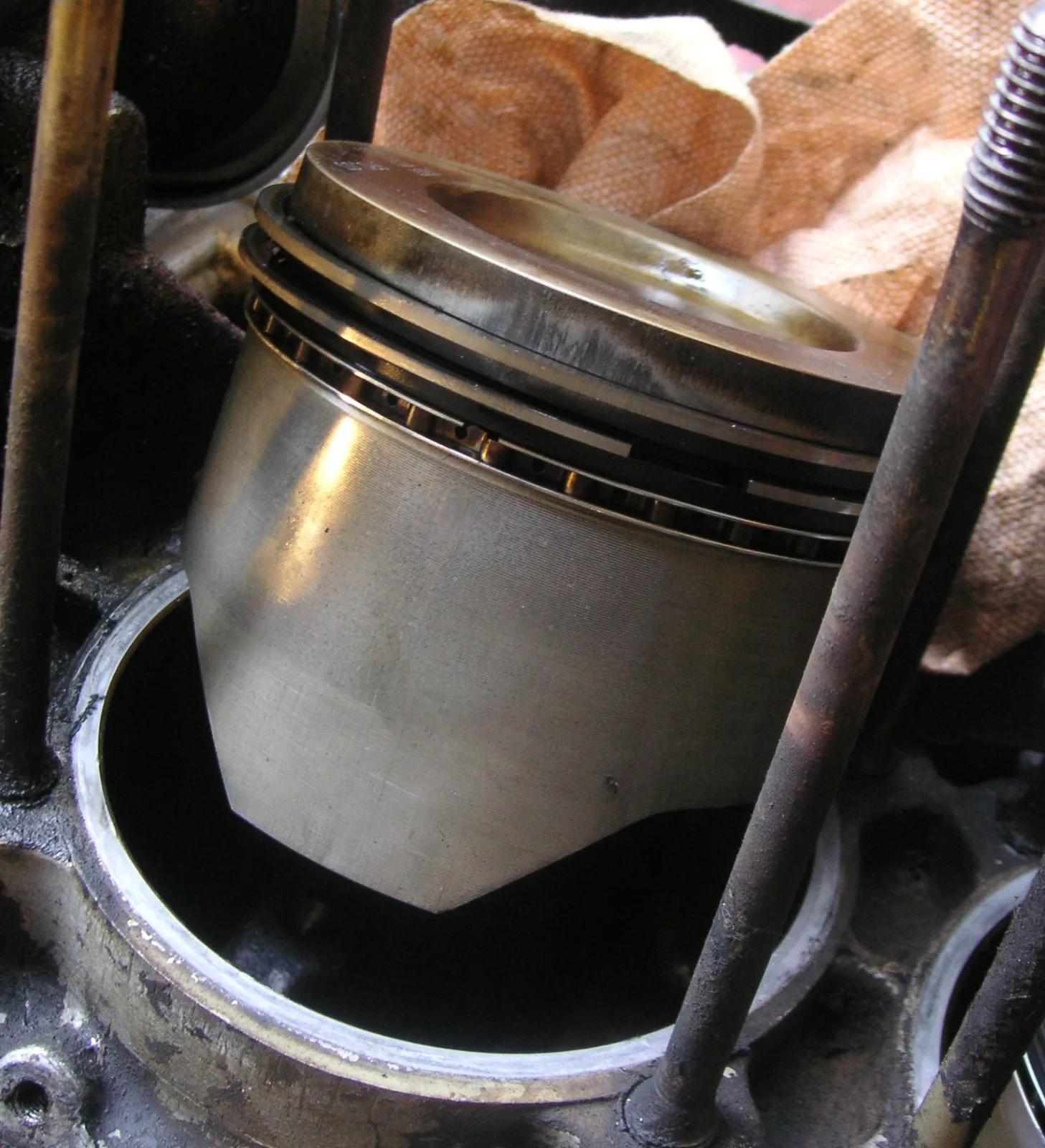

The pack is already in those upper grooves.
Pressure behind the ring, then the wall
The brochure gives piston rings three jobs. They limit combustion gas on its way into the crankcase. They carry heat out of the piston. They take part in controlling the oil film. The two compression rings work as a labyrinth. The seal leaks a little by design. A small amount of gas gets past the rings into the crankcase. That blow-by is what the crankcase circuit in what a PCV valve actually does has to move.
The heat path depends on the ring staying against the wall. The brochure says most of the heat the piston takes on in combustion, about 70 percent, leaves through the rings into the cylinder, and the compression rings do most of that carrying. Without that path, its account is seizure in the bore within a few minutes, or a piston that can melt. Carbon, dirt, or a distorted ring blocking the groove is, in the same section, a way the contact is lost. Overheating then becomes a matter of time.
The 90 percent is combustion pressure’s share of the ring’s total pressure force. Gas at the back of the ring pushes it out against the wall. A slightly larger joint gap on the first ring is how the brochure says more of that pressure is applied behind the second ring. The ring’s own tension is the smaller share, and that tension does not act along the piston’s axis. The force that seats a compression ring on the bottom of its groove is gas pressure.
A taper-faced ring, and a crowned compression ring, also let gas in at the face. Pressure between the face and the wall pushes back against the pressure behind the ring. On those shapes the outward boost is not the only gas force.
At idle the cylinders fill less, and the pressure boost on the rings falls with them. The brochure says the scraping suffers for lack of that support, and that the drop is particularly noticeable on diesel engines. After a long idle, oil can sit in the cylinder and the exhaust tract, and the engine can push a blue cloud out the exhaust when the throttle is opened again.
The second ring scrapes, and the oil ring only scrapes
One section does not cover those jobs. The brochure’s established pack in modern vehicle engines is three rings: a compression ring, a ring that seals gas and scrapes oil, and an oil-control ring. Packs with more than three rings are relatively rare in that account.
A rectangular ring, the two sides parallel, is the section the brochure calls the one chiefly used as the first compression ring in passenger-car gasoline engines. A taper-faced ring is used primarily in the second groove. The cone is small, about 45 to 60 angular minutes depending on the version. A degree is 60 minutes, so the face is a degree off square, or less. A new ring of that shape touches the wall on its lower edge. On the way up, the oil film wedges under the edge and lifts the ring a little. On the way down, the edge goes deeper into the film and scrapes oil toward the crankcase. On some gasoline engines the brochure puts a taper-faced ring in the first groove as well.
An oil-control ring, in the brochure, works on its own tension. Gas pressure cannot add to the contact force, because of the shape. The three-part version is two thin steel rails pressed out by a spacer-expander spring, and the brochure places that version mainly on gasoline engines in passenger cars. Oil scraped off the wall has to drain. What stays between the lands gets past the oil ring, and the second ring has to take it.
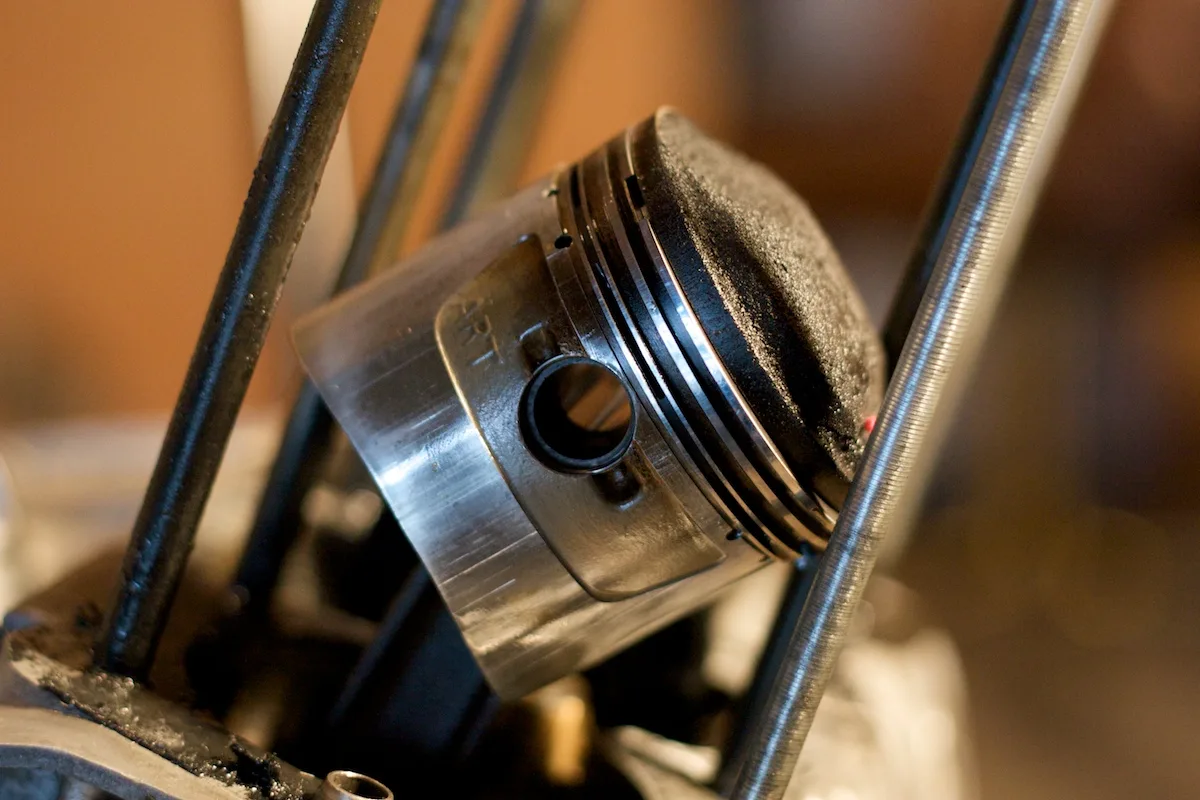

The lowest of those three is the oil-control ring.
On one group of car engines the scraper fails by sticking. American Honda service bulletin 13-006, December 19, 2018, version 9, names 2008–2011 TSX models and the 2011 TSX Sport Wagon in the affected-vehicles table, and it tells the dealer to check VIN status before treating a car as eligible. The possible-causes paragraph says the engine may create deposits on the oil control rings, and oil consumption can rise, when three things happen together, regularly, and for a long time. The engine is cold. It is accelerated hard while it is still cold. The fuel has an unusually high concentration of particles. If the oil control rings stick because of the deposits, the complaint that follows can be excessive oil consumption. That chain is the bulletin’s, for the vehicles the table covers.
The ends need room once the ring is hot
Joint clearance is the space between the ends once the ring is in the cylinder. Each ring is split. The brochure compares that opening to valve clearance. The parts grow as they heat, and the cold gap is what keeps the ends from butting. In its example of a ring 100 mm across, the clearance required for the ring’s own growth is at least 0.6 mm. The bore grows too, so the working gap can come back down a little. The bore grows much less than the ring. The block is stiffer, and the bore surface runs cooler than the piston and the rings. The top of the bore grows more than the bottom, and the hot cylinder takes on a slight funnel shape. The 0.6 mm is that example’s figure for the ring. It is not a gap to file into every bore.
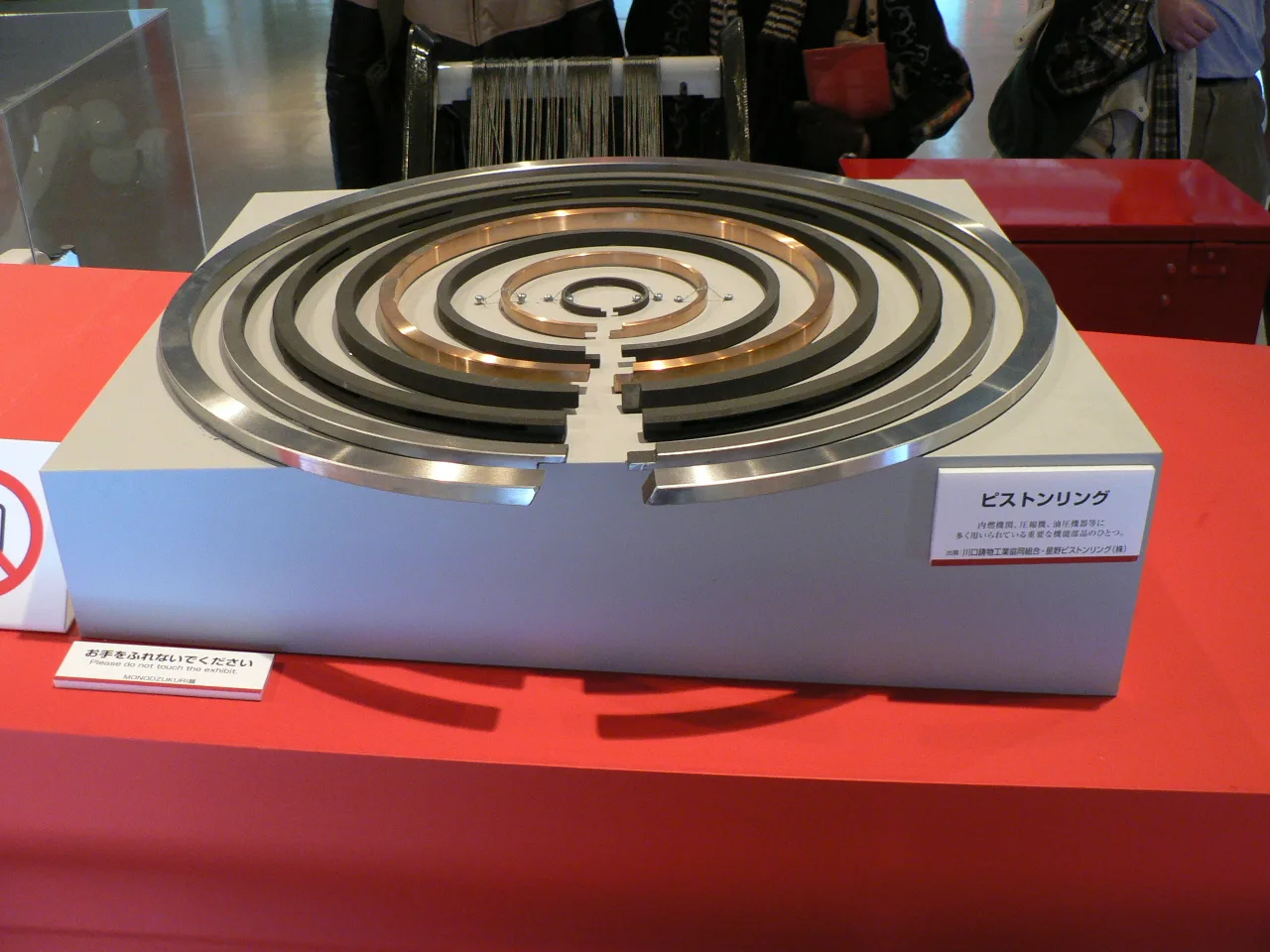

Every ring on the stand is split, and the open end faces the front.
Motorservice’s note on joint clearance starts from a complaint. New compression rings are sometimes measured at 1 to 2 mm at the joint, against an expected 0.3 to 0.6 mm, and the second ring is where that shows up most. The note’s account is that engine makers enlarge the gap on purpose. A larger gap lets combustion pressure reach the groove, and the back of the ring, sooner. Scraping and sealing improve, and the engine uses less oil at idle and at part load. A large joint clearance, the note says, raises blow-by a little. It does not, by itself, make the engine use oil. Oil use and a gap that has grown arrive together when the ring wears radially. The cross section is smaller, the ring seals less well, and the ends stand farther apart because of that wear.
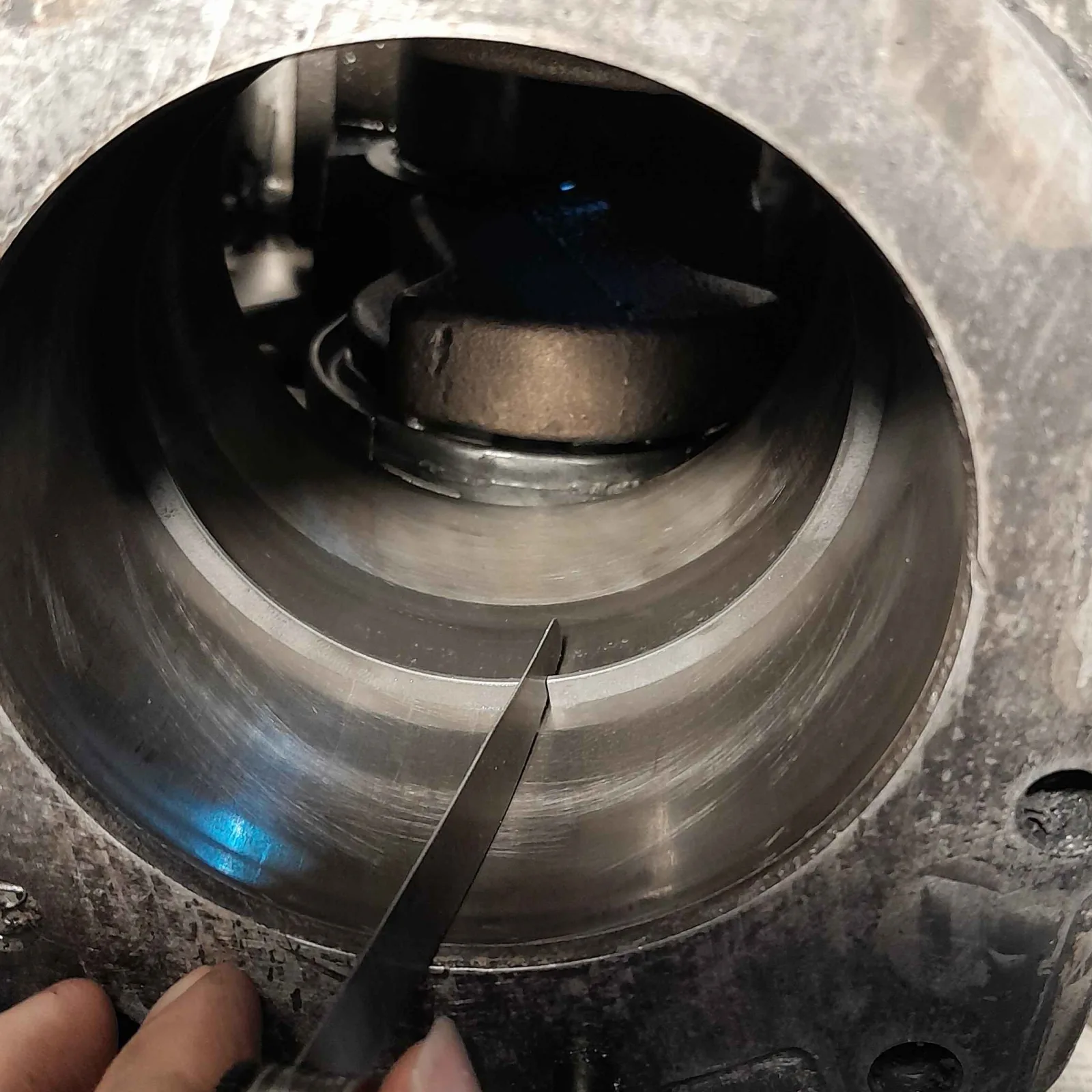

The blade in the parted ends is a check with the ring squared in this bore, which the file identifies as a Briggs & Stratton overhead-valve engine, and the blade carries none of the gap figures above.
When the rings go on a piston, the gap still has a place around the circle. MAHLE’s Technical Messenger, issue 03/2023 fits a ring with the labelled side toward the crown. The marks it names are the word Top and the MAHLE logo. The same sheet sets the gaps 120 degrees apart. The tool it specifies is a pair of piston-ring pliers, so the ring is not bent or opened past its limit. On a three-piece oil ring, the expander’s color marks stay visible and do not overlap, and the rail gaps are turned toward the pin bore. Those are fitting instructions for the rings that sheet covers. The clearance itself is still the one the ring was made with, checked with the ring in its bore.
The spring is the contact when combustion pressure is not behind the ring. The burn is what presses a compression ring out against the wall. The oil ring scrapes without that help. The open ends are the room the ring needs after it grows.
Sources
- Motorservice: Piston rings for combustion engines — Three jobs of a piston ring, two compression rings as a gas labyrinth on most engines, a designed leak into the crankcase, about 70 percent of piston heat leaving through the rings, up to 90 percent of a compression ring's pressure force from combustion gas behind it, a larger first-ring gap feeding the second ring, oil-control rings working on tension alone, axial seating from gas pressure, taper-faced rings at about 45 to 60 angular minutes, the upstroke wedge and the downstroke scrape, the three-ring pack, three-part oil rings on passenger-car gasoline engines, idle and a blue exhaust cloud, and a 100 mm example needing at least 0.6 mm of joint clearance before bore growth
- Motorservice: piston ring joint clearance and oil consumption — Measured gaps of 1 to 2 mm against an expected 0.3 to 0.6 mm, most often on the second ring; a gap enlarged on purpose so pressure reaches the back of the ring sooner at idle and part load; a large gap raising blow-by slightly; oil use and a grown gap both following radial wear
- MAHLE Aftermarket Technical Messenger, issue 03/2023: instructions for fitting piston rings — The marked side, Top or the MAHLE logo, facing the crown; ring pliers; gaps offset by 120 degrees; on a three-piece oil ring, expander color marks left visible and not overlapped, and the rail gaps turned toward the pin bore
- American Honda service bulletin 13-006, December 19, 2018 — Version 9: the affected-vehicles table for 2008–2011 TSX models and the 2011 TSX Sport Wagon, a VIN-status check, deposits on the oil control rings when a cold engine, hard acceleration while cold, and particle-heavy fuel coincide over a long time, and sticking oil control rings followed by an oil-consumption complaint
References checked .