What a rebuilt title actually is
A rebuilt title is the branded sheet a state issues after a salvage vehicle is repaired. Texas prints Rebuilt Salvage and keeps it on later titles. The inspection is identity and parts paper, not a clean title and not a CPO.
A rebuilt title is the ownership sheet a state prints after a salvage vehicle is repaired and the office accepts the file. The word on the paper is Rebuilt, Reconstructed, or, in Texas, Rebuilt Salvage. It is still a brand. It is not a clean title with the wreck taken off.
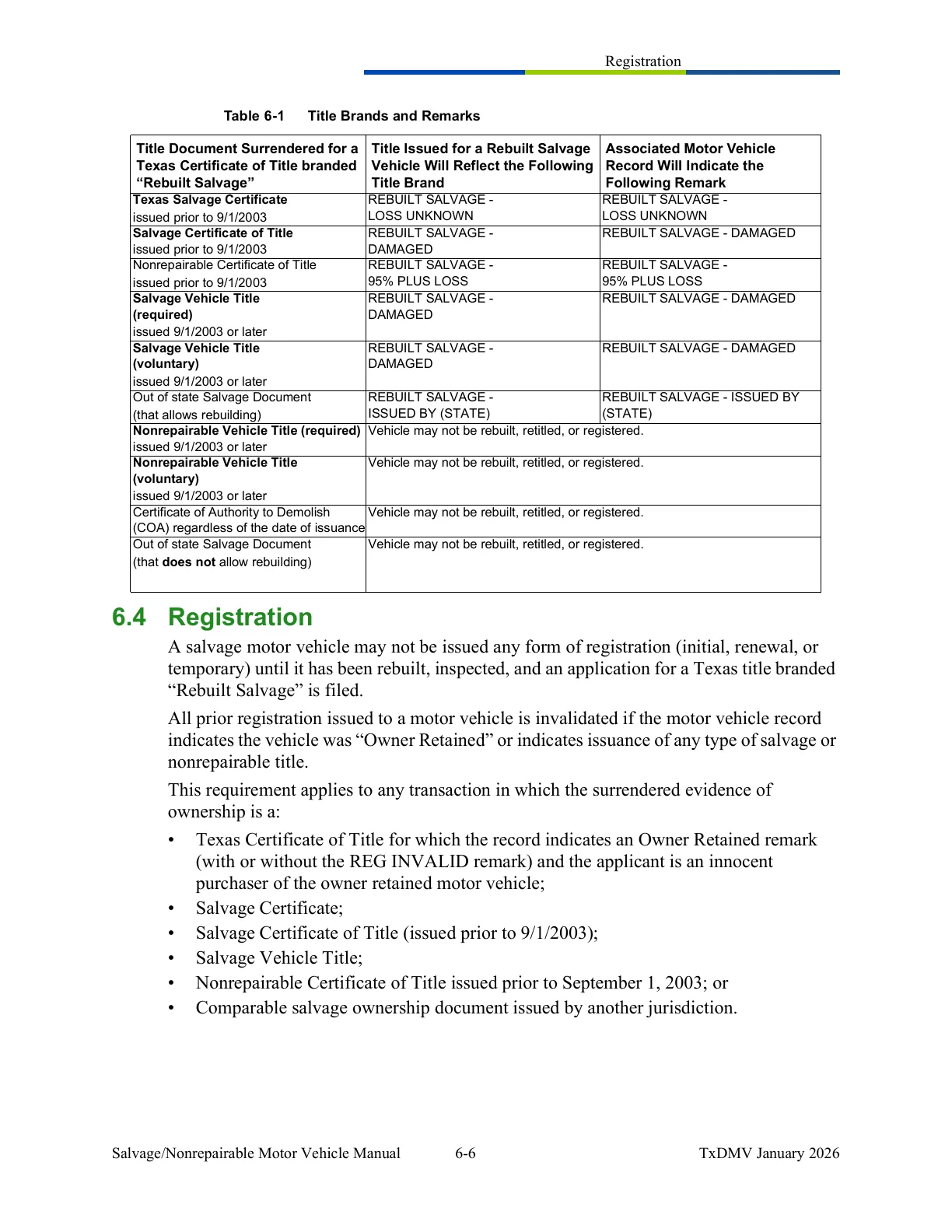
Texas writes the rule in Transportation Code section 501.100. The title issued after the repair has to disclose the vehicle’s former condition in a way a buyer can understand. The January 2026 TxDMV salvage manual is the procedure book, and Table 6-1 is the stamp. A Texas salvage vehicle title comes back as REBUILT SALVAGE - DAMAGED, and that brand is carried onto later titles. A nonrepairable vehicle title issued on or after September 1, 2003 is a different row. That vehicle may not be rebuilt, retitled, or registered. Junk and a current nonrepairable certificate are the stop. Rebuilt is the salvage the state let back on the road, with the history still printed.
Flood does not come off in the wash. The same chapter says the brands may also include FLOOD DAMAGE when water caused the loss. A lemon-law buyback is a manufacturer taking the car back for a warranty defect, not this stamp. A bonded title is a surety bond because the usual ownership evidence is missing. None of those is a rebuilt brand.
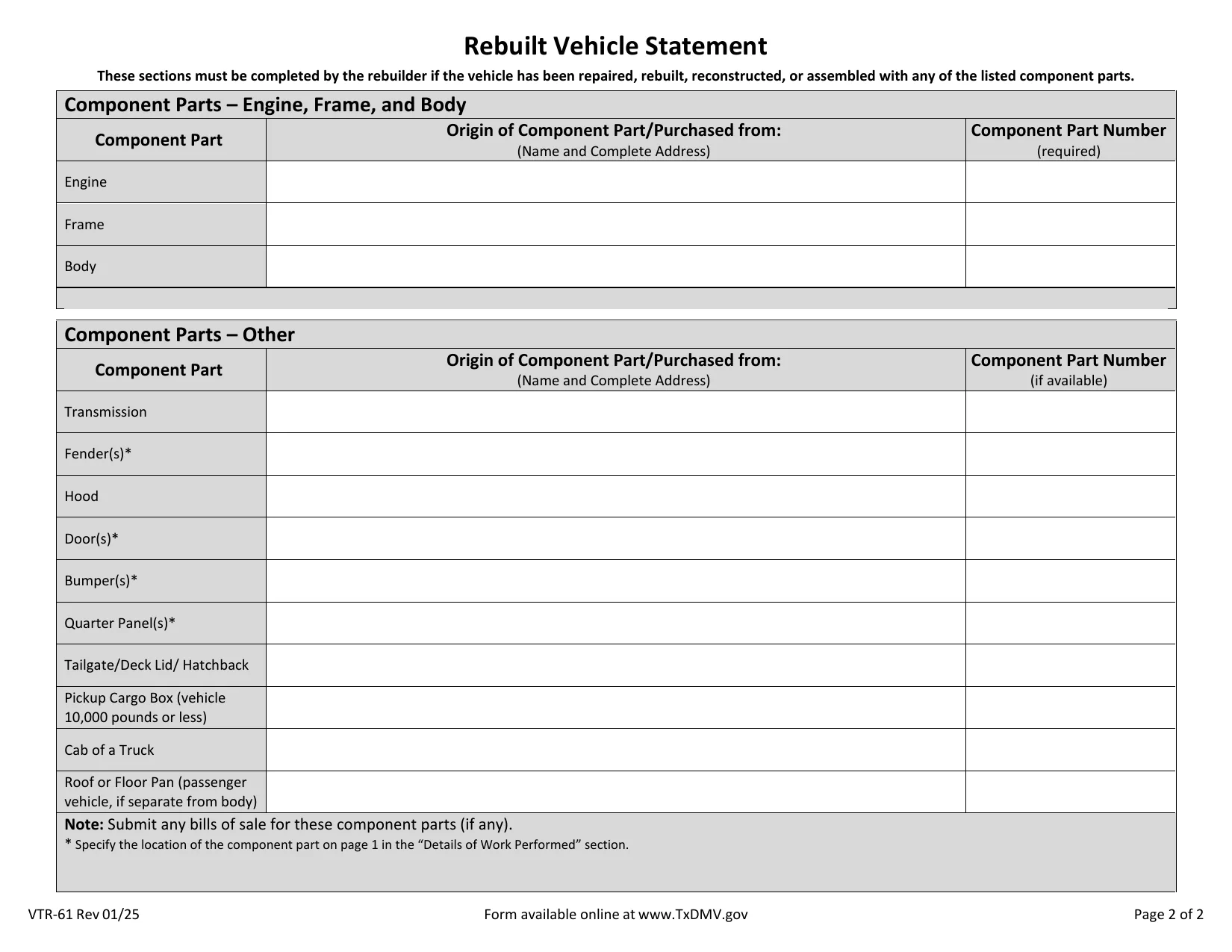
The form that rides with the Texas application is VTR-61, the Rebuilt Vehicle Statement. When component parts were used, page 2 is the list: engine, frame, body, who sold each one, and the number on the part. That is parts paper. A certified pre-owned inspection is a manufacturer program, a shop checklist, and a warranty. This sheet asks where the fender came from.
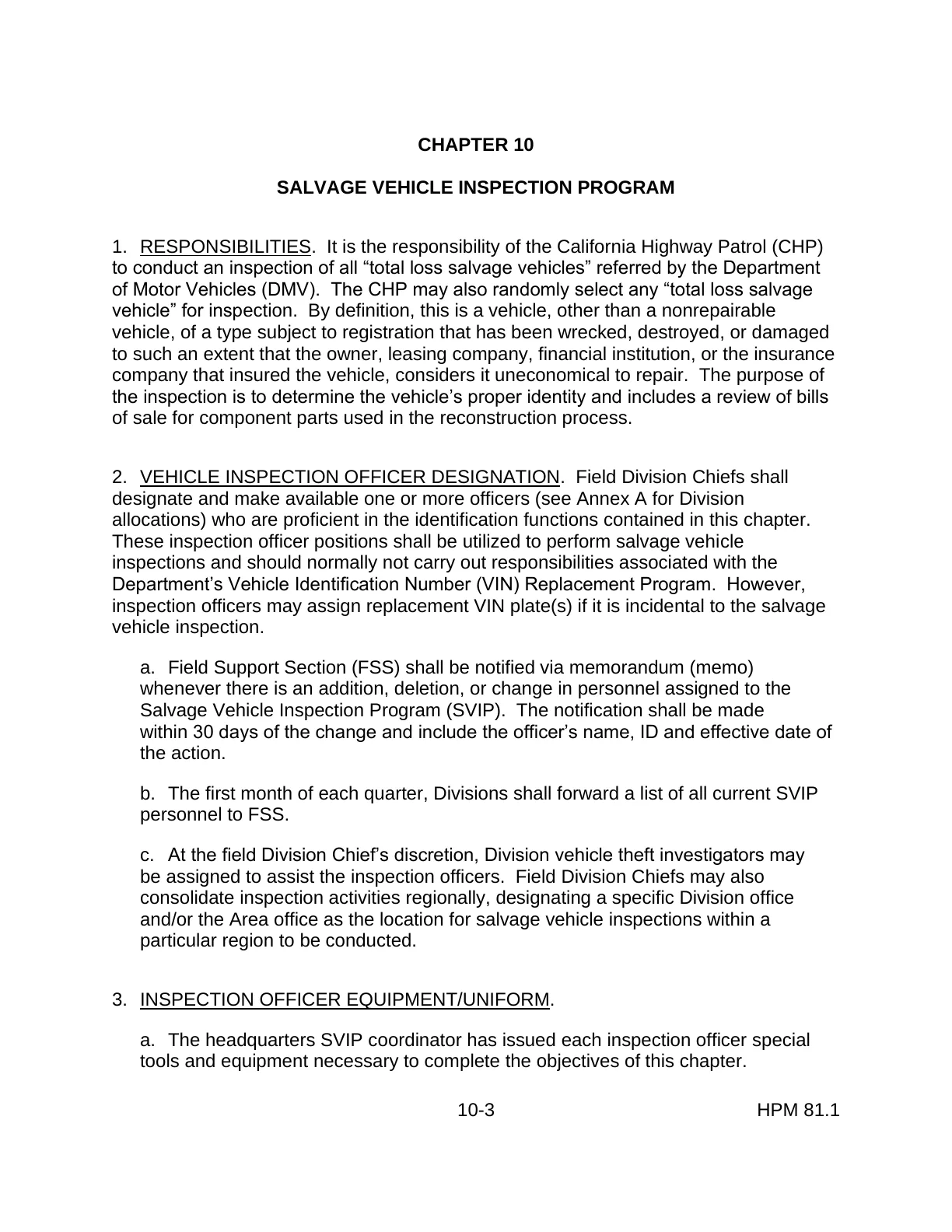
California does not use Rebuilt as the brand name for that path. The state calls the road-legal version revived salvage, and the salvage history stays on the record. When DMV refers the car to the California Highway Patrol, the salvage inspection manual states the purpose in one line: determine the vehicle’s proper identity, and review the bills of sale for parts used to put it back together. A pass produces a CHP 97C, Certificate of Inspection. The same chapter also requires the airbags that belong on that car. It is an identity and parts check with a safety-systems gate. It is not a clean title, and it is not a CPO.
Other states print reconstructed, prior salvage, or rebuilt. The brand is supposed to follow the VIN, including through NMVTIS, so a trip to another state is not a wash.
Read the word. Salvage is the total, not yet accepted back. Rebuilt or reconstructed is that history after the state took the parts paper and issued a title anyway. The brand stays.