What a report of sale actually is
A report of sale is the dealer's DMV filing that a VIN changed hands on a date. California dealers complete REG 51. It is not the title, not a bill of sale alone, and not a lien release.
Did the dealer just hand you the title? No. A report of sale is the dealer’s filing that this VIN changed hands on this date. It is not the title. It is not a bill of sale on its own. It is not a lien release.
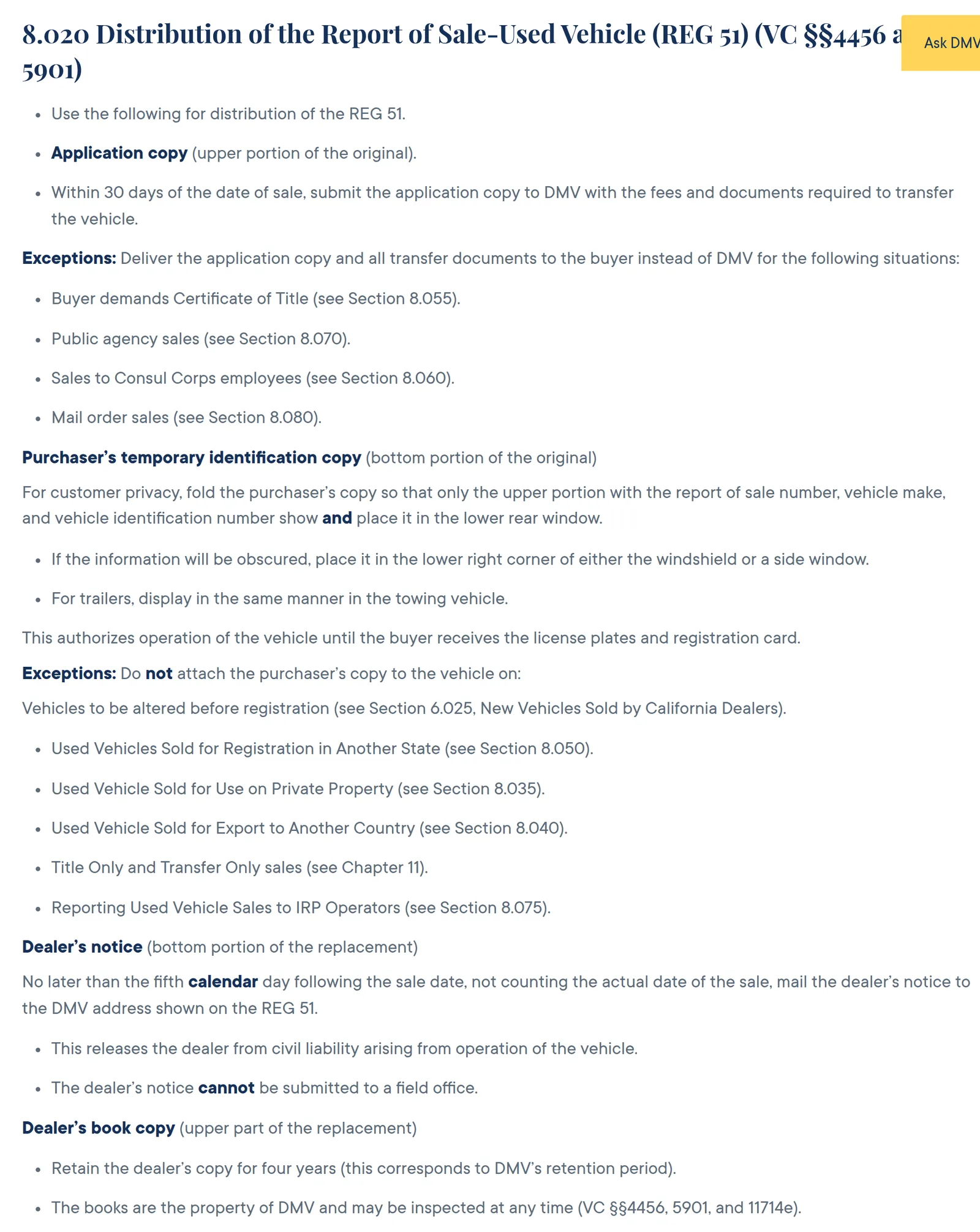
A licensed dealer has to complete REG 51, Report of Sale-Used Vehicle, for every retail used-vehicle sale. Date sold is the day the buyer paid the purchase price, signed a purchase contract or security agreement, and took possession or delivery. The VIN is the complete number on the title. Sold To is each buyer’s true full name. The purchaser’s temporary identification, the bottom of the original, is folded so only the report-of-sale number, the make, and the VIN show, then placed in the lower rear window. That copy authorizes operation until the plates and the registration card arrive.
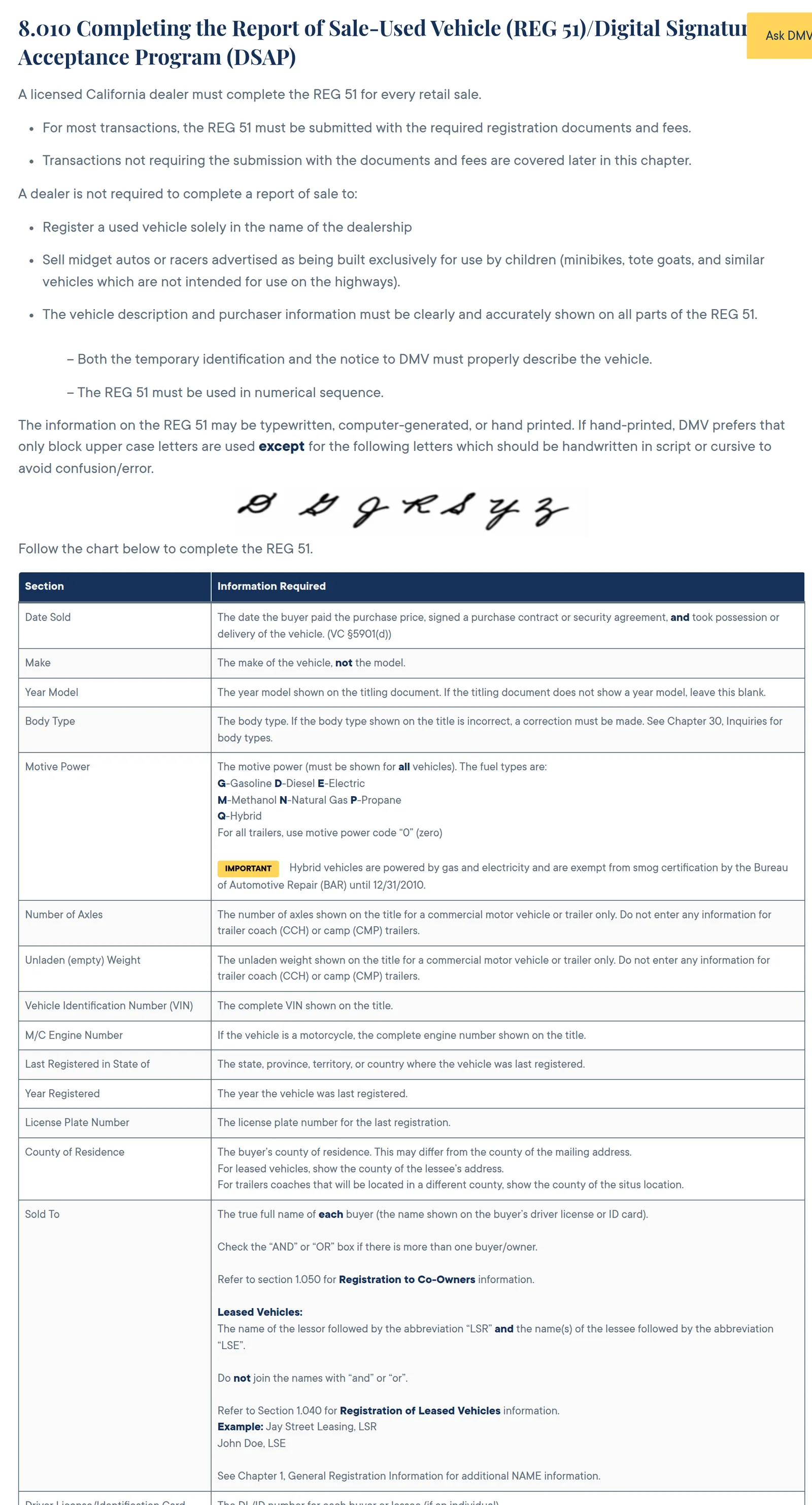
The dealer’s notice, the bottom of the replacement, is mailed to the DMV address on the form no later than the fifth calendar day after the sale. The sale date itself does not count. That mailing releases the dealer from civil liability for later operation of the vehicle. A private seller’s NRL is the cousin, and it is not this sheet. The application copy, the top of the original, still goes to DMV within 30 days of the sale, with the fees and the documents required to transfer the vehicle. The dealer keeps the book copy four years. The title is still the ownership sheet. REG 135 is still the receipt for the price and the parties. A lien release is still the lender’s paper.