Published by HALOX Co.
What a serpentine belt actually does
Follow the serpentine belt, distinguish driven pulleys from routing pulleys, and understand why cracks and noise alone do not settle belt condition.
A serpentine belt carries rotation from the crankshaft pulley to several accessories. Its ribs fit grooved pulleys and transmit power by friction. Depending on the engine, that route can drive the alternator, A/C compressor, hydraulic power-steering pump or water pump. Gates describes those applications; an electrically driven accessory will not appear on the same route.
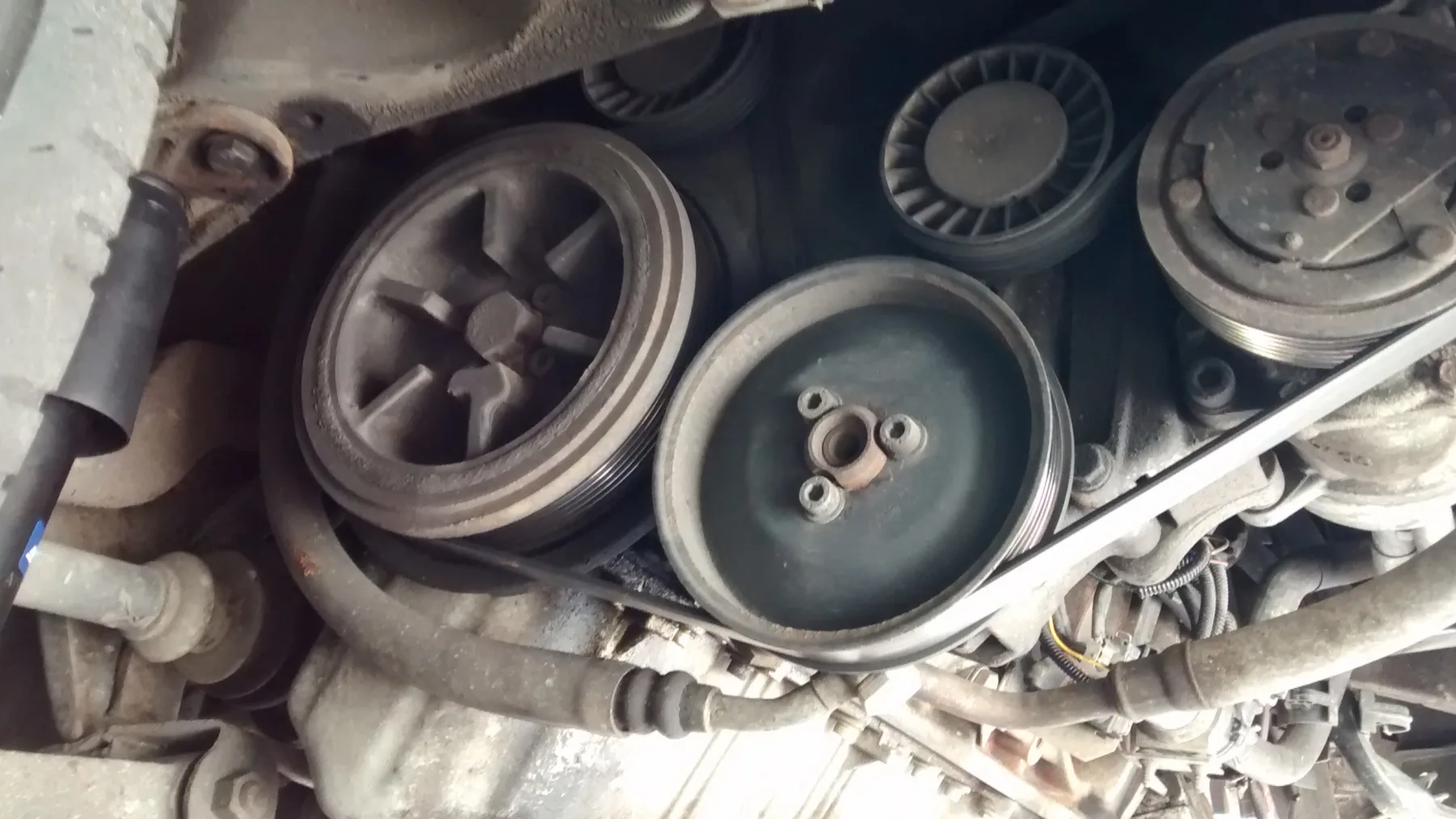

The vehicle’s routing diagram matters. An idler changes the belt’s path, while an automatic tensioner applies force through its pulley to maintain tension. The tensioner pulley may contact the smooth back or the ribbed face, according to the design. A smooth pulley alone does not identify the component behind it: some accessories also use the belt’s back.
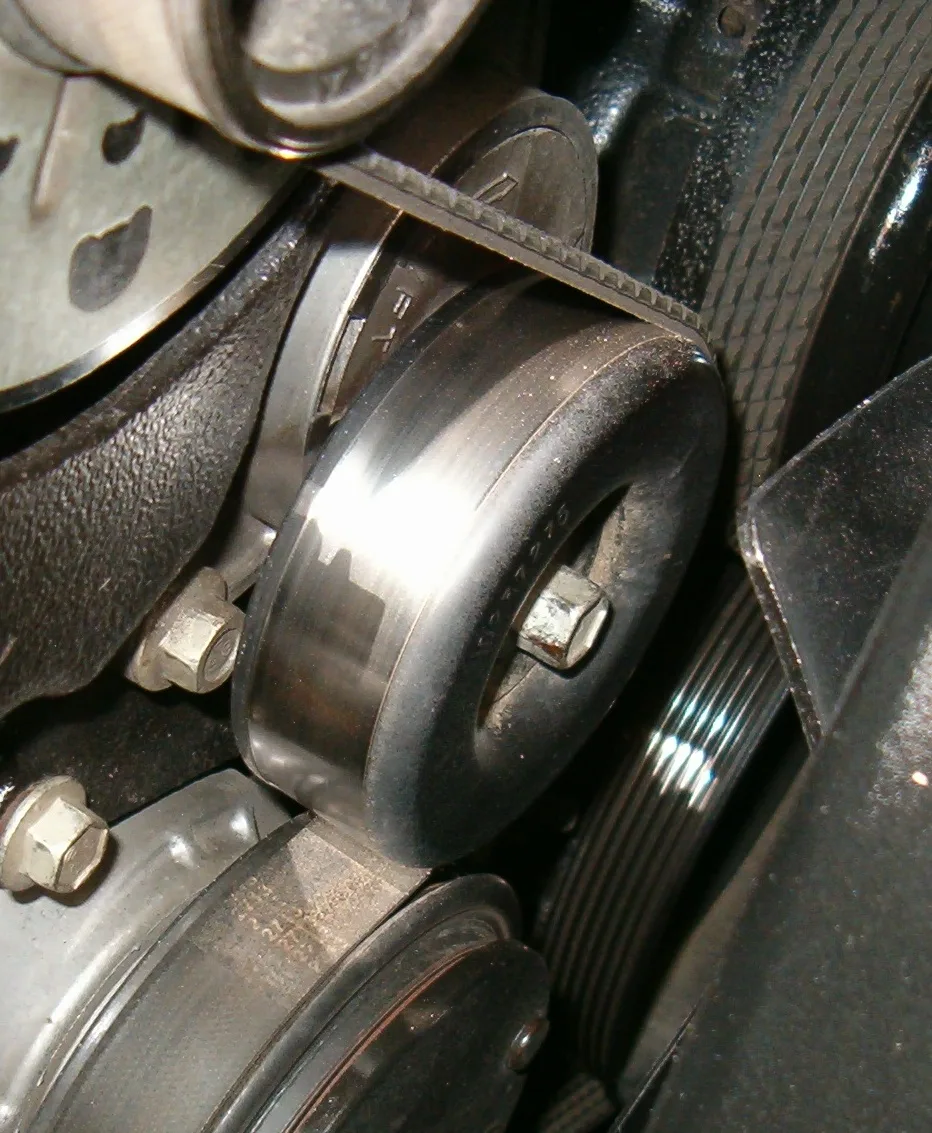

Not every accessory drive uses a spring tensioner. Some separate elastic belts maintain their own tension. Gates’ Stretch Fit belt description identifies that construction, which needs the specified fitting method.
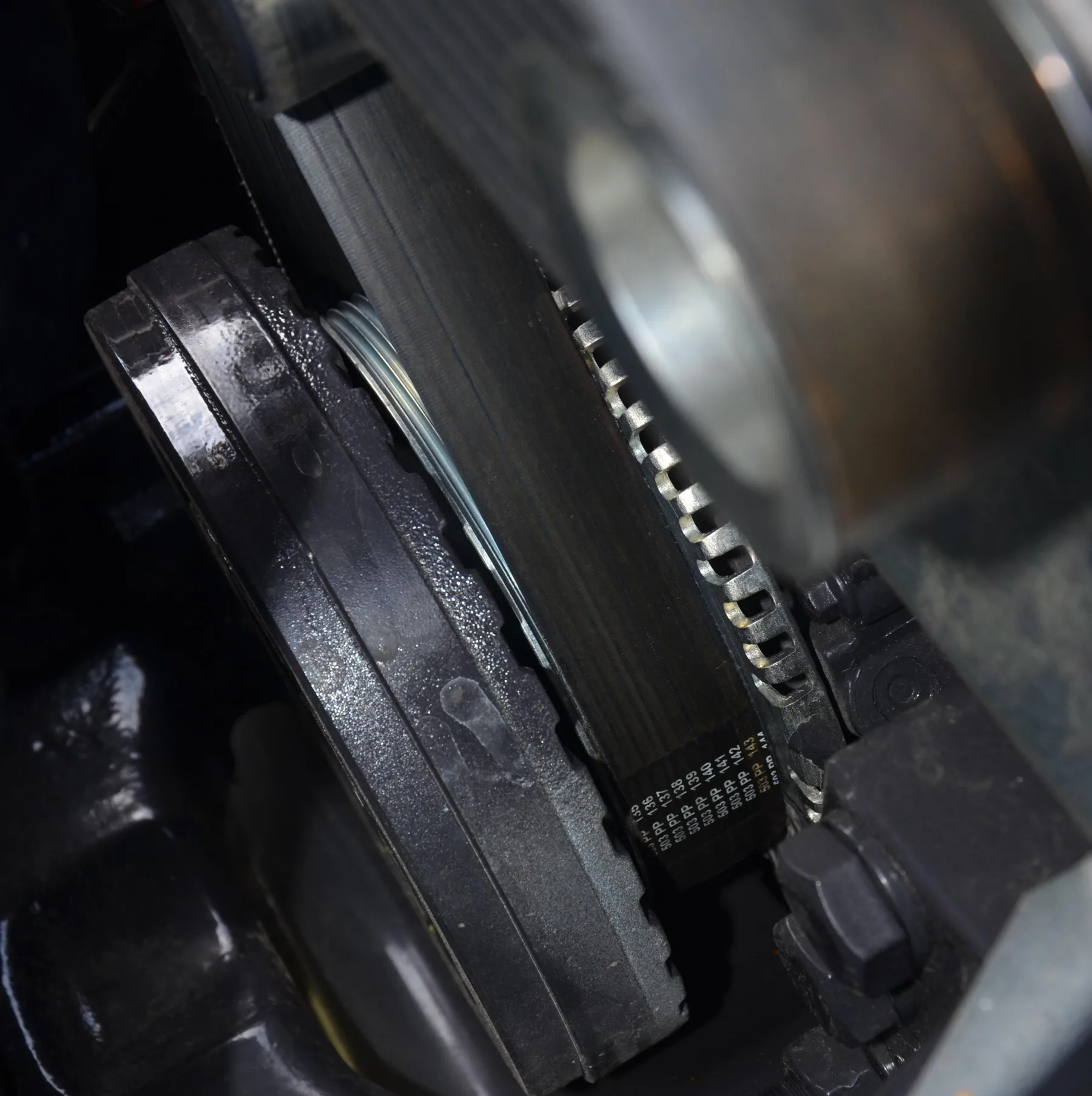

Cracks are only part of the inspection
Modern EPDM belts can lose material from their ribs without developing obvious cracks. The changing rib profile affects how the belt sits in a pulley and transmits force. Gates’ inspection bulletin specifically warns against using a crack check alone for EPDM belts.
A chirp or squeal is a reason to inspect the drive, not proof that the belt alone has failed. Belt fit, contamination, pulley alignment and tension all affect the contact. A belt that stops can disable its driven accessories, but those accessories can also cause a drive problem.
Sources
- Gates: Micro-V belt drive systems — Accessory applications
- Gates TT002-15: belt inspection changes — EPDM rib material loss and pulley fit
- Gates: Stretch Fit belts — Elastic belt construction without conventional adjustment
References checked .