Published by HALOX Co.
What a sway bar actually does
Why a sway bar is a torsion spring that only works when the two wheels move unequally, what that does to body roll and to ride over one-wheel bumps, and why stiffer isn't always better. Covers how links and bushings connect it, the symptoms and causes of worn links, and how it differs from a damper, roll cage or strut brace.
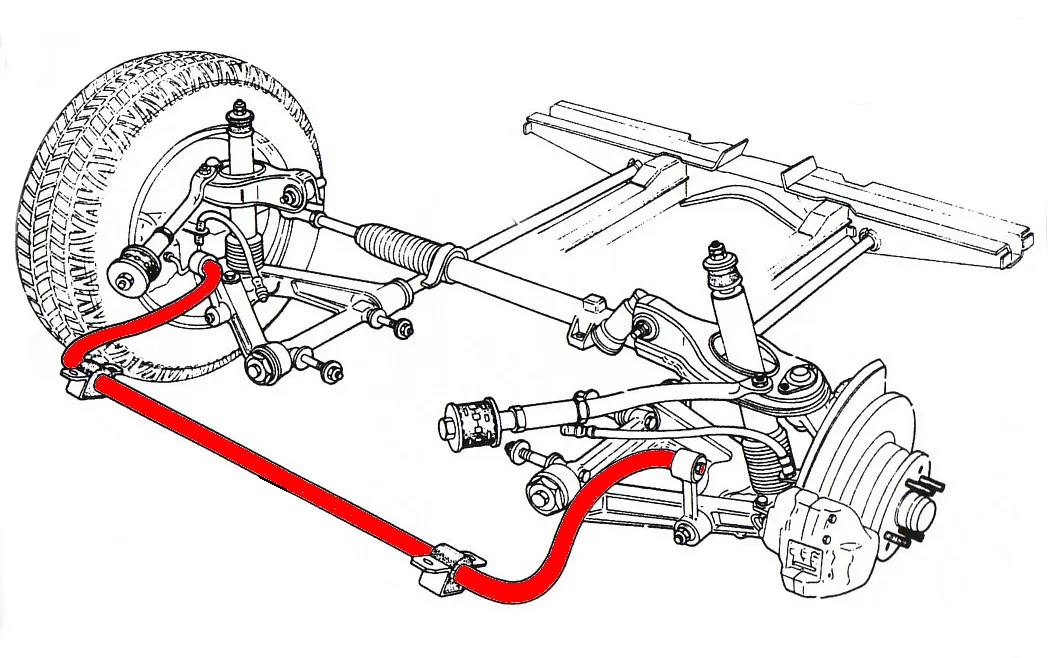
A sway bar, stabilizer bar and anti-roll bar are different names for the same part. It ties the two sides of an axle together so that when the wheels move by different amounts, the bar twists. That resistance adds roll stiffness and limits how far the body leans in a corner. Eibach explains the left-to-right connection.
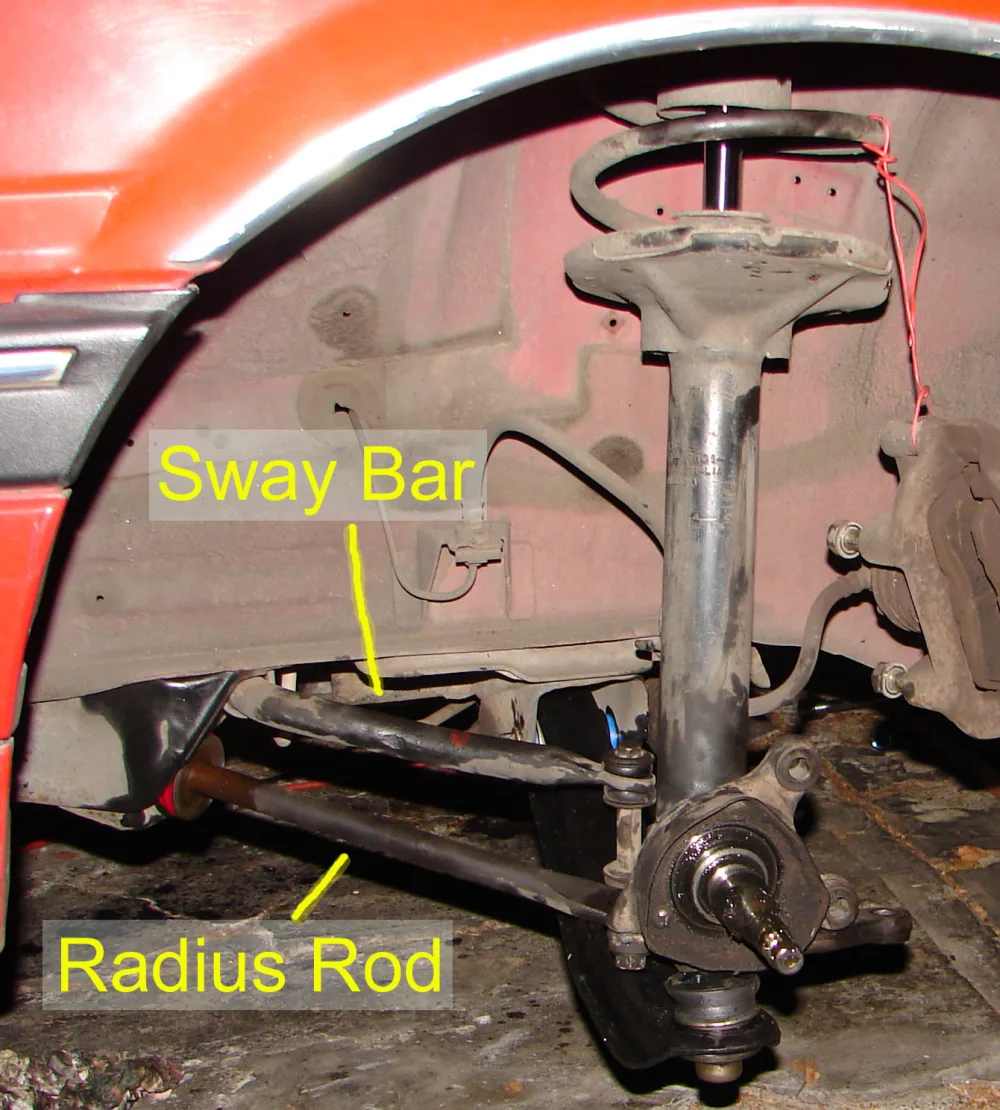


In a corner, weight shifts to the outside. The suspension compresses on that side and extends on the other, and the body rolls. By passing force from one side to the other, the bar helps keep the car flatter. Eibach.
The bar is a spring. Twisting it stores energy, and it pushes back as it tries to straighten. It works alongside the main coil, leaf or air springs, which carry the car’s weight. Saying it’s “not a spring” hides the very thing that makes it work.
Unequal movement is the key
One stabilizer-bar patent describes the typical setup on independent front suspension. The bar is “nothing more than a torsion bar” running across the car. It’s mounted to the frame on each side but free to rotate, with arms at each end attached to the control arms. This stabilizer-design patent.
If both wheels rise together by the same amount, the bar just rotates in its mounts with little twist. If one side rises more than the other, the bar twists and passes force across.
That coupling has a cost, which the patent spells out. When one wheel hits a bump, the bar tries to lift the other wheel too. That hurts ride on straight roads, makes low-speed driving less comfortable, and can set up a rocking motion on rough or off-road surfaces, sometimes called “anti-roll-bar waddle.” Fast cornering on pavement wants a stiff bar, while slow, rough roads want a soft one. Most bars are stiff, favoring roll control. Patent US20040217569A1.

Links and bushings
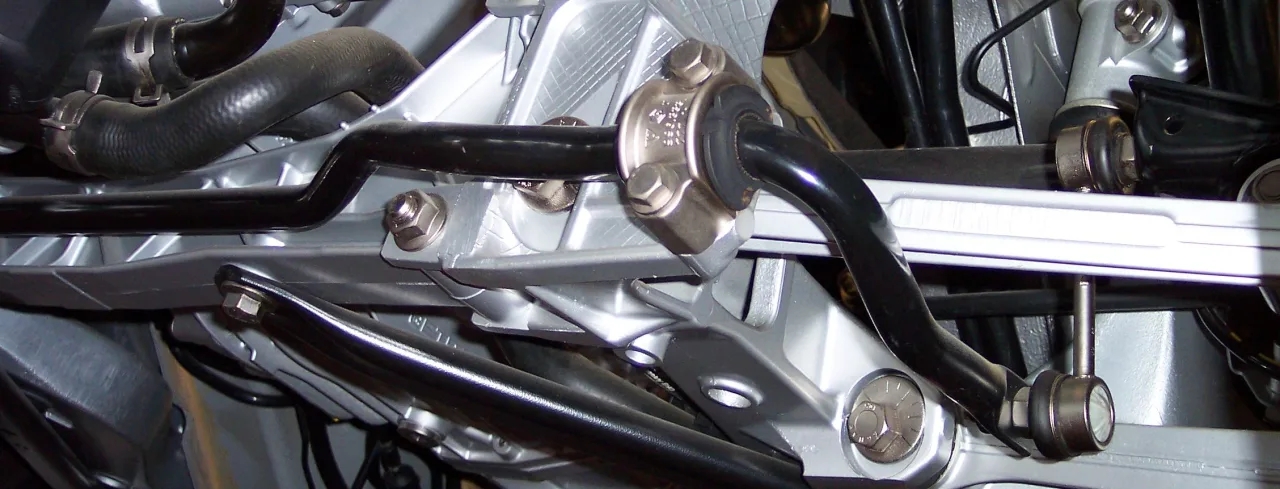
Bushings hold the bar to the body or subframe, and links connect its ends to the moving suspension. MOOG notes that front links may attach to the control arms, steering knuckles or struts, and rear links to the control arms or frame. Every modern car has a front bar and some add a rear one, so there can be up to four links. MOOG on sway-bar links.
MOOG lists these symptoms of worn links:
- metallic clunking over bumps;
- loose or vague steering;
- an unstable feel in turns and lane changes;
- uneven tire wear; and
- more body roll.
The causes it gives are corrosion from water, salt and debris, impacts from potholes or curbs, and overloading. MOOG also warns that these symptoms match other failing steering and suspension parts. MOOG. A clunk alone doesn’t pinpoint the link.

Stiffer isn’t automatically better
Aftermarket makers like Eibach sell stiffer bars, some adjustable, to fine-tune handling, and call springs the primary upgrade. Eibach. The patent shows the other side of that trade: more roll stiffness means more one-wheel coupling and a harsher ride on broken roads. Patent. Less roll isn’t a guarantee of more grip in every situation.
What it isn’t
- A damper absorbs motion through hydraulic resistance; the bar stores energy and gives it back.
- A roll cage reinforces the space around the occupants.
- A strut-tower brace ties the upper suspension mounts together.
Those are separate structures with separate jobs.
Sources
- Eibach: Anti-Roll-Kit — Weight transfer and body roll; left-right coupling; stiffer bars for handling fine-tuning (aftermarket maker)
- US20040217569A1: stabilizer bar design — Torsion bar mounted to frame with arms to control arms; ride and low-speed comfort tradeoff; one-wheel bump coupling; conflicting stiffness needs
- MOOG: signs of bad sway bar links — Link attachment points, number of links, symptoms and failure causes
References checked .