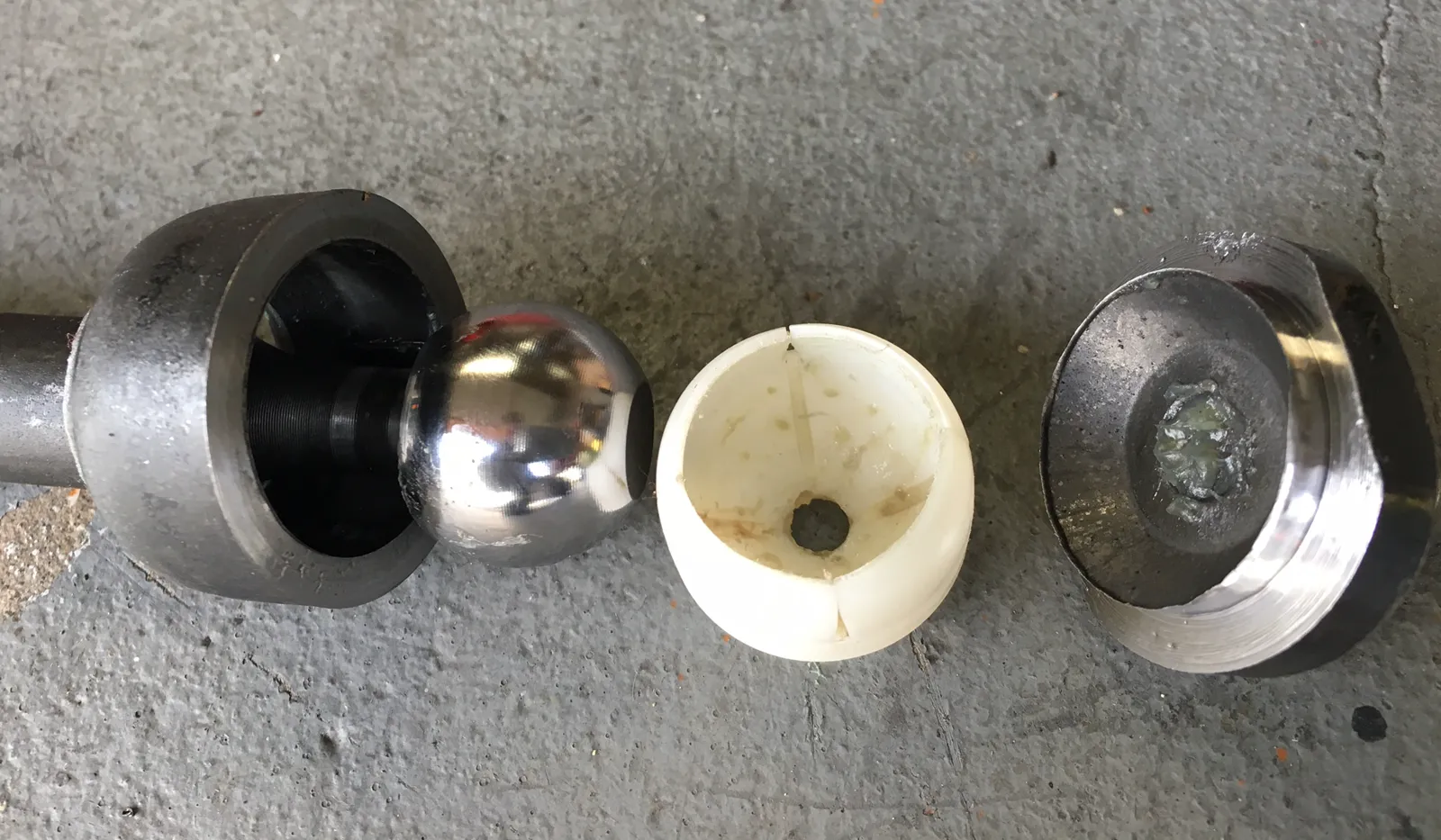
What a tie rod actually does
A tie rod is the link from the steering rack to the knuckle. Inner end in the rack, outer ball joint on the knuckle. It is not a control arm, not a CV axle, and not a sway-bar end link.
Turn the wheel and the tire follows. People still point at the fat CV boot and call that the steer. Or they call the wishbone the rod. Or they think the sway-bar drop link is the same piece.
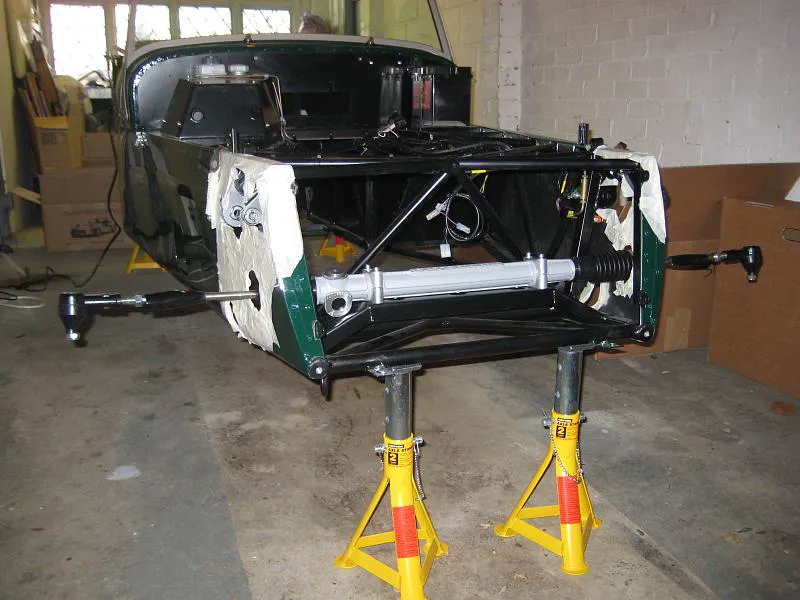
That silver tube is the rack. Inner rods leave each end. Outer ends are ball joints on the knuckle. The pinion walks the rack. The rods push or pull. The knuckle turns. That is the steer. It is not a control arm. That A locates the hub as the wheel goes up and down. It is not a CV axle. That shaft drives the hub. It is not the sway-bar end link. That little drop only loads the bar.
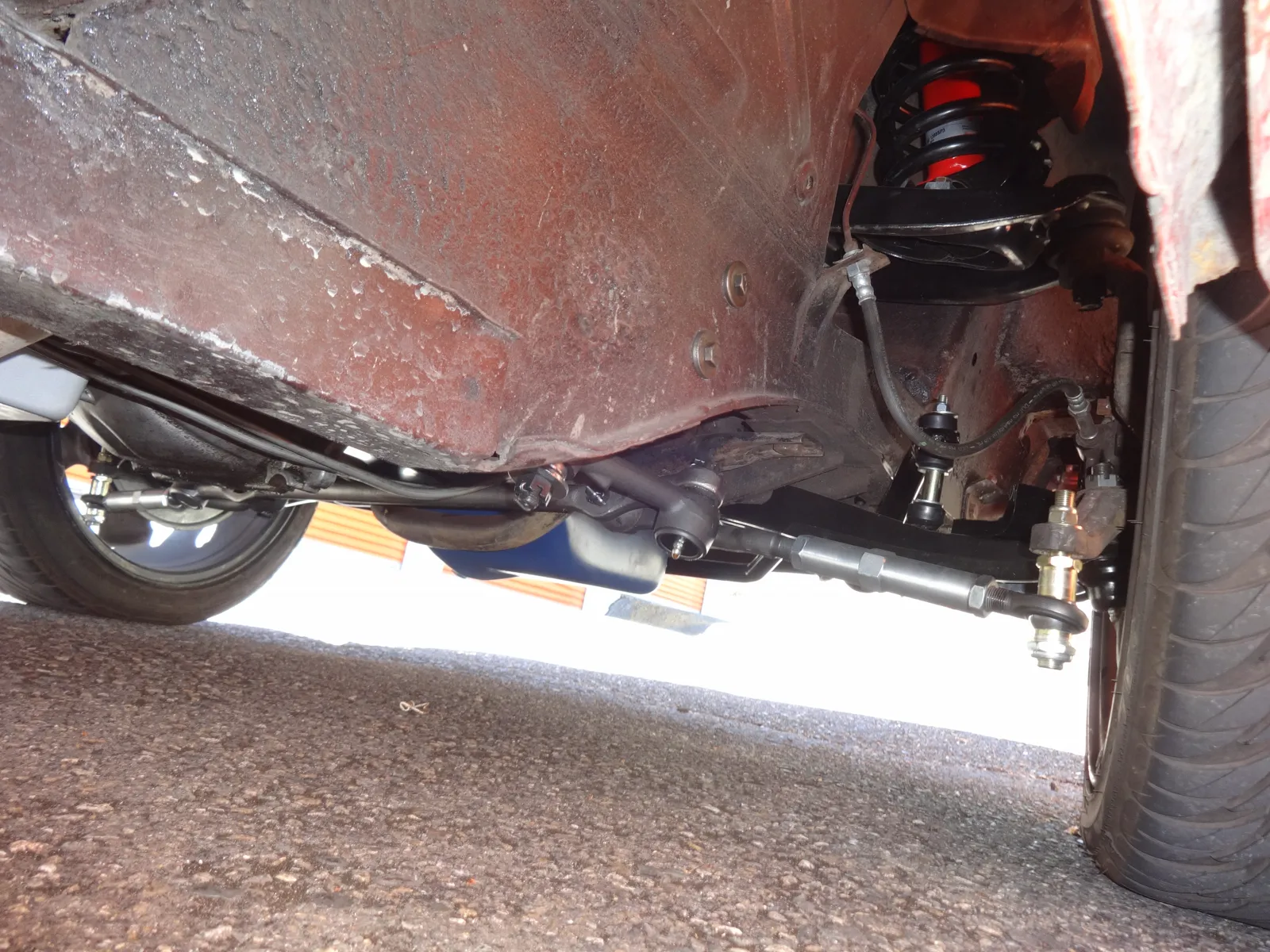
Inner and outer are one link: rack to knuckle. The inner end is a ball in a socket under the rack boot. Cut one open and the sphere is the hinge. The outer end is the short taper through the knuckle. Threads between them set toe. Play in that ball is the clunk on lock and the wander on the highway.