Published by HALOX Co.
What a timing chain actually does
Timing-chain synchronization, guides and tensioners, the separate accessory belt, and the difference between no fixed interval and no possible wear.
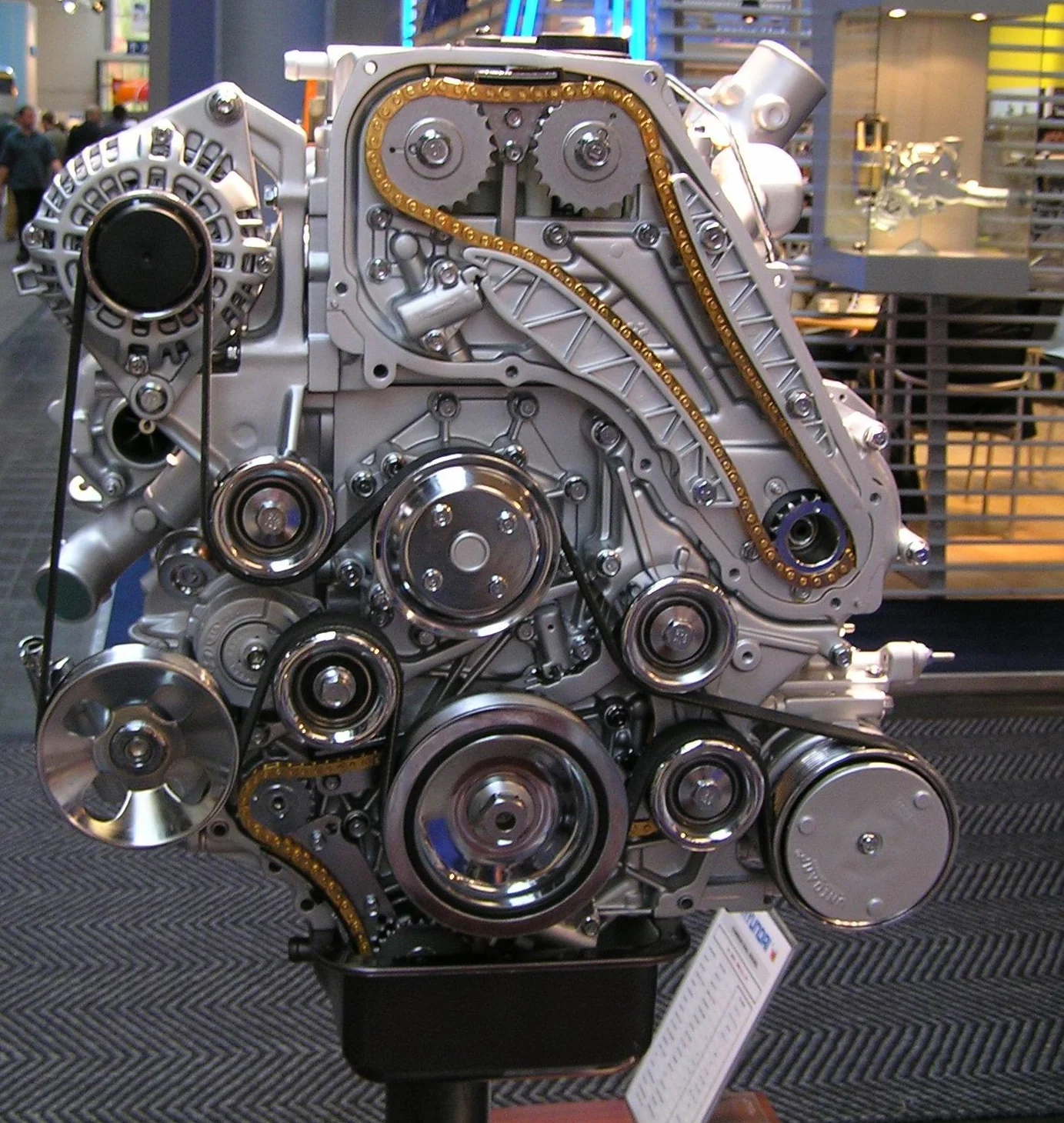
A timing chain links the crankshaft to the camshaft or camshafts. The crank moves the pistons; the cams operate the valves. Their relative timing must remain correct as the engine turns. The chain engages sprockets to maintain that relationship, rather than driving accessories by friction like a serpentine belt.
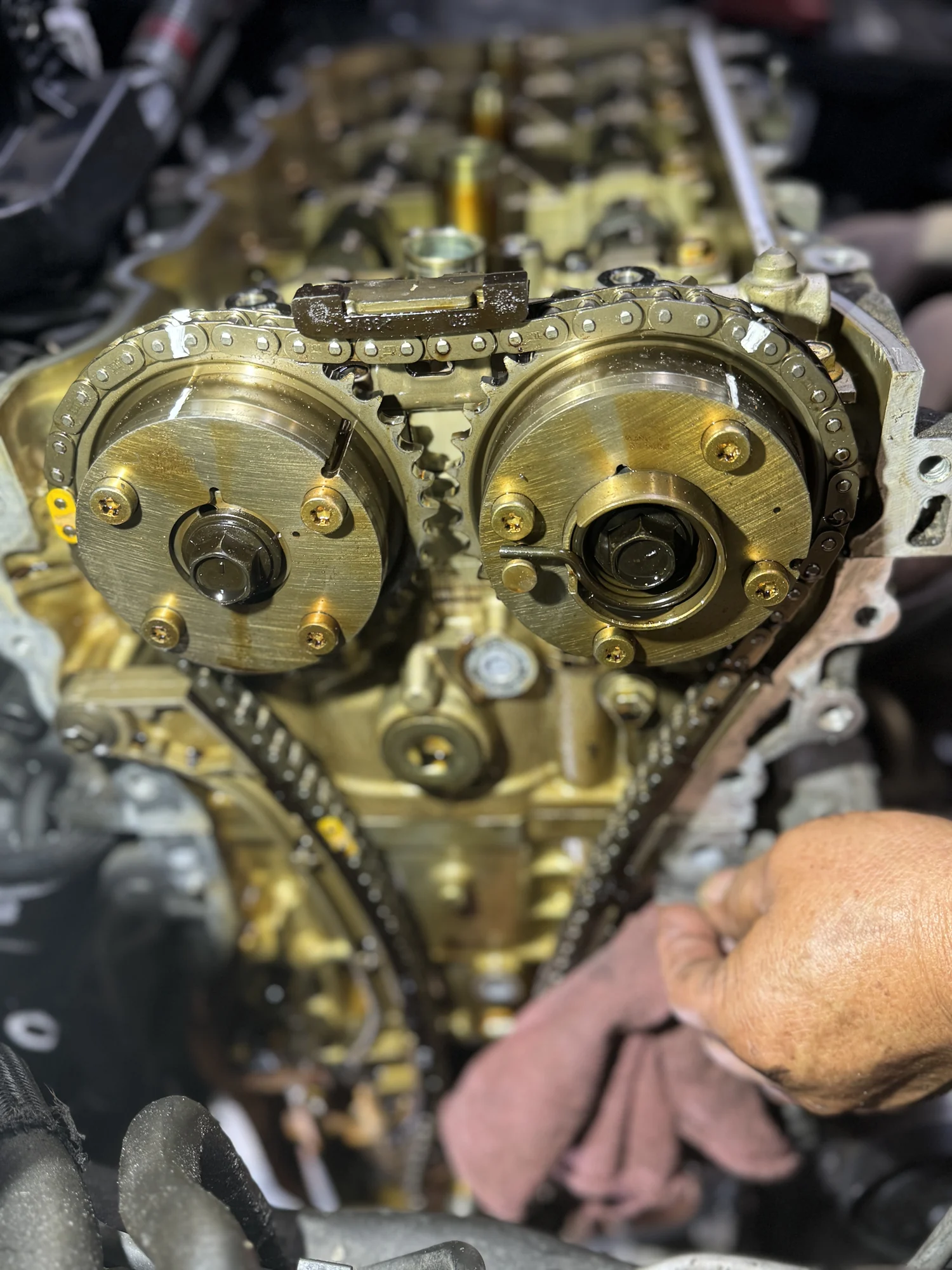

The timing system includes more than metal links. Guides constrain the route, and tensioners take up slack on the appropriate side. Some engines add camshaft phasers for variable valve timing. Cloyes’ timing-kit description lists these distinct components and explains that the contents depend on the engine.

No fixed interval does not mean no wear
A chain is an internal engine component, and many vehicles do not specify a routine replacement interval for it. That differs from claiming that it will last indefinitely. Cloyes discusses the interval distinction.
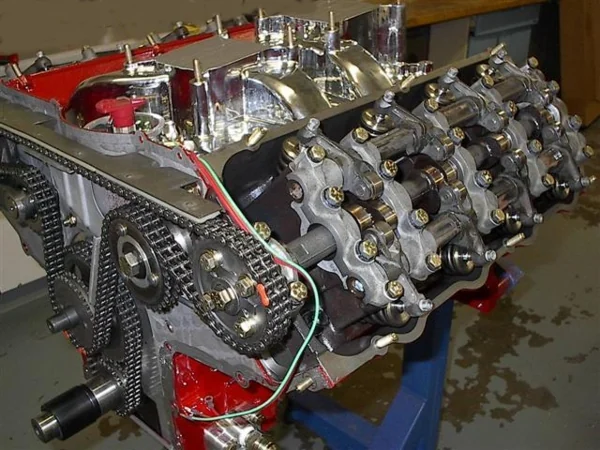
Wear in the chain joints can accumulate as elongation and disturb timing. Guides and tensioners also belong in an assessment of the drive. Cloyes’ technical-center explanation identifies wear and elongation as reasons timing systems need service. Maintain the specified engine oil and service schedule, and follow model-specific inspection or replacement guidance.


A cold-start rattle is information to investigate, not proof that the chain alone has stretched. Nor does a quiet engine prove that every timing component is sound. The accessory belt and the timing drive have different jobs even when their covers sit close together; finding a worn accessory belt does not settle the condition of the chain behind the cover.
Sources
- Cloyes: timing chain kits — Chains, guides, sprockets, tensioners and phaser variants
- Cloyes: timing chain maintenance intervals — Internal-component classification versus wear
- Cloyes: technical center — Timing-chain wear and cumulative elongation
References checked .