What a tire placard actually is
A tire placard is the Tire and Loading Information card on the driver's door jamb. It states cold inflation pressures, the occupant-and-cargo limit, and tire size under FMVSS 110. It is not the title, not registration, and not the sidewall maximum pressure.
Open the driver’s door. The card on the jamb is headed Tire and Loading Information. The usual spot is the driver’s B-pillar. No pillar, and the same card goes on the door edge. That card is the placard.
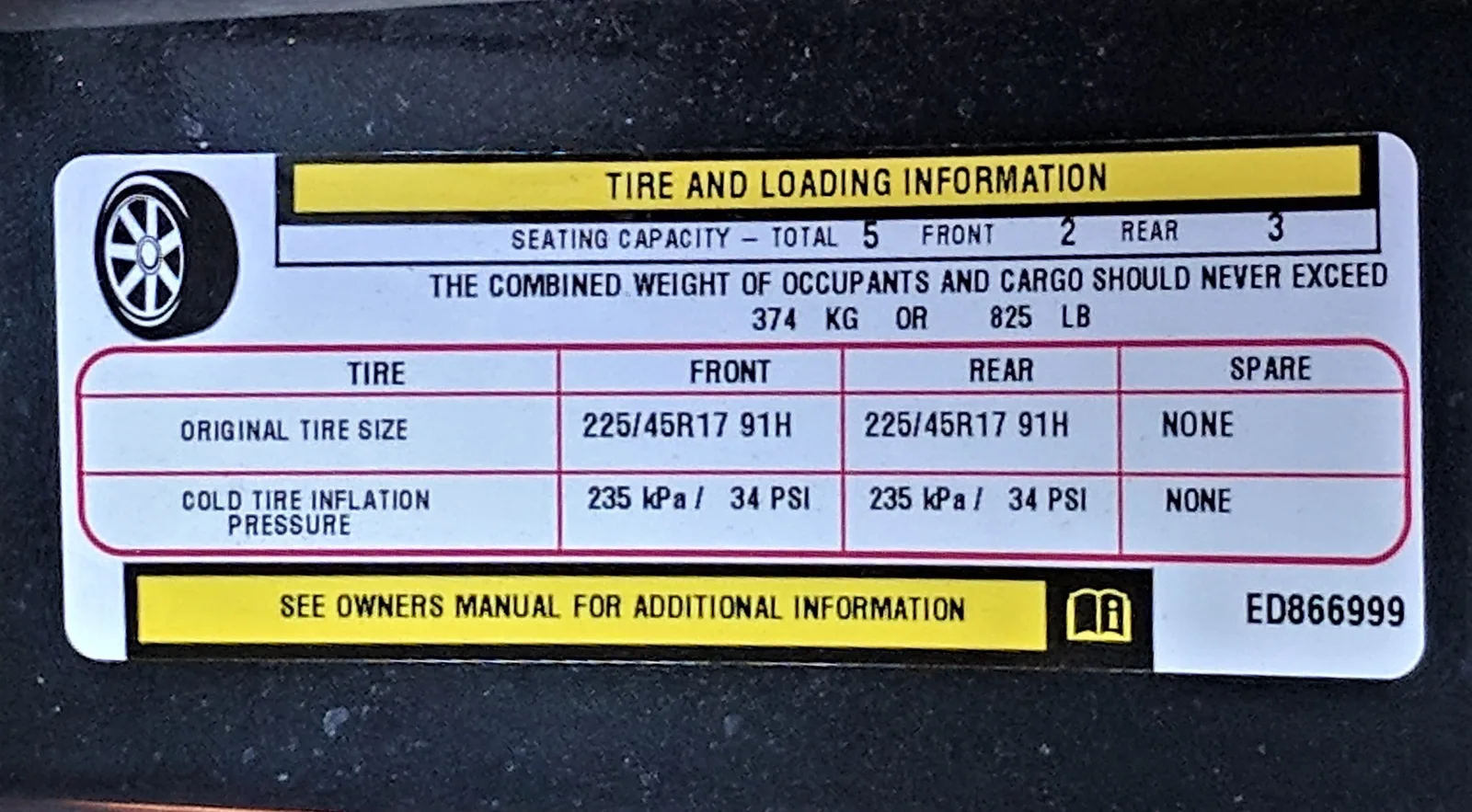
It carries this vehicle’s numbers. The load line is the combined weight of occupants and cargo that should never be exceeded, and the seating count those seats were rated for. Below that are the tire size fitted at first retail sale and the cold inflation pressure for the front, the rear, and the spare. Cold means the tire has not been heated by a drive. FMVSS 110, 49 CFR 571.110, requires the card on a vehicle with a gross vehicle weight rating of 10,000 pounds or less. It is not the title. It is not the registration.
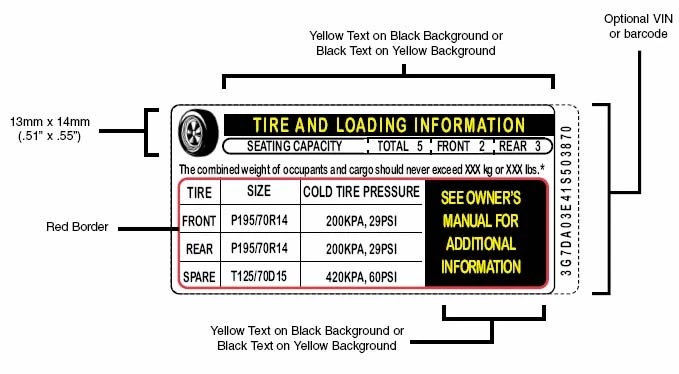
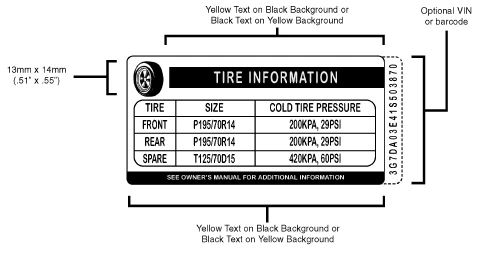
The example in the standard is that layout: a yellow header, the never-exceed line, the seating count, then size and cold pressure. A maker may move size and pressure onto a second label next to the placard, headed Tire Information. The load line stays on the placard. The pressures, if they move, move to that label.
The number molded into the sidewall is the tire’s maximum permissible pressure. Placard pressure has to sit at or below that maximum, and it has to suit the load this vehicle puts on the tire. Filling to the sidewall number treats the door card as optional. The door card is the pressure the vehicle was certified with.