Published by HALOX Co.
What a turbocharger actually does
Follow the exhaust and intake paths through a turbocharger, then find the shaft, center housing, intercooler, and boost-control valves.
Start with the pipes. One set brings exhaust from the engine to the turbine and carries it away afterward. The other brings filtered outside air to the compressor and sends it toward the intake. The shaft connects the wheels; the plumbing keeps the gas streams separate. Garrett’s system guide shows the two sides and their common shaft.
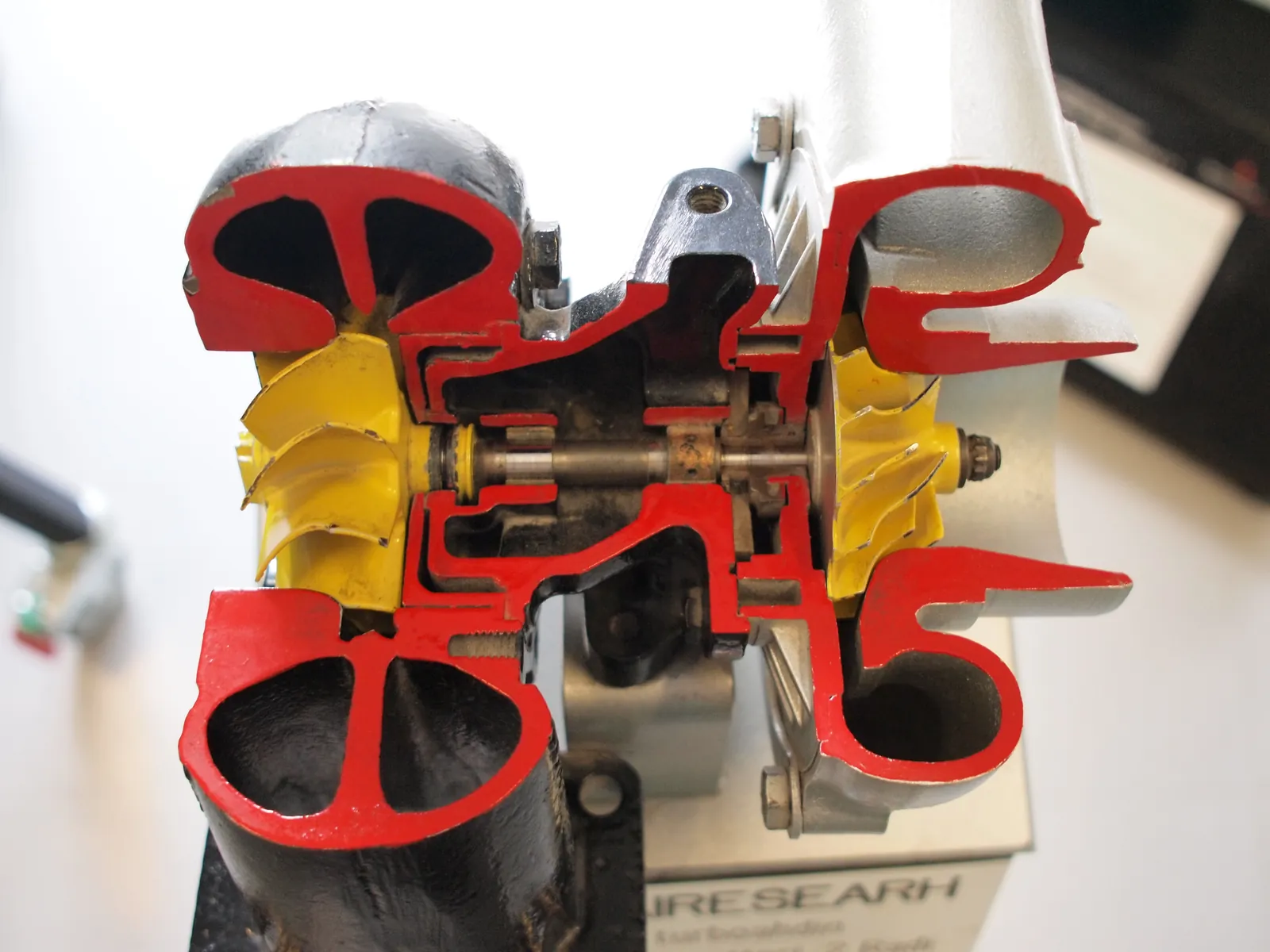

Two paths, one shaft
The turbine takes energy from the hot exhaust. That turns the shaft and the compressor wheel on its other end. The compressor raises the pressure of the incoming air. With more air mass available in the cylinders, the engine can burn more fuel and produce more power for its displacement.
Many systems put an intercooler between the compressor and the engine. Cooling the compressed air increases its density. It gives the intake charge another step between the wheel that compresses it and the cylinders that use it. Garrett’s basic guide follows that route through the compressor, charge-air cooler, and intake manifold.
The center housing sits between the two outer housings. It supports the rotating assembly and carries the bearings and oil connections. CHRA means center housing and rotating assembly: the center unit, shaft, and wheels. It is a name for the middle assembly within the complete turbocharger. Garrett’s CHRA training notes explain the assembly and its rotating parts.
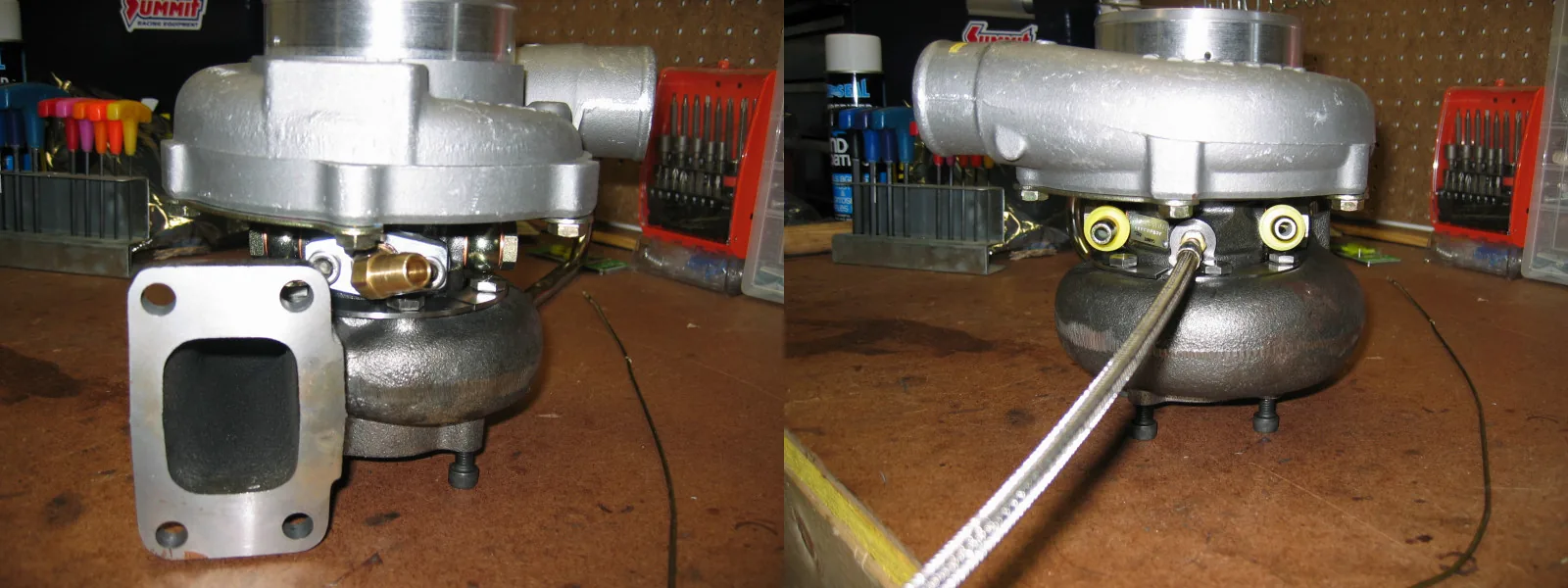

The valves have different jobs
On a wastegated turbo, opening the wastegate lets some exhaust bypass the turbine. Less exhaust energy reaches the wheel, which helps control boost. The bypass can be built into the turbine housing or sit in the exhaust plumbing. Some turbochargers use variable turbine geometry; a visible wastegate can is not a universal identifying feature. Garrett describes those arrangements in its guide to turbocharger types.
A blow-off or compressor bypass valve deals with air on the intake side. Its pressure-relief job helps protect the compressor from surge, particularly when the throttle closes. Trace which pipe the valve serves: an exhaust bypass and an intake pressure-relief valve act on different sides of the same machine. Garrett’s basic guide distinguishes the two.
Why the response takes time
The wheels have to accelerate when the engine asks for more air. Their inertia and the available exhaust flow affect how quickly boost builds. That delay is turbo lag. The response depends on the turbo and the engine around it, so a badge alone says little about how a particular car will feel. Garrett’s explanation of turbo lag describes those factors.
Sources
- Garrett: turbocharger system guide — Separate gas paths and shared shaft
- Garrett: turbo basics — Airflow, charge-air cooling and intake/exhaust control valves
- Garrett: CHRA training notes — Center housing, bearings and rotating assembly
- Garrett: turbocharger types — Wastegate and variable turbine designs
- Garrett: turbo lag — Rotating inertia and available exhaust flow
References checked .