Published by HALOX Co.
What a wastegate actually does
Follow a wastegate through the exhaust bypass, valve and actuator, and see why visible rod movement cannot establish that boost control works.
The small can and rod beside some turbochargers belong to the actuator. Follow the rod toward the turbine housing: it operates a valve that gives exhaust another route. The valve and that bypass are the wastegate; the can is the part that moves it.
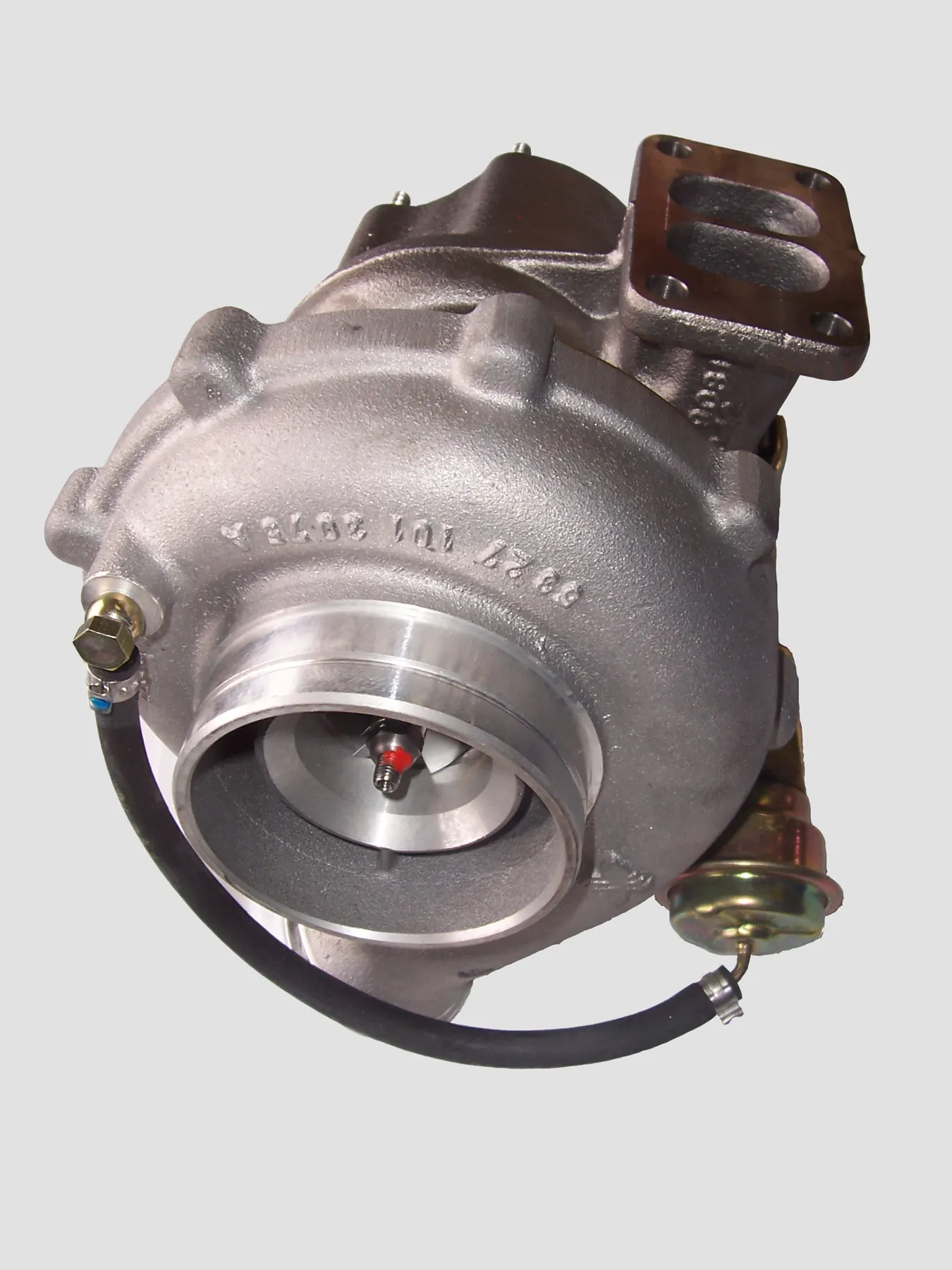

Follow the exhaust bypass
Exhaust normally drives the turbine wheel, which shares a shaft with the intake compressor. Opening the wastegate sends some of that exhaust around the turbine. The wheel receives less driving energy. Garrett’s system guide explains how that bypass helps match turbine power to the boost the system needs.
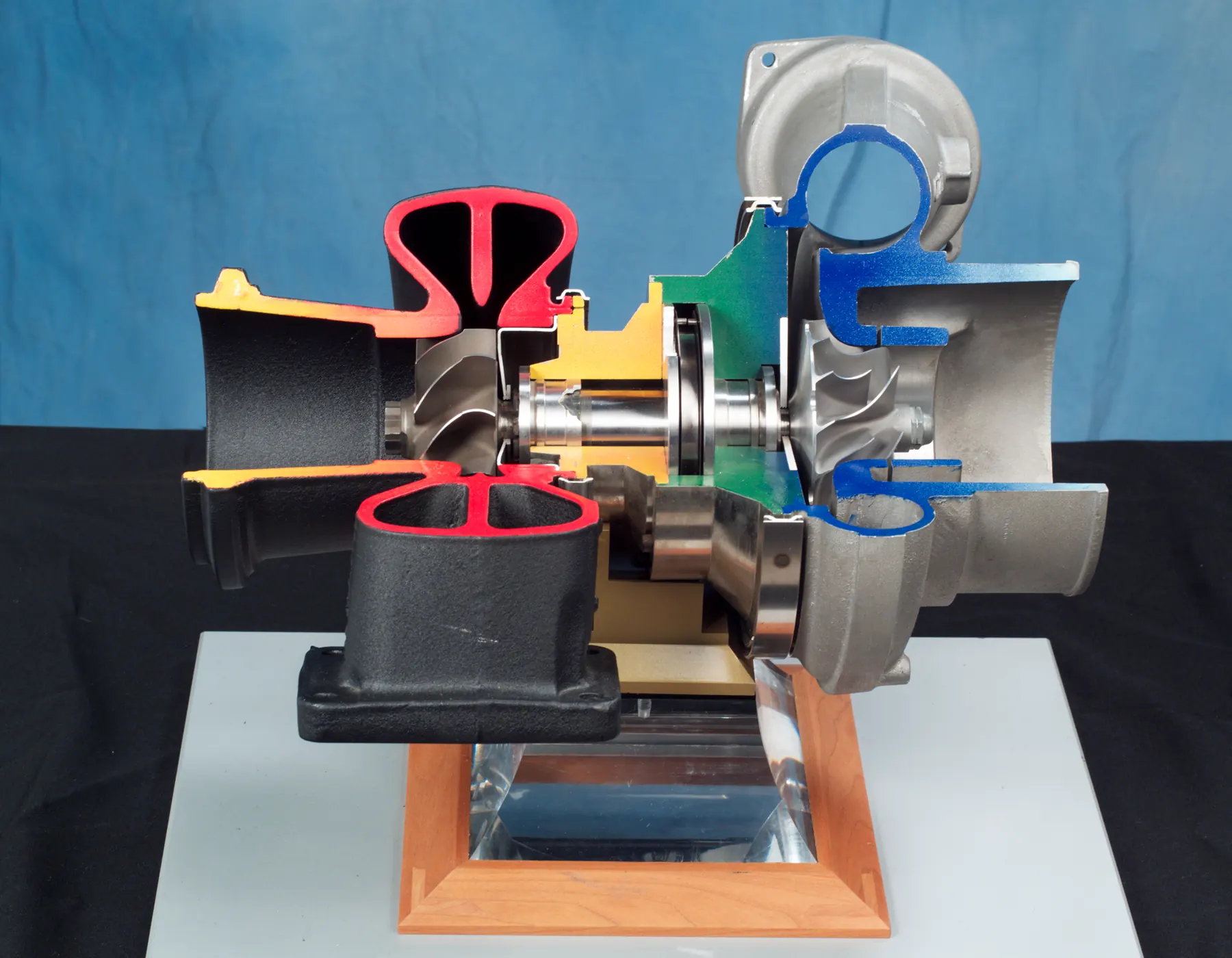


An internal wastegate puts the bypass valve in the turbine housing. An external wastegate uses a separate valve in the exhaust plumbing. The location changes, but both redirect exhaust before it does work on the wheel. Garrett explains internal and external placement. The NASA cutaway above shows the shared shaft; it is not an illustration of the wastegate valve itself.
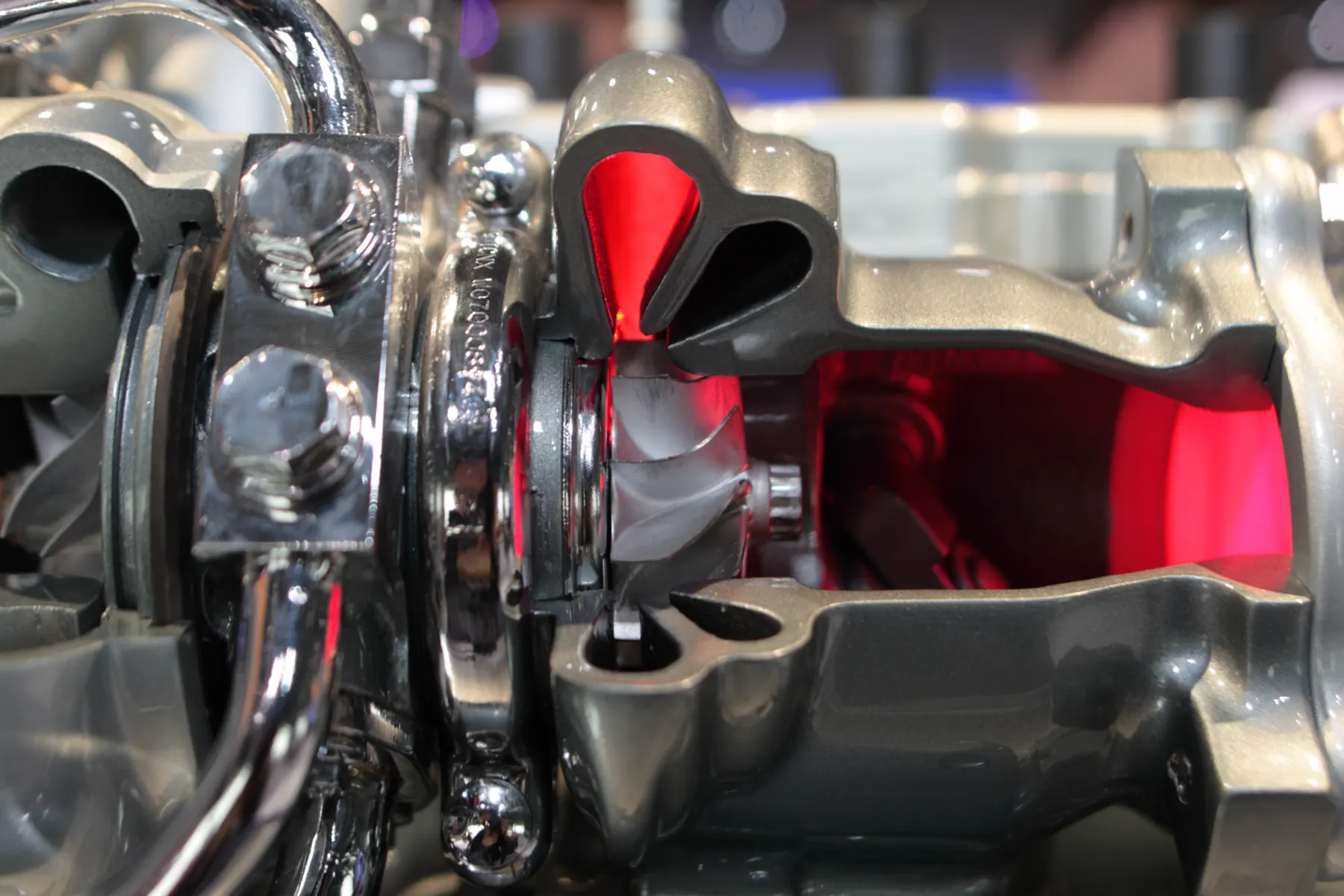

The actuator is part of a control system
A pressure-operated actuator uses pressure against a spring to move its rod. Other systems use electronic control. Garrett’s account of turbocharger types describes wastegate actuation and variable turbine geometry. A visible actuator can is therefore not a feature every turbo must have.
The rod’s movement shows one part moving. It does not measure boost or establish that the valve, its linkage and the rest of the control system work as intended under engine load. Revving a stationary car is not a complete boost-control check. A valve that cannot close may divert too much exhaust; one that cannot open may prevent the expected bypass. Those are explanations of the valve’s role, not diagnoses from a photograph or a driveway observation.
Sources
- Garrett: turbo basics — Exhaust-side bypass and distinction from intake-side valves
- Garrett: how wastegates work — Internal/external valve placement and actuation
- Garrett: turbocharger types — Wastegate and variable turbine designs
References checked .