Published by HALOX Co.
What a water pump actually does
How coolant-pump circulation, mechanical and electric drives, shaft sealing and the relief hole fit into the cooling system.
The water pump circulates engine coolant. In a typical centrifugal pump, a rotating impeller moves coolant through its housing and produces the pressure difference needed for circulation. The coolant carries heat away from the engine; the radiator transfers that heat to air. HELLA describes the pump and its impeller.
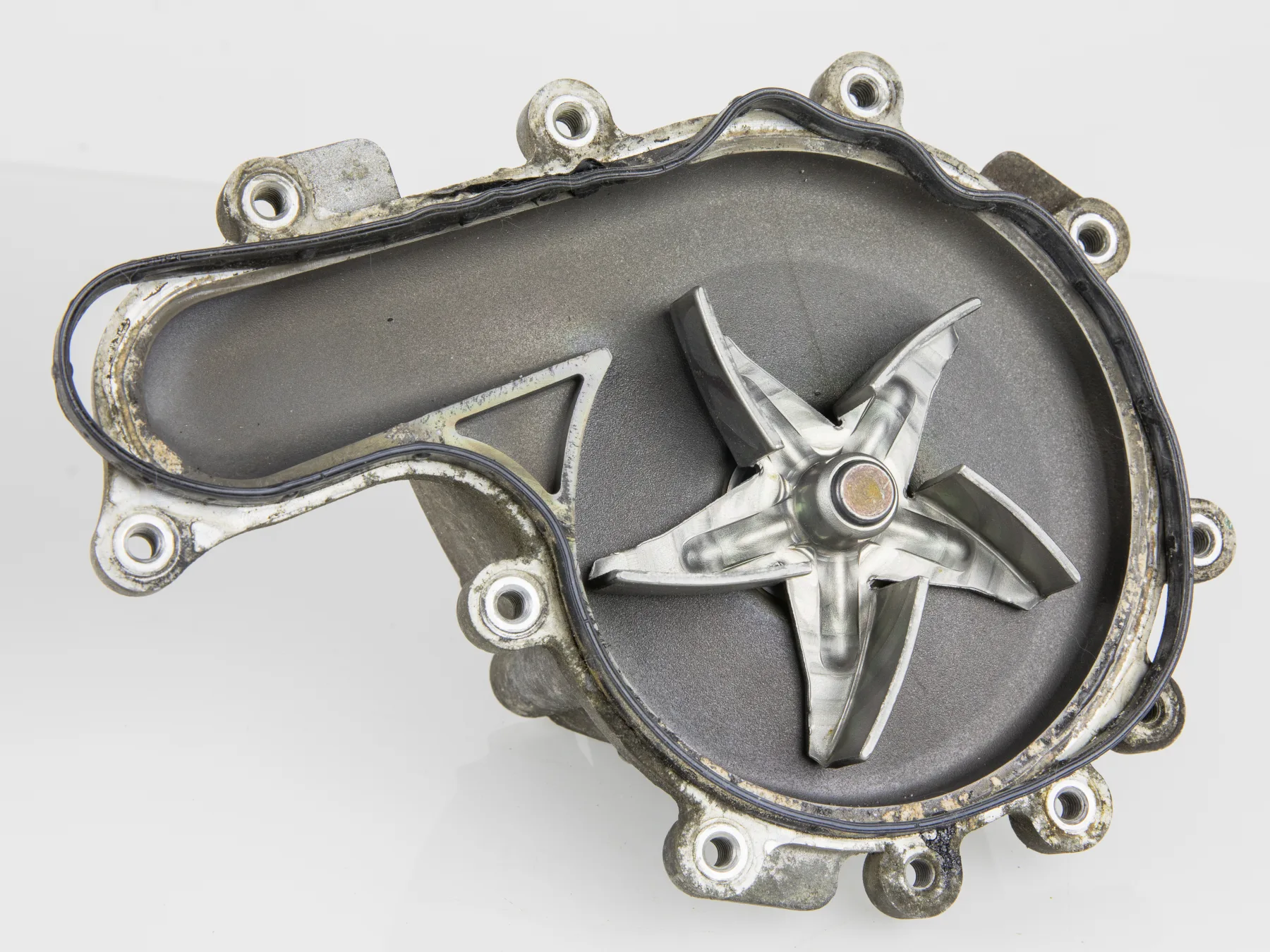

The cooling circuit determines where the flow goes. A bypass can keep coolant moving through the engine while the thermostat restricts the radiator route during warm-up. Opening the thermostat then admits more flow through the radiator. HELLA’s circuit explanation separates these jobs.
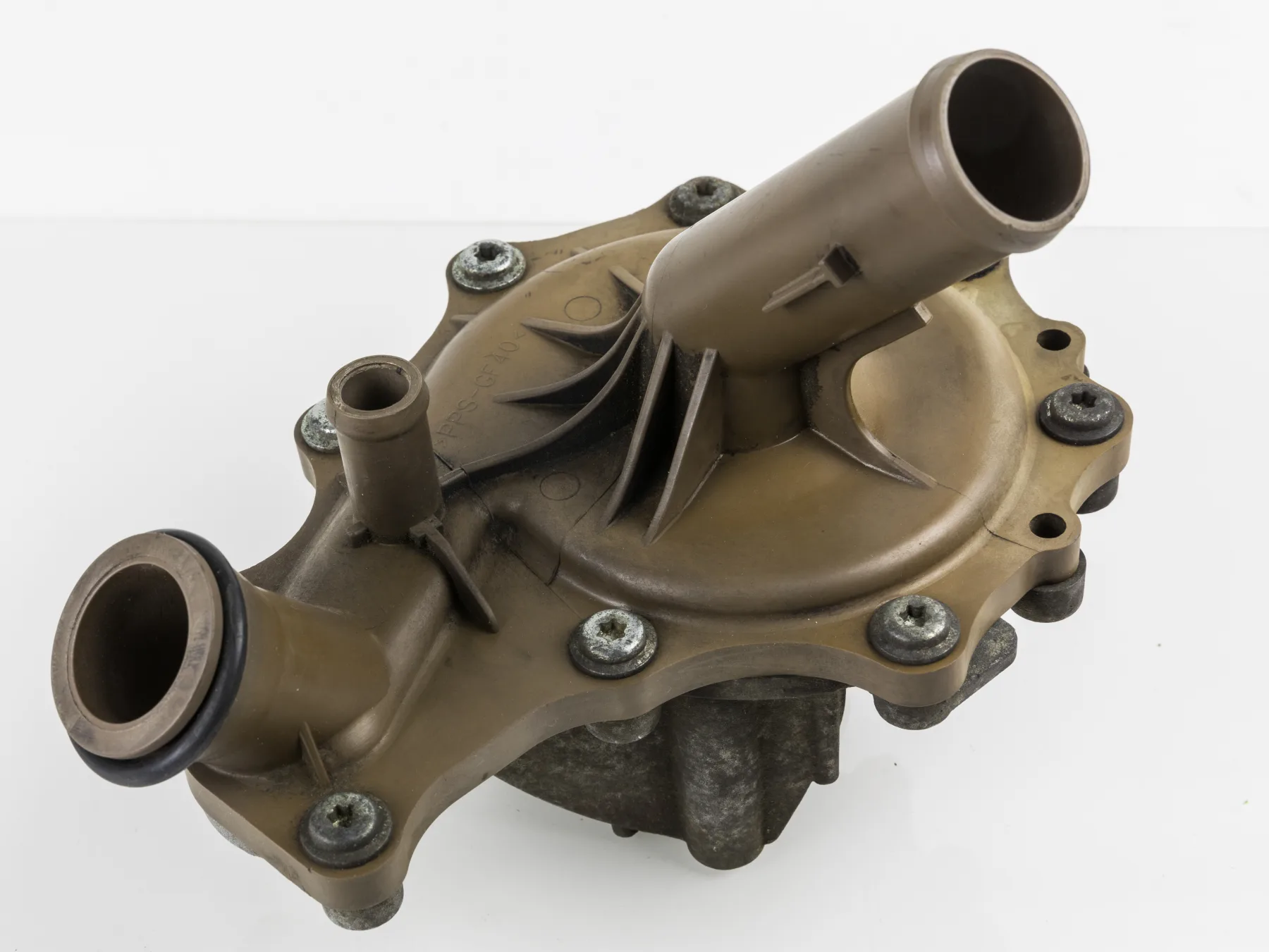

The drive is not always a belt
Mechanical pumps may use an accessory belt, timing drive or another engine-driven connection. Electric pumps have their own motor, allowing control of flow independently of crankshaft speed. They can serve as main or auxiliary pumps and, where commanded, continue circulating coolant after the engine stops. The visible pulley hub in the last photograph is one mechanical design, not a universal identifying feature.
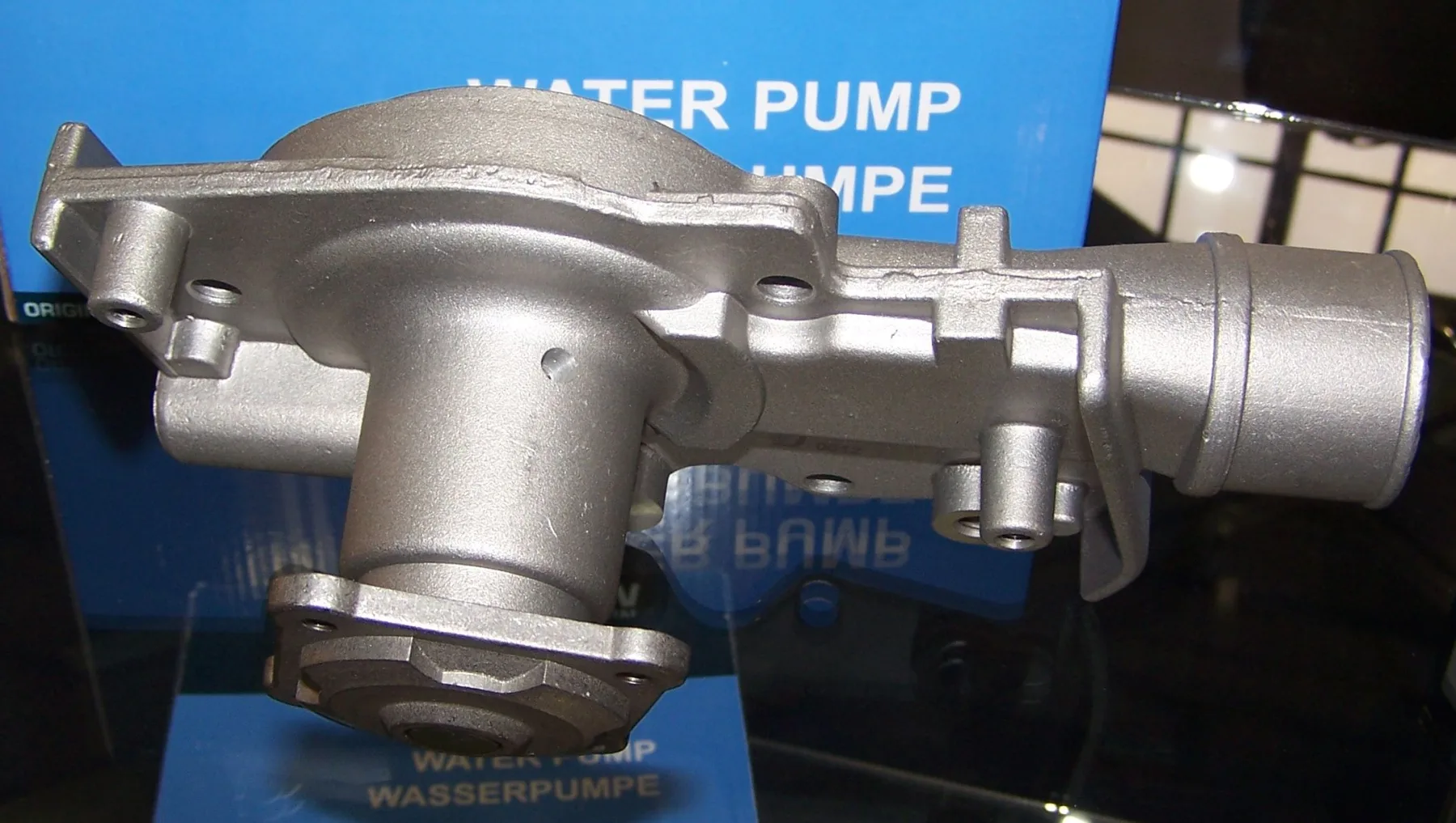

A mechanical shaft seal separates coolant from the bearing area. A relief or weep hole lets small amounts that pass the seal escape. HELLA notes that minor coolant traces at that bore can occur without proving a defective pump. Persistent leakage needs assessment against the pump manufacturer’s guidance; the opening should not be sealed as a repair.
Overheating or noise cannot identify the pump by itself. The circuit’s coolant level, airflow, thermostat, pressure control and actual circulation must be assessed together. A spinning pulley also does not establish that the impeller is securely turning with its shaft. HELLA’s cooling-system checks verify that attachment separately.
Sources
- HELLA: water-pump function and faults — Impeller, mechanical/electric drives and relief-hole traces
- HELLA: engine cooling basics — Bypass circulation and distinct radiator/thermostat roles
- HELLA: cooling checks — Verification of impeller attachment and circuit faults
References checked .