Published by HALOX Co.
What an A/C compressor actually does
Follow refrigerant through the A/C compressor and distinguish magnetic-clutch, variable-displacement and electric compressor arrangements.
The cabin blower moves air across the evaporator. The A/C compressor moves refrigerant around a separate, closed circuit. It draws in low-pressure vapor and discharges vapor at higher pressure and temperature, ready to reject heat at the condenser. HELLA explains this refrigerant route.
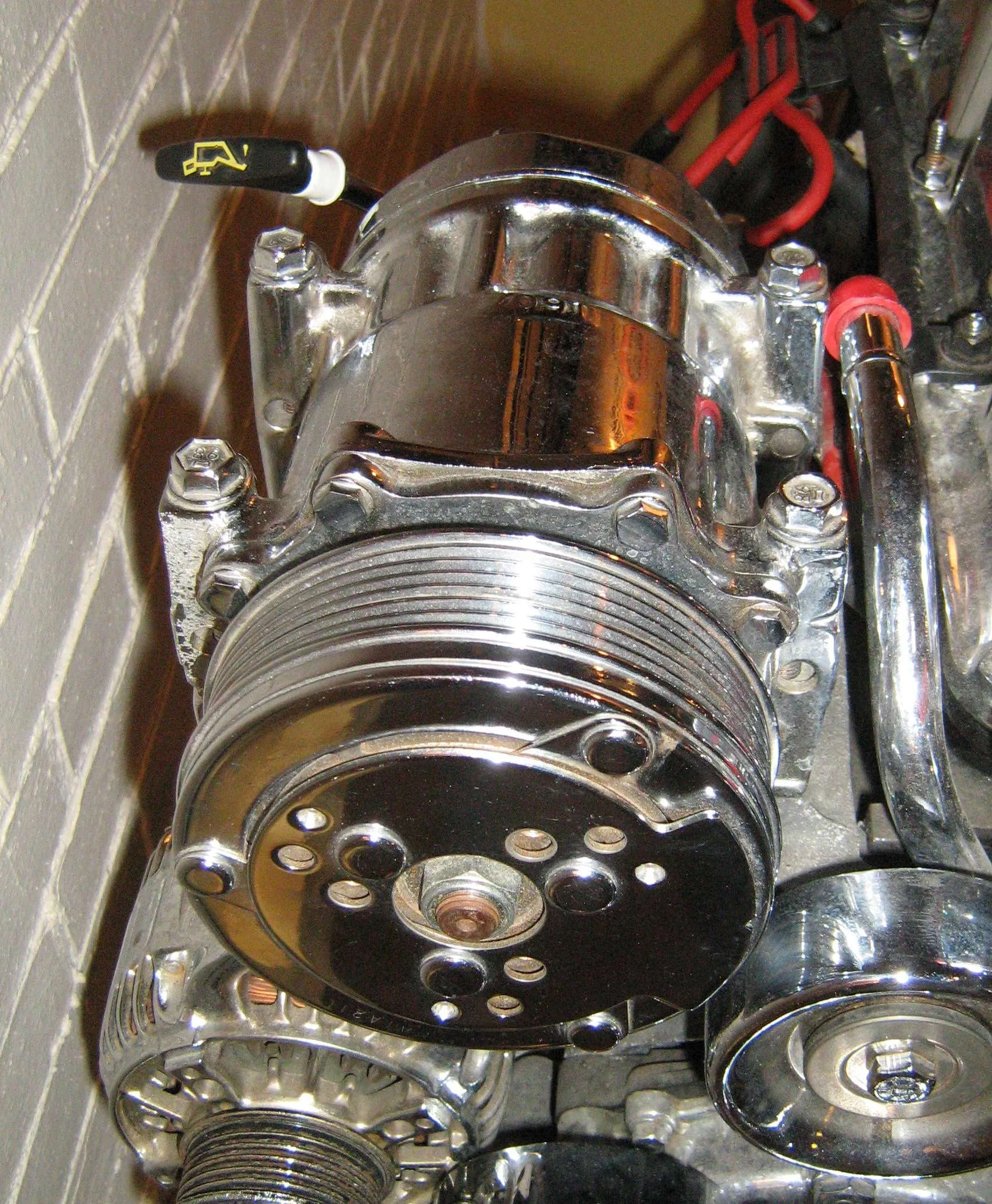


The pictured compressor uses an engine belt and magnetic clutch. The outer pulley can turn while the clutch is disengaged; engaging the clutch connects it to the compressor shaft. That is one arrangement, rather than a feature every A/C compressor has.
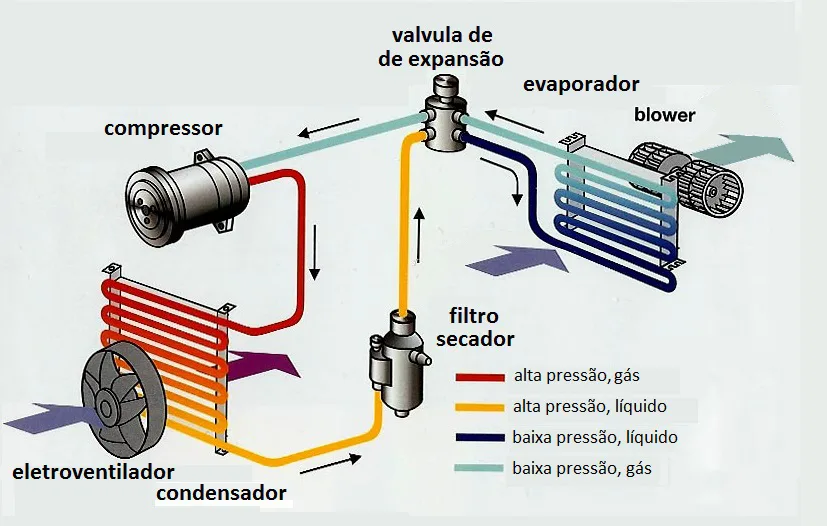

The pressure change enables the cooling cycle
At the condenser, hot refrigerant releases heat to outside air and condenses to liquid. After the system’s metering device lowers its pressure, refrigerant evaporates while absorbing heat in the evaporator. The compressor maintains circulation and the pressure difference; the cabin fan and condenser fan move air on their respective sides of the heat exchangers.
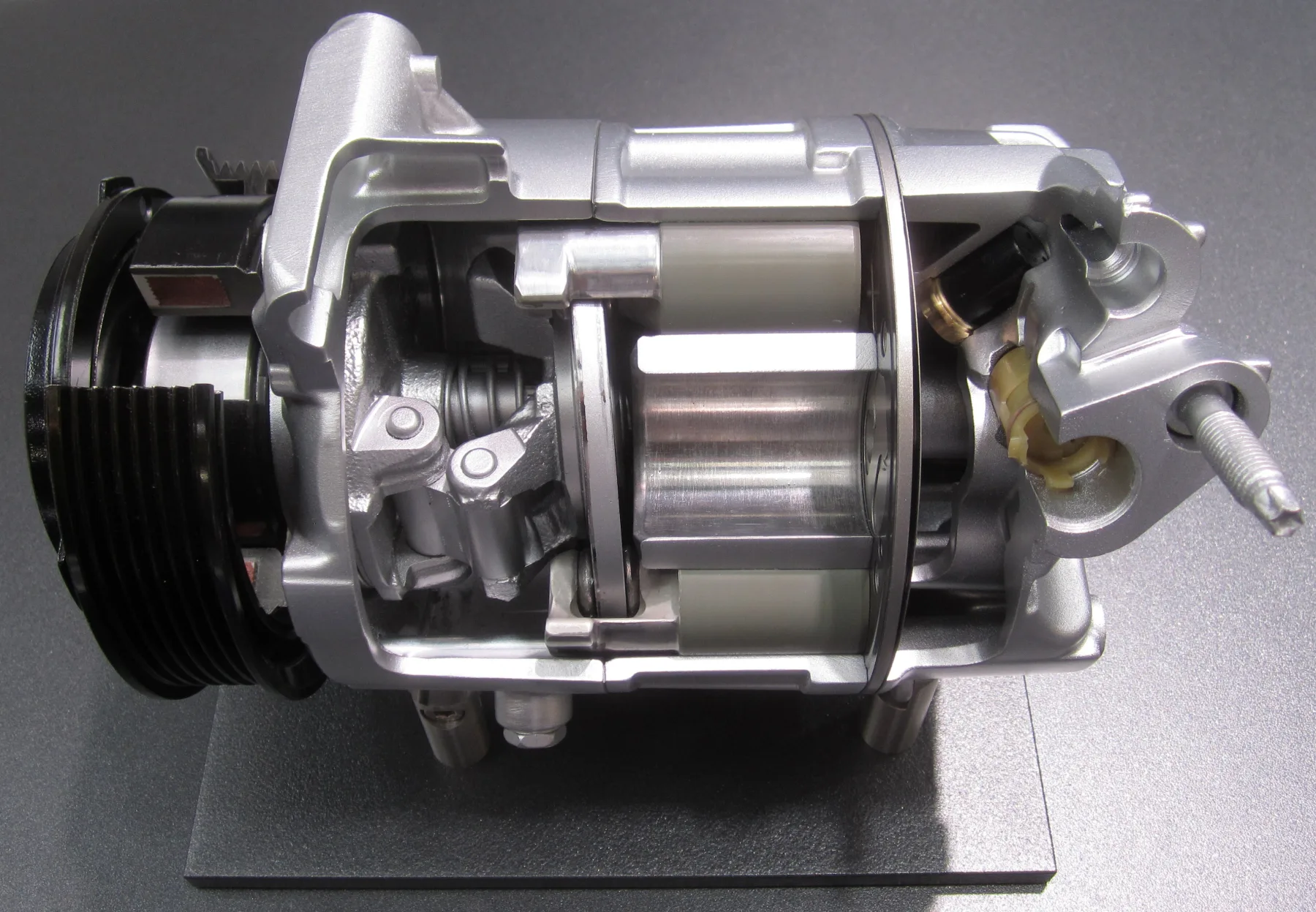

The cutaway shows a swash-plate compressor. Its tilted plate turns shaft rotation into piston strokes. Some variable-displacement belt-driven designs use an internal control valve to change capacity while the shaft keeps turning. HELLA’s compressor guide explains why clutchless operation cannot be judged by looking for clutch engagement.
Electric compressors run from a motor instead of a crankshaft belt. They allow cooling when the combustion engine is stopped, as in some hybrid and electric vehicles. Scroll compression is one common electric design. HELLA’s hybrid thermal-management guide describes this independent drive.
Warm air does not identify a seized compressor
A compressor can be disabled by controls because another condition is outside specification. Low refrigerant, airflow problems and electrical faults can also leave the vents warm. A turning pulley does not establish pumping performance, and a disengaged clutch may keep a seized compressor shaft from turning with the belt. The failure effect depends on the particular clutch, pulley and drive protection. Assessment needs circuit pressure, command and performance information, rather than a verdict from the pulley alone.
Sources
- HELLA: automotive air conditioning — Refrigerant cycle, condenser and evaporator heat transfer
- HELLA: compressor operation — Clutchless variable displacement and fault assessment
- HELLA: hybrid and electric thermal management — Electric compressor operation independent of engine
References checked .