Published by HALOX Co.
What an emissions waiver actually is
How a failed emissions test, repairs at the shop the program counts, a failed retest, and a decision by the office that page names produce a temporary registration waiver in California, Illinois, Virginia, and New York, and why Arizona's repair help still ends in a pass.
The car has failed, and an emissions waiver is the permission some state programs will give once the repairs they count have been done and it fails again. It lets the owner register or renew for the period that program sets.
The EPA’s page for motorists says these programs find high-emitting cars and trucks so the owner can be told to repair them. The 1990 amendments to the Clean Air Act set inspection-and-maintenance requirements for several areas of the country. Testing is run by state and local agencies, and the page says the programs vary from area to area, so the waiver rules sit on the state site that page links. EPA’s October 2021 overview draws the programs as counties. States required to run a basic or enhanced program put it in their implementation plan, and other states or cities may run one on their own. The same sheet says some states offer a repair or hardship waiver based on the cost of the repairs that followed a failing inspection, and the state page is where the eligibility lives.
A California pass is the smog certificate in what a smog certificate actually is, and the waiver is the result for a car that still fails. BAR’s Smog Check reference guide, revised November 21, 2025, says it follows a biennial failure that survives the minimum spend that guide sets at a Smog Check station, and that only a Referee facility can issue it.
The failure is a particular test
Virginia’s inspection page says a car that needs the test has to pass, or hold a waiver, every two years before the Department of Motor Vehicles will register it or renew it. A 1980 or older car gets a two-speed idle test. Most 1981 through 1995 gasoline vehicles at or under 8,500 pounds gross vehicle weight rating go on a dynamometer at 15 mph and at 25 mph, and the inspector reads hydrocarbons, carbon monoxide, and nitric oxides. All-wheel drive, full-time four-wheel drive, and traction control that cannot be turned off take the idle test instead. Most 1996 and newer cars get an on-board diagnostic test, and some of them still get a tailpipe test as well, or instead.
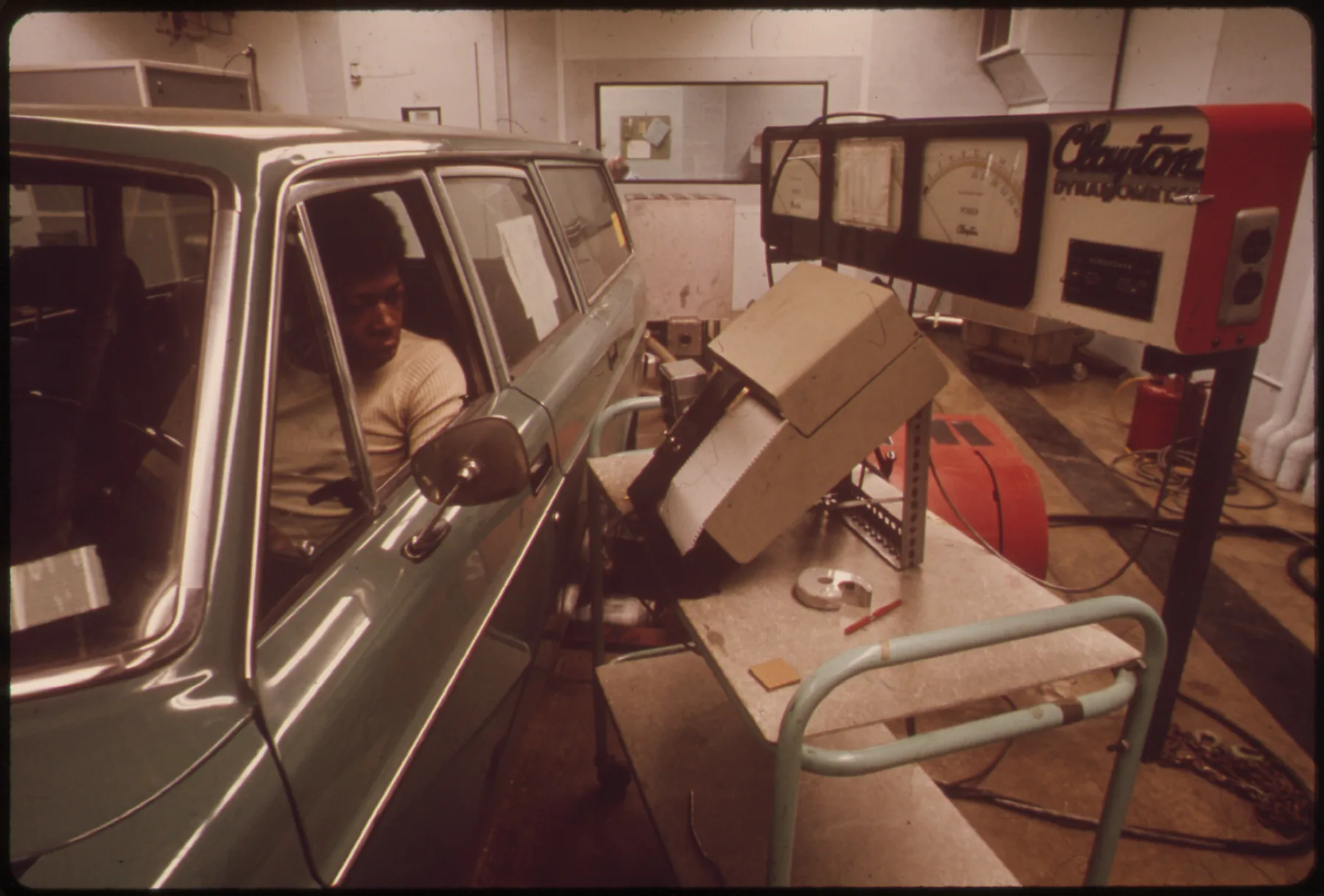


A driver in a cream sweater sits in the pale green wagon with the window down, looking toward the side mirror, beside a console lettered Clayton Dynamometer. Virginia’s page is the one that puts the 1981 through 1995 cars on that kind of test.
California’s Smog Check page can include a visual check, a functional check, an on-board diagnostic check for most 2000 and newer vehicles, and a tailpipe test for pre-2000 vehicles. A car with the check engine light on will fail. Virginia puts the diagnostic test on most 1996 and newer cars. California puts it on most 2000 and newer cars.
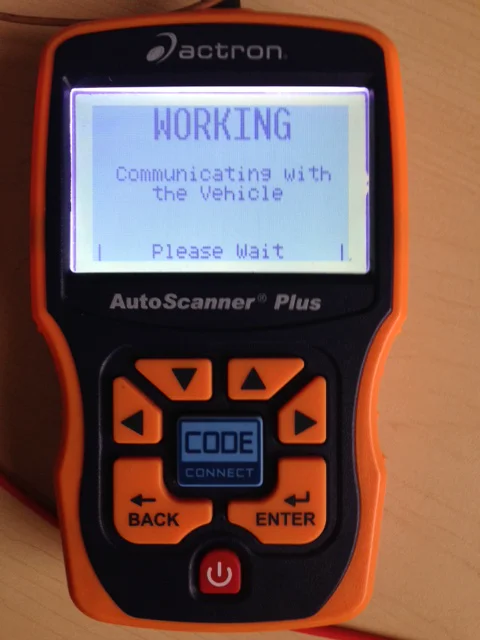

The photograph is a handheld scan tool, an orange-and-black Actron AutoScanner Plus on a light wood surface, its screen reading that it is communicating with the vehicle. Illinois’s repair-waiver page says the malfunction light and the data-link connector have to work before a waiver is eligible, and money spent because the light is dead, or because the connector will not talk to the equipment, does not count. New York’s waiver questions, dated January 2026, are about this inspection. The first test has to catch the trouble codes, and those codes stay in the car for it.
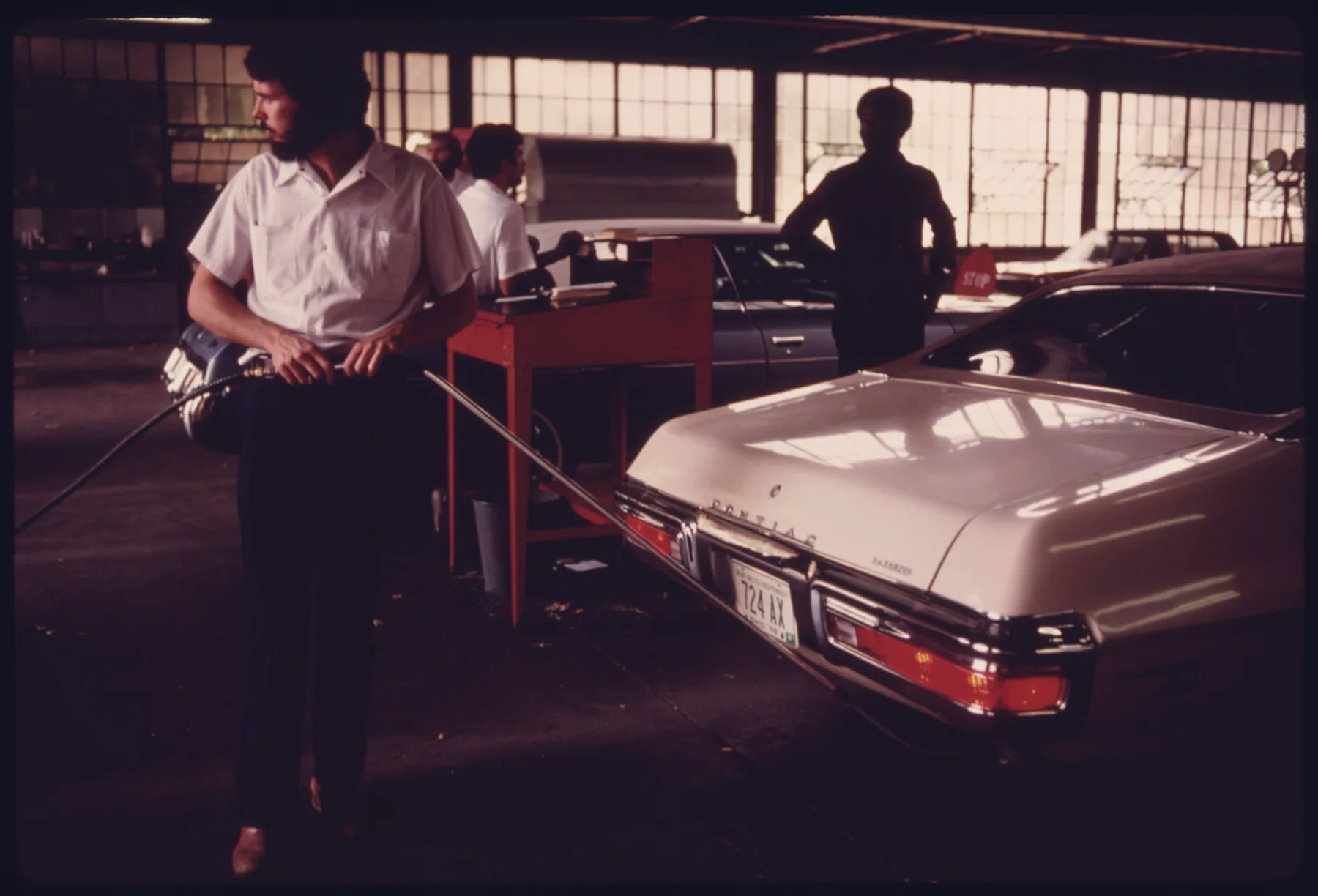


In the shed, a bearded man in a white short-sleeved shirt holds a long metal probe on a hose toward the rear of a cream-white Pontiac, plate 724 AX. Virginia’s failure page says a tailpipe failure is hydrocarbons, carbon monoxide, and sometimes nitric oxide, and it names a faulty oxygen sensor or a broken catalytic converter as the kind of fault those readings indicate. California still uses a tailpipe test on pre-2000 cars.
The invoice has to be the one that counts
The minimum is a number on the state’s page. The argument is over which lines on the invoice are allowed to add up to it, and the page is the full list.
Virginia will count the repair and the diagnosis when a certified emissions repair technician at a certified facility does the work or approves it. Anyone else may repair the car, and a later pass is a pass. Money paid elsewhere, on a car that fails again, cannot be applied. The amount that qualifies is printed on the initial failure report. The failure page states the figure in effect on or after January 5, 2026. The inspection page says the department reviews that amount every year, and it still prints an older figure.
Illinois draws the line in a different place. The questions page says an owner may work on the car, and it defines the recognized repair technician whose work counts toward a waiver. Diagnostic labor does not count, because a diagnosis does not fix the car. The original receipt is the evidence, and the repair sheet is not. Warranty work the car is owed has to be finished. An application on or after January 1, 2026 has to meet the minimum on the repair-waiver page. That page is the one to read, because the questions page still shows the previous year’s figure.
California counts work at a licensed Smog Check station, test-and-repair or repair-only, after a biennial failure, at the minimum in the November 21, 2025 guide. Tampered equipment has to be put back first, and that repair sits outside the waiver no matter what the rest of the invoice says. The consumer-assistance page is separate income-based help at a STAR station. If it does not cover the bill, the owner can pay the rest, retire or replace the car, or call the Referee about a one-time repair cost waiver.
New York’s questions sheet counts the parts and the labor that address the failure found on the first inspection and meet the minimum it sets. The work comes after that inspection. The station’s own work counts, and so can another registered shop’s invoice once the parts are on the car. The owner’s parts can count, and the owner’s labor cannot. Diagnosis, repairs, parts, and issuance have to be finished within 30 days, or the inspection system stops offering the waiver. The remaining lines are settled on that sheet.
The retest fails, and then someone decides
Virginia wants the first failure and a retest that still fails. There is one free retest at the same station within 14 calendar days, and the repair sheet goes back with the car. The failure page will not waive every failed car. A car still under its emissions warranty, a visual failure of the emissions equipment, and visible smoke are among the refusals, and the page holds the rest. A missing or dead system has to be fixed without regard to the minimum. The exception that page names is an on-board diagnostic failure. The station then sends a pass or a waiver to DMV electronically, and the registration can be renewed.
Illinois ends with a look at the car. The repair-waiver page closes on a visual check of the equipment and of the repairs on the receipts. If that check fails, the application is denied and the next try starts over with the documents again. The waiver goes to the owner, or to a person the owner names. The questions page says very few vehicles qualify, and that what the owner of a still-failing car receives is a renewal for the current test cycle.
Only a California Referee issues the waiver, and the guide allows one under the same ownership. The car has to be repaired before it changes hands, and a car in the middle of a transfer cannot receive one. After the change, the new owner may be eligible. Fleets are outside it, and so are the initial registrations the guide lists. A visible-smoke failure is a narrower case, for owners who meet the income conditions on that guide.
New York issues the waiver at the station, on the reinspection, when the system offers it. The car has failed emissions, passed safety, and is currently registered, and a dealer sale cannot get one. Monitors that are simply not ready, with no codes on the first report, are generally not a reason, and the questions page sends that case to the Office of Clean Air. Clear the codes after the repairs and drive the car. If the light stays off and the monitors finish, the car can pass on the way back in. If the light returns and the other requirements are met, the waiver can still be issued.
It carries the registration, and then it ends
In Virginia, an inspection within 90 days of expiration can renew the registration for up to two years. Earlier than that, the renewal can run one year. Either way, a pass or a waiver is due every two years.
Illinois holds the waiver to the current test cycle, and the next cycle is another test.
California’s postponement runs for up to two years from the renewal due date. By the next biennial inspection, or by a title transfer, the car has to be fully repaired, and one waiver is the limit while the same owner holds the car.
New York’s waiver is the inspection certificate the failed emissions test would otherwise withhold, and it buys time to repair and pass later in the ordinary way. It is valid through the end of the last day of the month of issuance in the following year, or once 365 days have passed from the previous waiver. Another one takes another round of repairs at the minimum that page sets.
Arizona’s voluntary repair program, revised November 12, 2025, pays toward emissions repairs at an approved shop after a failed required test, and the page says it guarantees a pass. The owner goes back, passes, and renews with the Motor Vehicle Division. A tampered system is outside the program, and the path ends in a passing test.
A title is the ownership record, and these pages leave it alone. When the waiver’s period ends, the car is due at the test again.
Sources
- EPA: Vehicle emissions inspection and maintenance, general information for motorists — Programs identify high-emitting cars and trucks so owners can be told to repair them. The 1990 Clean Air Act amendments set inspection-and-maintenance requirements for several areas. State and local agencies run the tests, the programs vary from area to area, and the page links the program sites, including repair-waiver information.
- EPA: Overview of Vehicle Inspection and Maintenance Programs, October 2021 — EPA-420-F-21-067. The programs are mapped by county. States required to run a basic or enhanced program include it in the state implementation plan, and other states or cities may run one voluntarily. Some states offer a repair or hardship waiver based on the cost of repairs after a failing inspection.
- California BAR: Smog Check, when you need one and what is required — A Smog Check can include a visual check, a functional check, an on-board diagnostic check for most 2000 and newer vehicles, and a tailpipe test for pre-2000 vehicles. A car with the check engine light on does not pass. A failure is followed by repairs and another inspection.
- California BAR: Smog Check Reference Guide, November 21, 2025 — Revision 6.0. A repair cost waiver follows a biennial failure and qualifying repairs at a Smog Check station, at the minimum the guide sets. Only a Referee facility issues it. It postpones the certificate requirement for up to two years from the registration-renewal due date, and the car must be fully repaired by the next biennial inspection or a title transfer. One waiver under the same ownership. Excluded during a transfer, while emissions equipment is tampered, for the initial registrations the guide lists, and for government and private fleet vehicles. A visible-smoke failure is a narrower income case. Licensed test-and-repair and repair-only stations may do the work.
- California BAR: Apply for repair assistance — Income-based help with emissions repairs at a STAR test-and-repair station after a biennial failure. If that help does not cover the repair, the options are to pay the rest, retire or replace the car, or call the Smog Check Referee about a one-time repair cost waiver.
- Virginia DEQ: Why did my vehicle fail? — One free retest at the same station within 14 calendar days. Repairs count toward a waiver only when a certified emissions repair technician at a certified facility performs or approves them. The qualifying amount is the one printed on the initial failure report, and the page states the figure in effect on or after January 5, 2026. A retest must still fail. The page lists the cases it will not waive. A tailpipe failure is hydrocarbons, carbon monoxide, and sometimes nitric oxide. A missing, disconnected, or inoperative system has to be corrected without regard to the repair minimum, with the on-board diagnostic exception the page names.
- Virginia DEQ: How do I get an inspection? — A pass or a waiver every two years to register or renew. The station sends a pass or a waiver electronically to DMV. Within 90 days of expiration the renewal can be for up to two years; earlier, one year. Most 1981 through 1995 gasoline vehicles at or under 8,500 pounds gross vehicle weight rating get a dynamometer test at 15 mph and 25 mph. A 1980 or older car gets a two-speed idle test. Most 1996 and newer vehicles get an on-board diagnostic test, and some still get a tailpipe test. All-wheel drive, full-time four-wheel drive, and traction control that cannot be turned off get the idle test instead of the dynamometer. The department reviews the waiver amount annually, and the page still prints an older figure.
- Illinois Air Team: Repair waiver — A car that failed a retest can qualify when the warranty repairs it is eligible for are done, the emissions devices appear present and operating, and a recognized repair technician did the work. The malfunction light and the data-link connector have to work. Diagnostic labor does not count. Applications on or after January 1, 2026 must meet the minimum printed on that page. Receipts, not the repair sheet, are the evidence. The last step is the page's visual check. The waiver is issued to the owner or a person the owner names.
- Illinois Air Team: Frequently asked questions — A waiver lets the owner of a failing vehicle renew the registration for the current test cycle. Very few vehicles qualify. An owner may work on the car, and the repairs that count are still the ones a recognized repair technician does. The waiver answer still prints the previous year's minimum. The repair-waiver page states the figure for applications on or after January 1, 2026.
- New York DMV: OBDII emissions waiver questions — January 2026. The waiver lets a car that failed the emissions inspection receive an inspection certificate after it passed the safety inspection and qualifying repairs met the minimum the page sets. Not for a dealer sale. The car must be currently registered. Trouble codes are left in place for the initial inspection. Diagnosis, repairs, parts, and issuance have to be finished within 30 days. The owner's parts can count and the owner's labor cannot. Valid through the end of the last day of the month of issuance in the following year, or once 365 days have passed from the previous waiver. Another waiver requires the requirements to be met again.
- Arizona ADEQ: Voluntary Vehicle Repair Program — Revised November 12, 2025. After a failed required emissions test, the program pays toward emissions-related repairs at an approved shop and says it guarantees a passing test. The owner returns to a station, passes, and renews with the Motor Vehicle Division. A tampered emissions system is not eligible.
References checked .