Published by HALOX Co.
What an ignition coil actually does
Primary current, magnetic-field collapse, secondary voltage and coil arrangements, plus why misfire symptoms alone cannot identify a failed coil.
An ignition coil stores energy in a magnetic field and releases it as a voltage pulse. Current flowing through its primary winding builds that field. When the ignition switching device interrupts the current, the rapid field change induces voltage in the secondary winding. The secondary’s turns allow the pulse to reach the voltage needed at the spark plug. HELLA explains the coil’s transformer-like construction.
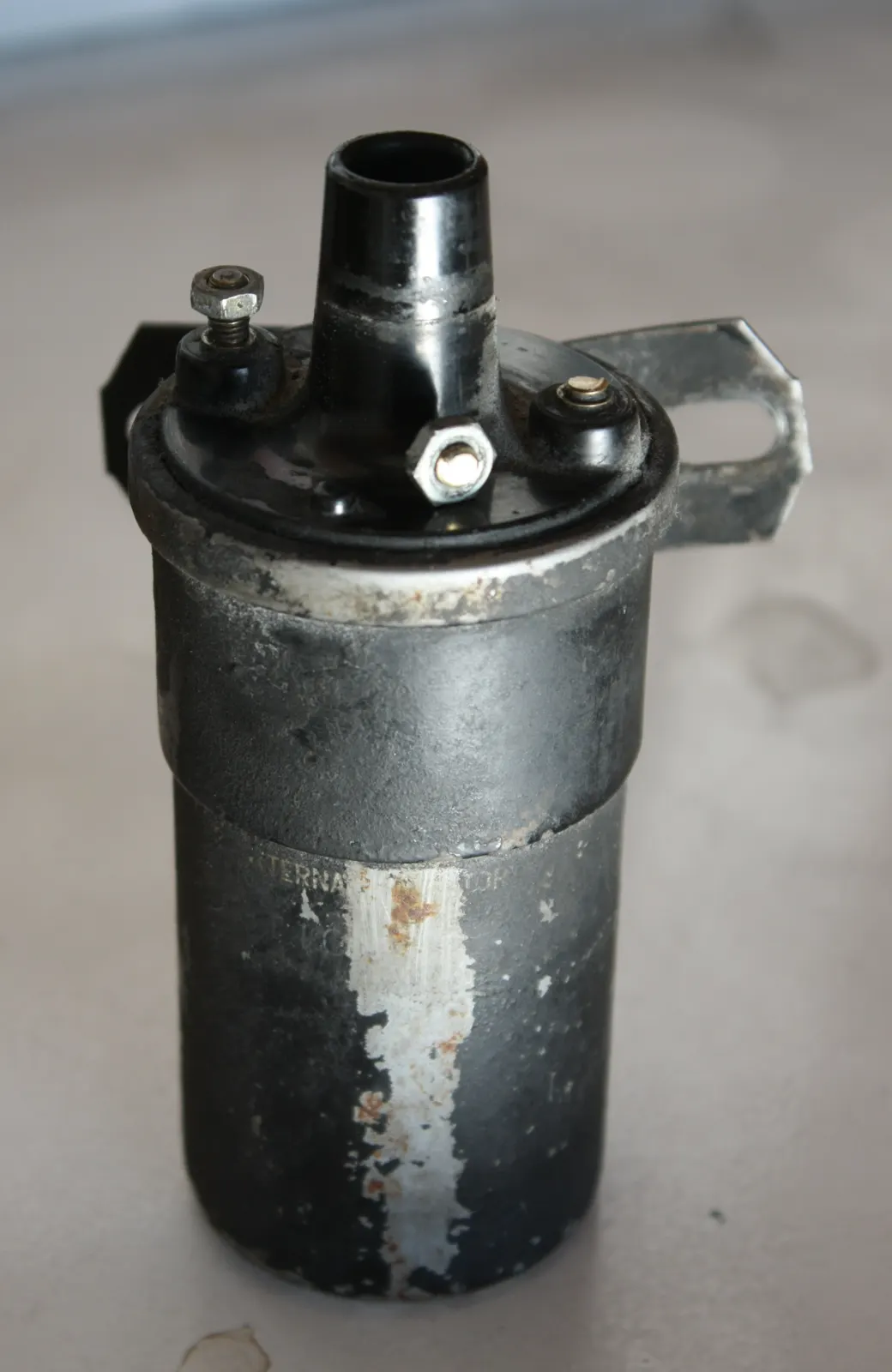

The battery feed supplies energy to the primary circuit. The engine controller or ignition module controls switching, often through an output stage integrated with the coil or another module. A small signal wire is not necessarily the wire delivering all of the primary current. The circuit diagram determines which connection does which job.
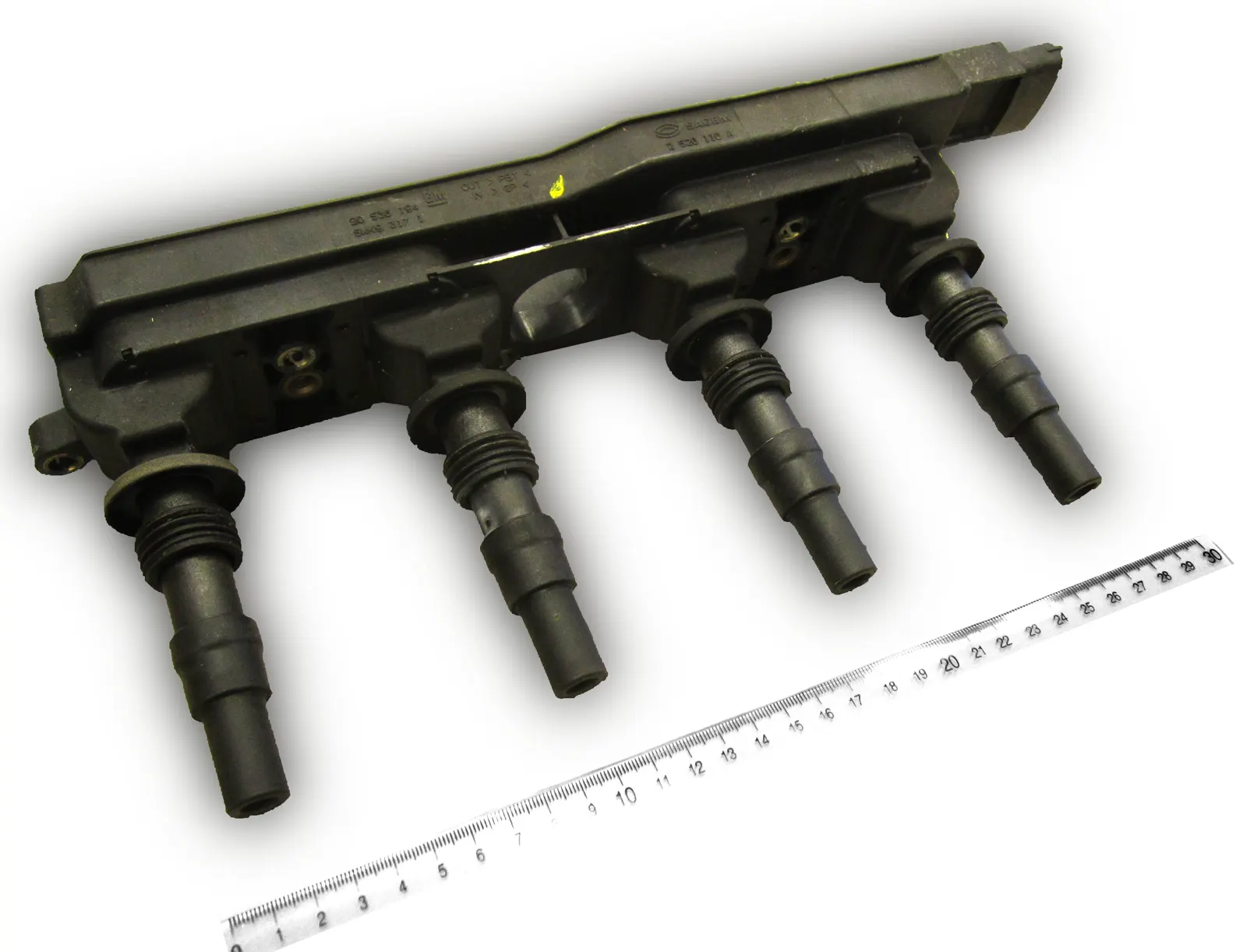

Same energy conversion, different packaging
A remote coil can feed a distributor, which directs high voltage to the appropriate plug. A wasted-spark unit fires paired plugs, while a coil-on-plug unit sits above one plug well. Rail modules can combine several coils or outputs. HELLA describes these arrangements; their appearance and test methods are not interchangeable.
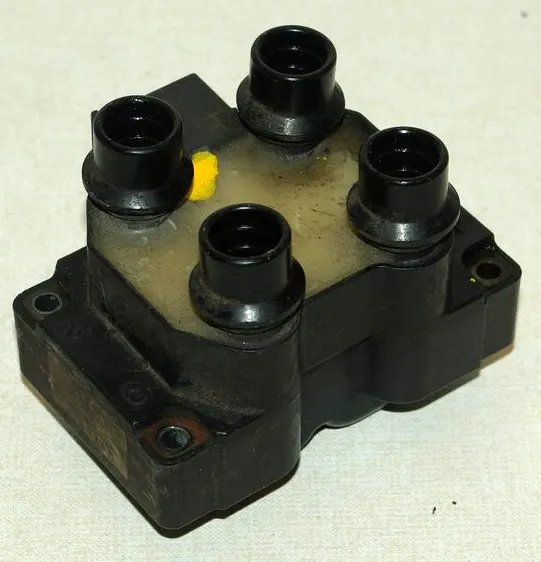

The coil provides the pulse; the plug provides the gap. Worn plugs, damaged insulation, poor electrical supply and engine conditions can all affect whether combustion succeeds.
A hot coil is not automatically failed, and rough idle or a cylinder misfire code does not prove coil failure. Niterra’s diagnostic guide distinguishes electrical coil-circuit faults from misfire codes with many possible causes. The useful evidence is whether the circuit and output behave as specified under the conditions that produce the fault, not a blanket instruction to begin by replacing either coils or plugs.
Sources
- HELLA: ignition coil function and diagnosis — Primary switching, secondary induction and coil packaging
- Niterra TekniWiki: ignition coil diagnosis — Circuit codes versus nonspecific misfire codes
References checked .