Published by HALOX Co.
What an oil pump actually does
Oil-pump circulation, gear and gerotor designs, pressure versus flow, relief control and the variable-delivery pumps used in modern engines.
The oil pump moves lubricating oil through the engine. In a wet-sump system it draws from the oil pan and supplies the filter and lubricating passages. The filter removes particles; an oil cooler, when fitted, exchanges heat. Neither supplies the pump’s circulation. Motorservice describes this oil-supply route.
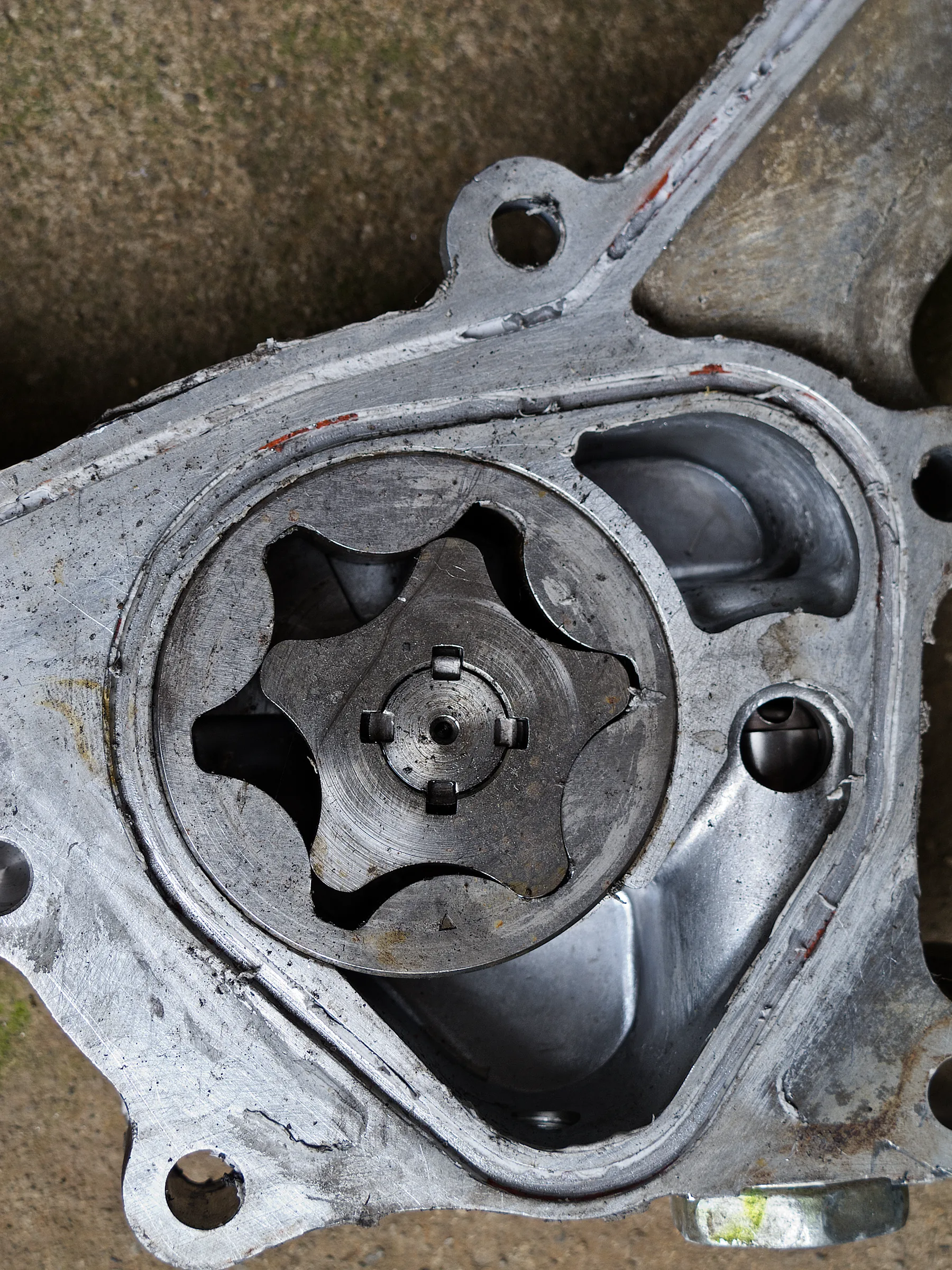

Many pumps use positive-displacement mechanisms. Spur gears carry oil in spaces around their outer edges; a gerotor uses expanding and shrinking spaces between an inner and outer rotor. Other designs include vane and variable-displacement pumps. Melling lists these constructions. The pictured housing alone does not show which internal mechanism is installed.
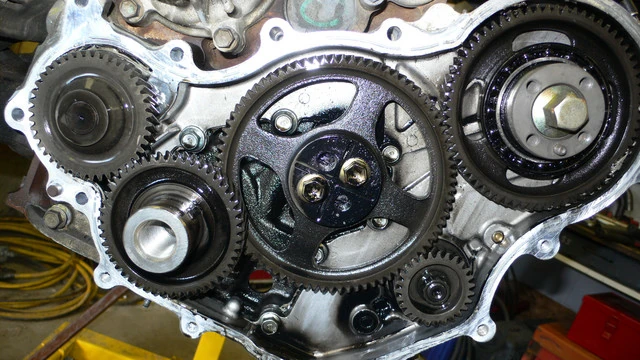


The drive can come from a crankshaft connection, gears, chain or shaft, depending on the engine. The timing-gear photograph illustrates one layout. Its gear order is not a universal oil-pump identification map, and a pump need not sit submerged in the sump to draw oil from it.
Pressure is not a fixed output quantity
A fixed-displacement pump moves approximately a set volume per revolution, subject to leakage and filling. System pressure depends on the resistance to that flow, including oil viscosity and the engine’s oil clearances. More clearance can mean more flow leakage and lower pressure even though the pump turns. Melling’s pressure-versus-flow bulletin explains this distinction.
A relief mechanism limits excessive pressure by diverting flow. It is different from a filter bypass, which responds to restriction across the filter. Relief settings are part of the pump specification, as Melling’s pump descriptions show.
Not all pumps deliver a fixed volume per turn. Variable pumps can adapt delivery to temperature, speed and engine load. Motorservice explains this demand-based control. An oil-pressure warning needs prompt attention under the owner’s instructions; the warning does not prove that replacing the pump will resolve the cause.
Sources
- Motorservice: oil supply — Wet-sump oil route and variable delivery
- Melling: oil pumps — Gear, gerotor, vane and variable-displacement designs
- Melling: pressure versus flow — Flow resistance and bearing clearance
- Melling: oil pump specifications — Application-specific relief springs and pressure settings
References checked .