Published by HALOX Co.
What an oxygen sensor actually does
Oxygen-sensor feedback, lambda, switching versus wideband measurement, catalyst monitoring and the limits of fault codes and visual inspection.
An oxygen sensor measures residual oxygen in the exhaust and provides feedback to engine control. It does not directly measure fuel delivery or soot. The controller combines that feedback with other inputs to adjust mixture under the conditions where closed-loop control is active.
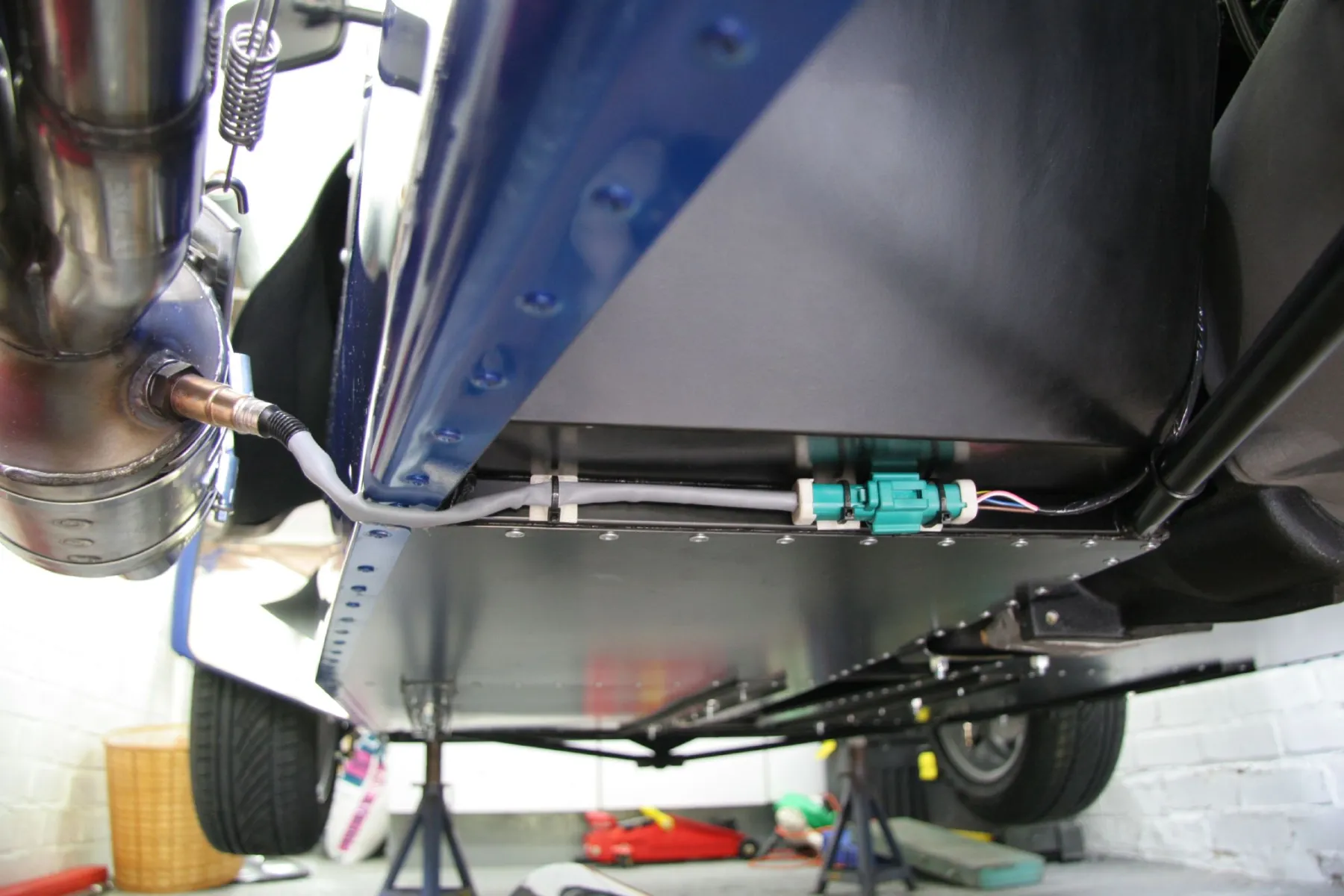

Lambda compares the actual air-fuel ratio with the fuel’s stoichiometric ratio. At lambda 1, the mixture has the chemically balanced air and fuel proportions. A switching sensor has a sharp signal transition near that point; it does not report a precise mixture ratio across a wide range. Bosch explains switching-type sensing.
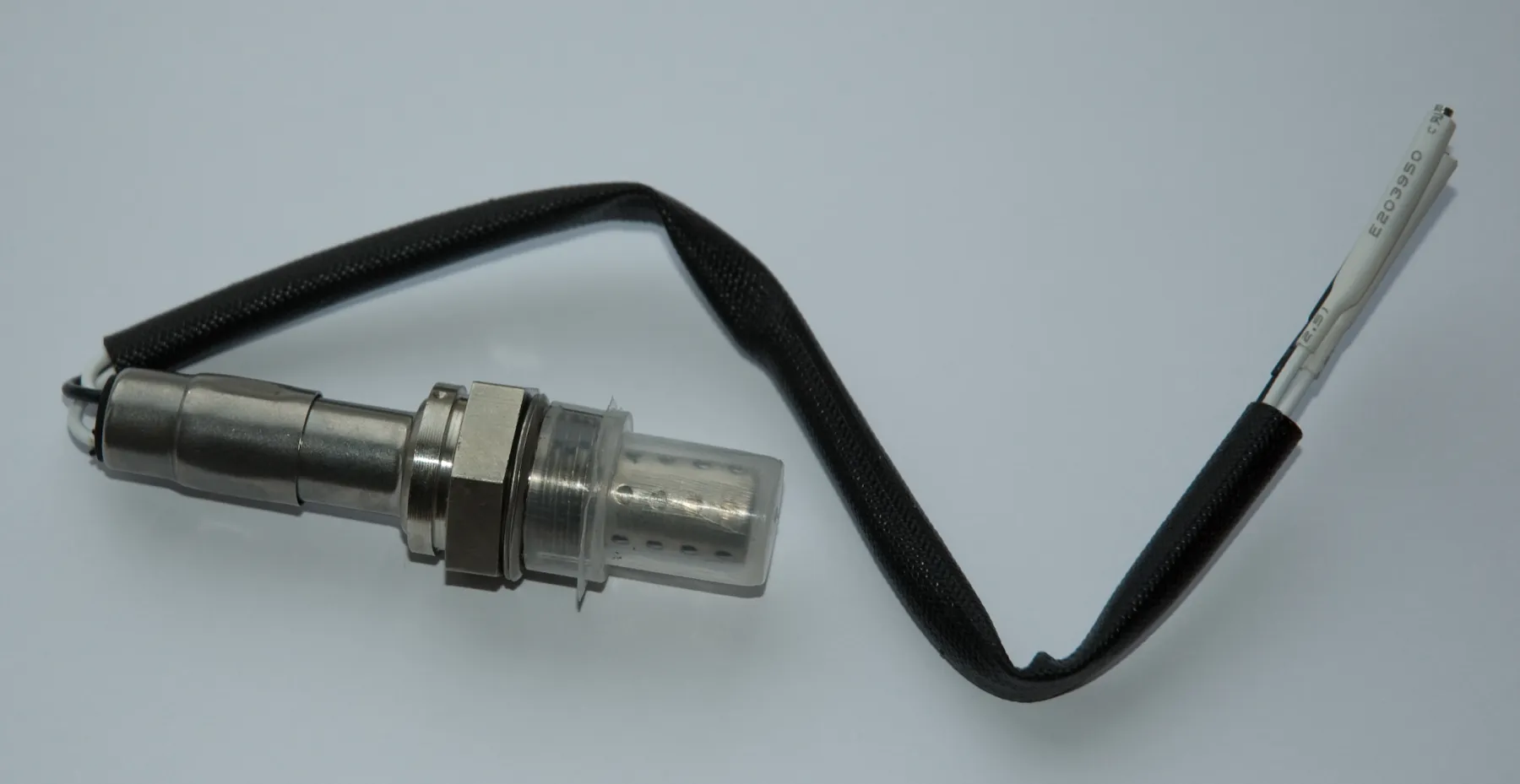

A wideband sensor uses measurement and pump cells to report mixture over a wider rich-to-lean range. Bosch describes that construction. Sensor type determines the electrical signal and test method; treating every probe as the same voltage source can give a false reading.
Location changes the control task
An upstream sensor commonly provides mixture feedback. A downstream sensor commonly supports monitoring of the catalyst’s oxygen-storage behavior, although exact control roles vary by engine. HELLA explains comparing upstream and downstream behavior. The catalyst does not simply “eat leftovers” without a control context.
Heating brings the sensing element to its working temperature. Cold start and some high-load conditions can use a different control strategy, so the controller is not universally chasing lambda 1 in every engine state.
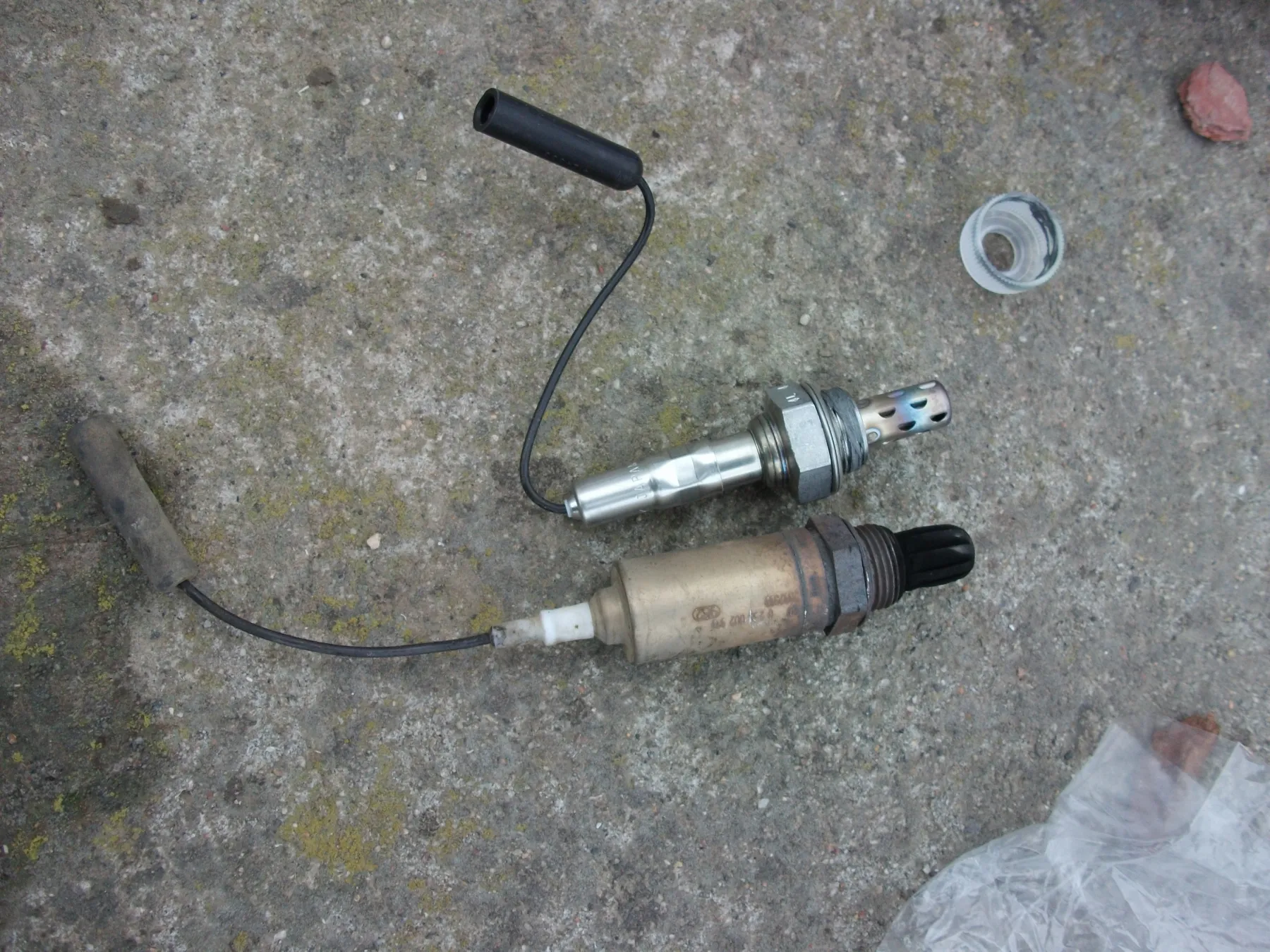

Black deposits alone do not prove a sensor is dead, and bright metal does not prove it works. A sensor-related code can involve the heater, wiring, signal response or exhaust leaks. HELLA’s diagnostic guide checks those separately. The signal and code are evidence to investigate, rather than proof of one defective probe.
Sources
- Bosch: switching lambda sensor — Signal transition near stoichiometry and heater
- Bosch: wideband lambda sensor — Measurement/pump cells and rich-to-lean range
- HELLA: lambda sensor diagnosis — Catalyst monitoring, operating states, wiring and exhaust checks
References checked .