Published by HALOX Co.
What the Monroney sticker actually shows
The new-car Monroney discloses vehicle identity, suggested prices, options and destination. Safety ratings may be unavailable, and fuel-economy costs are standardized estimates.
The Monroney is the complete new-car window disclosure, rather than just the EPA fuel-economy panel. Its useful role is to connect the vehicle in front of you with the manufacturer’s listed configuration and suggested prices. A dealer’s additional price sheet is a different document.
For the new automobiles covered by the federal disclosure law, the label identifies the vehicle, final assembly point and dealer/delivery information. It lists the manufacturer’s suggested base price, specified accessories or options, transportation charge and their total. The statute requires the label on the windshield or side window before delivery to the dealer. 15 USC 1232 label requirements.
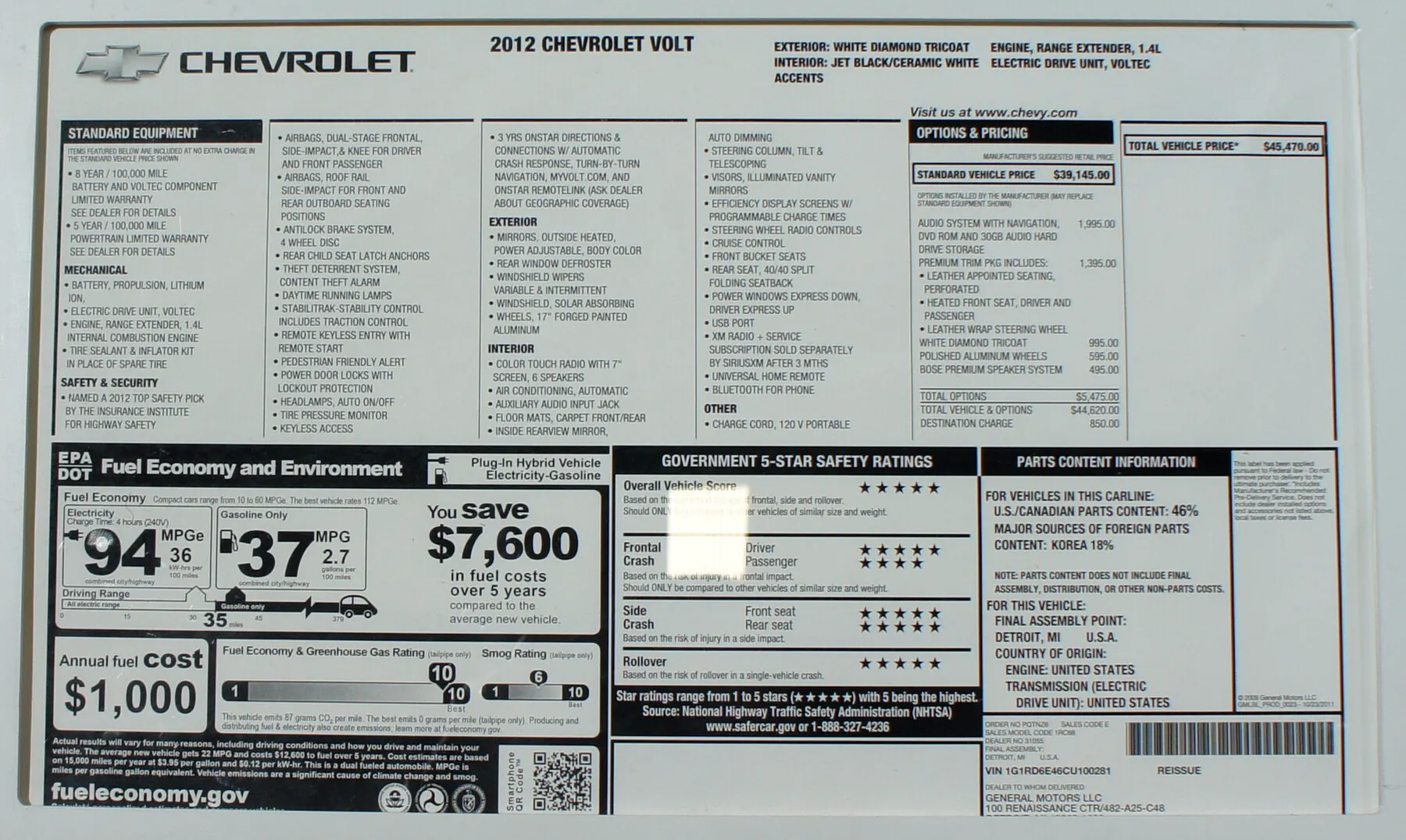

Suggested retail price is a disclosure, not proof of the final transaction price. Compare the label with the purchase agreement so you can identify dealer-added products, taxes and other charges separately from the manufacturer’s listed equipment and transportation amount.
Safety-rating information belongs on the disclosure, but every rating is not necessarily available. Federal law requires available NHTSA ratings and a statement when testing or ratings are absent. NHTSA explains Not Rated as the absence of a result for that crash condition; it is not a zero-star score. Statutory rating-disclosure provisions; NHTSA ratings questions.
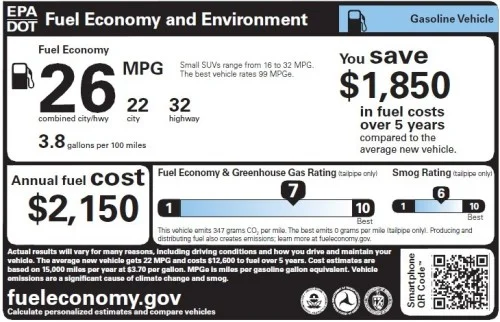


The fuel-economy panel uses standardized ratings and cost assumptions, explained in EPA/DOE’s gasoline-label guide. For a plug-in hybrid, MPGe expresses energy-equivalent economy in the electricity mode, while gasoline-mode MPG is separate. MPGe is not the number of miles the battery can cover on a charge; range is a separate entry. The annual-cost estimate depends on assumed mileage and fuel prices. EPA/DOE plug-in label explanation.
Keep the window label with the vehicle records and compare its identity with the car and contract. It is the manufacturer’s disclosure for that labeled configuration, not a guarantee of your fuel bill, road range or purchase price.
Sources
- 15 USC 1232: automobile label and entry requirements — Federal new-automobile price and identification disclosure
- NHTSA: ratings and label questions — Federal star-rating meaning and unrated vehicles
- EPA/DOE: plug-in-hybrid fuel-economy label — Federal label values, MPGe, gasoline mode and cost assumptions
- EPA/DOE: gasoline fuel-economy label — Federal gasoline label layout and estimated figures
References checked .