Published by HALOX Co.
Why AWD is not the same as 4WD
Why AWD/4WD labels overlap, how automatic and locked modes differ, and why low range and pavement permission must be checked in the owner’s manual.
AWD and 4WD both describe systems capable of driving front and rear wheels, but the labels do not provide a complete hardware specification. Useful questions are whether power distribution is automatic, whether a mode mechanically couples the axles, whether low range exists and which surfaces each mode permits.
An AWD system may drive both axles continuously or vary their contribution automatically. It need not wait for obvious wheelspin. Ford’s AWD manual describes continuous monitoring and adjustment of front-to-rear power distribution without a driver selecting engagement.
The mode matters more than the badge
Many traditional part-time 4WD systems provide high-range and low-range selections. Low range adds gearing for low-speed work. But a “4WD” name does not guarantee a 4L position, and the absence of a lever does not prove a vehicle is AWD. Electronic selectors and automatic or full-time modes make that visual shortcut unreliable.
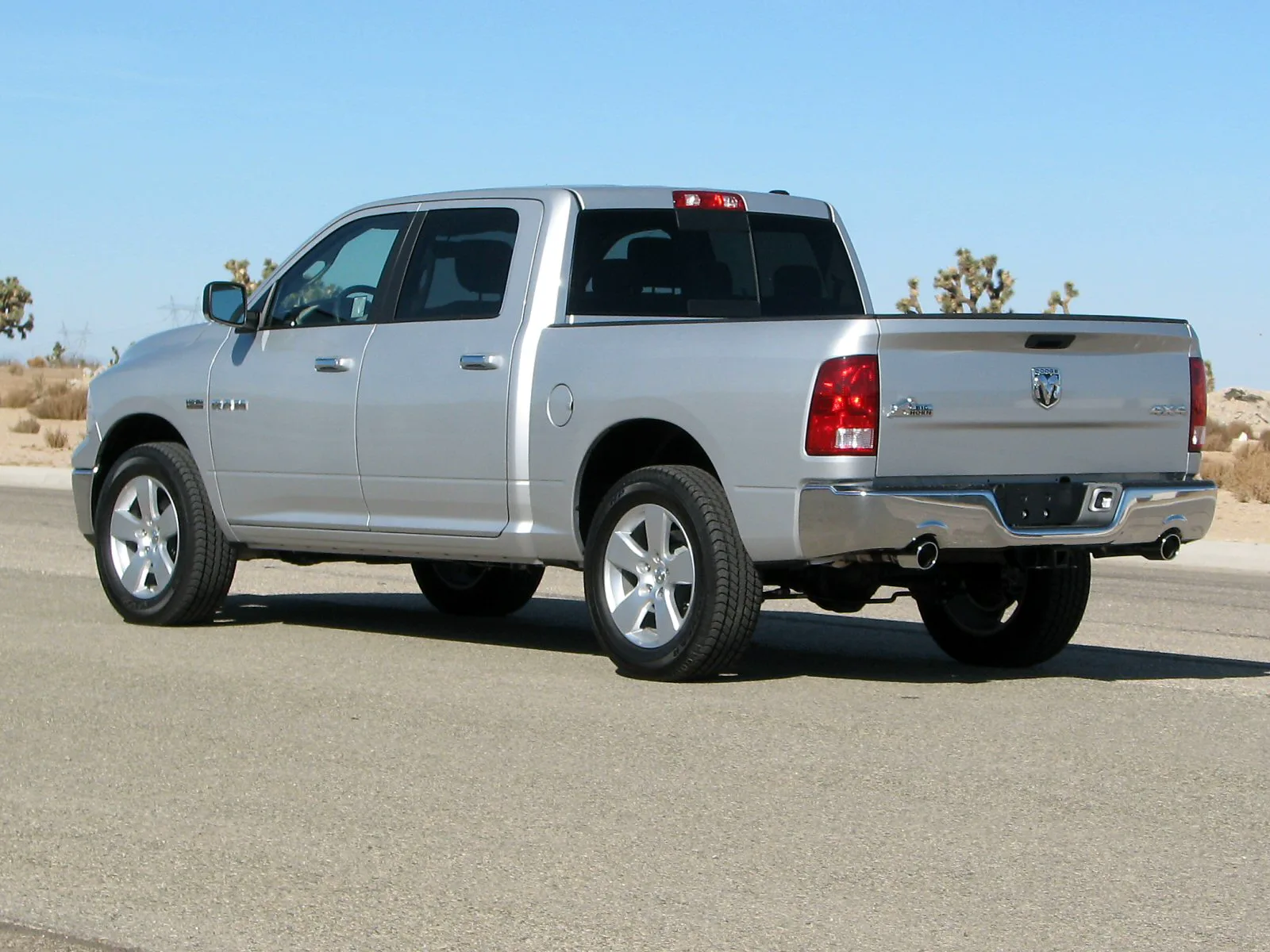


Locked modes can make the axles fight the different distances they need to travel in a turn on high-traction pavement. For the Raptor system covered by this Ford manual, 4H and 4L are restricted to consistently slippery or loose surfaces.
Automatic four-wheel-drive modes are a different case. A Ford/Lincoln 4A manual example permits normal dry or wet pavement use. That permission belongs to the specified mode and vehicle, not every 4x4 badge.
Extra driven wheels can help acceleration on snow, but the badge does not grant shorter braking distances. Ford’s AWD guidance explicitly warns against that assumption. Read the particular vehicle’s manual for surfaces, engagement conditions, tire requirements and limits; a tailgate photograph cannot establish its transfer case or control strategy.
Sources
- Ford: using AWD — Automatic torque distribution and snow braking limits
- Ford: Raptor 4WD limitations — 4H/4L restrictions to slippery/loose surfaces
- Ford/Lincoln: Normal 4A mode — Automatic 4WD mode allowed on dry and wet pavement
References checked .